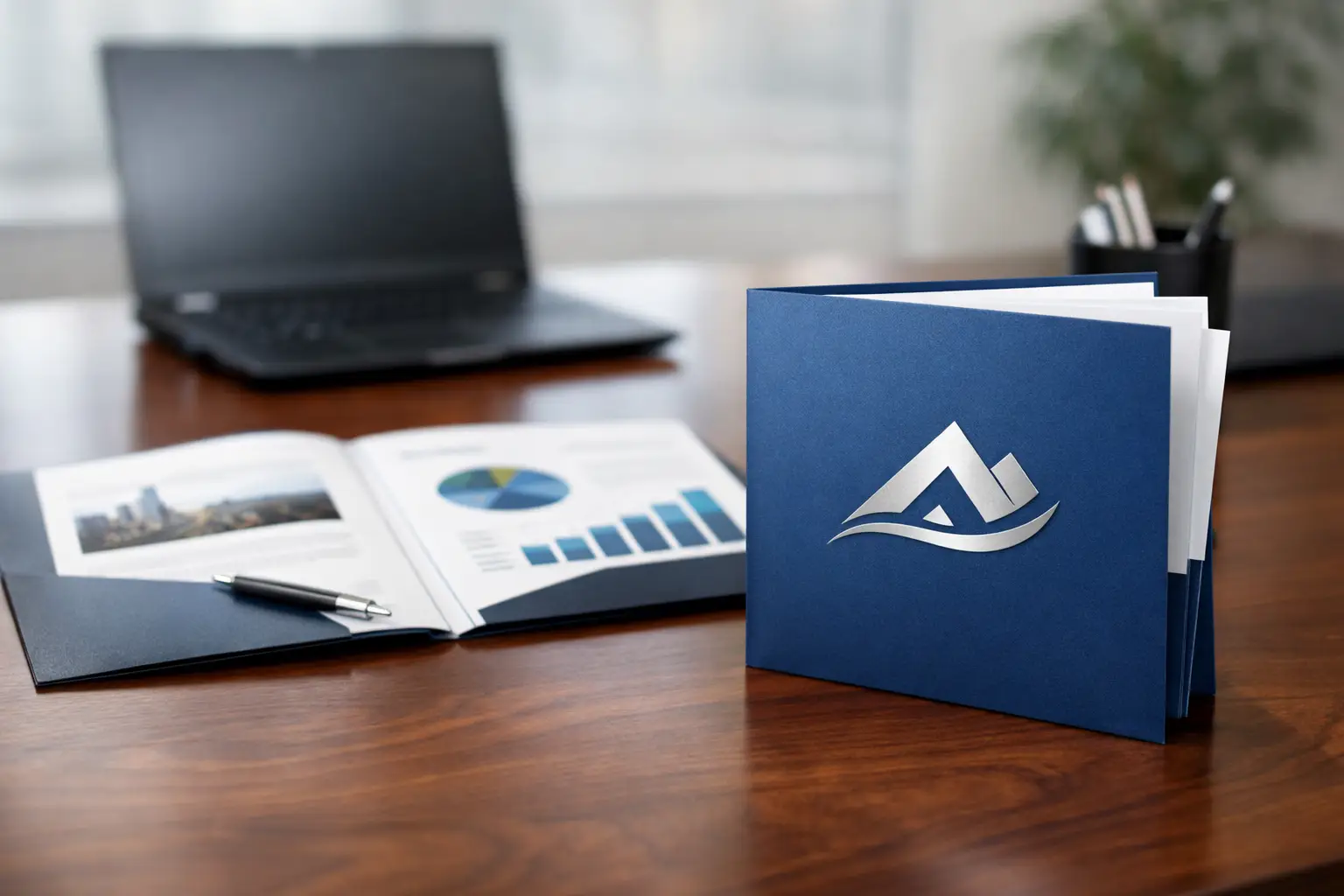
A proposal lands on a prospect’s desk with a business card, a clear cover letter, and neatly organized supporting documents inside. Before a word is read, the materials have already made a statement about the business behind them. So, are printed presentation folders still useful? For many organizations, they are – not as a replacement for digital communication, but as a practical tool for moments when a professional, physical impression matters.
Digital files are fast, easy to update, and essential for day-to-day communication. Yet a well-produced folder gives important documents a sense of order, permanence, and care that an email attachment cannot always match. The strongest approach is usually not print versus digital. It is using each format where it does its best work.
Are Printed Presentation Folders Still Useful for Business?
Yes, when they serve a clear purpose. Presentation folders work especially well when information needs to be handed over, reviewed in person, retained for reference, or shared with several decision-makers. They keep materials together while giving your brand a visible place in the conversation.
For a local contractor, that may mean presenting a project estimate, scope of work, references, insurance details, and warranty information in one organized package. For a school or community organization, it may mean preparing sponsorship packages, registration forms, event details, and donor information. For a professional office, folders can support client onboarding, real estate listings, financial consultations, or employee welcome packages.
The usefulness comes from function, not nostalgia. A folder should make the recipient’s next step easier. If it simply holds a few generic sheets that could be emailed with no loss of clarity, it may not be necessary. If it turns a complex set of documents into a professional package that is easy to review and keep, it earns its place.
Why Physical Materials Still Influence Decisions
Business decisions are often made after the meeting ends. A printed folder remains on a desk, in a briefcase, or in a boardroom while people compare options and revisit details. That physical presence can be valuable, particularly for higher-consideration services where trust, proof, and presentation affect the final decision.
A folder also gives recipients a simple way to organize information. Rather than searching through an inbox for separate attachments, they can see the proposal, pricing sheet, case studies, and contact information in one place. For busy managers and committee members, that convenience matters.
There is also a quality signal involved. A folder printed with accurate color, clean finishing, and a thoughtful layout shows that your organization pays attention to details. It does not guarantee better service, but it supports the credibility of the people delivering it. That can be especially helpful when meeting a new client, responding to a formal request for proposal, or representing your organization at a community event.
Where Presentation Folders Deliver the Most Value
Presentation folders are most effective in settings where a personal handoff is part of the experience. Sales meetings, consultations, open houses, trade shows, board presentations, and recruitment events are all strong uses. They also work well for documents that have a longer life than a single conversation.
Consider a folder for a project kickoff meeting. The pocket can hold a timeline, contact sheet, project overview, and branded notepad. The recipient leaves with something useful rather than a loose stack of paper. The same principle applies to client welcome packages, employee orientation materials, and fundraising presentations.
They can also improve consistency across a team. When every sales representative or account manager has the same professionally printed folder and core inserts, your company is represented consistently. That is useful for growing businesses that want their customer-facing materials to look reliable regardless of who delivers them.
For events, folders can help separate your organization from a table full of flyers. A thoughtful package with the right materials can feel more valuable than a handful of individual handouts. The key is restraint. Include what attendees need, not every piece of marketing material you have ever produced.
When Digital Is the Better Choice
Printed folders are not the right answer for every communication. Digital delivery is usually better for rapidly changing information, large document libraries, routine follow-ups, and materials that need to be searched, forwarded, or completed online.
If your pricing changes weekly, if your proposal requires several rounds of revision, or if the recipient is in another region, a digital PDF is more efficient. It reduces waste and makes updates easier. Similarly, a simple one-page service overview may be more useful as an email attachment than as a printed package.
The trade-off is that digital documents can be easy to overlook. A practical middle ground is to provide a printed folder at the meeting, then send a digital copy afterward for easy sharing and reference. This gives the recipient both a polished physical package and the convenience of electronic files.
What Makes a Presentation Folder Worth Keeping
A folder is only as effective as the materials inside it. Start with the recipient’s questions. What do they need to understand, compare, approve, or act on? Build the package around those needs rather than filling the pockets with general promotional pieces.
The outside should clearly identify your organization with a logo, brand colors, and contact details. The inside should be organized so the most important information is immediately visible. Business card slots are useful when a specific representative will follow up. Pockets can hold standard letter-size documents, while custom folder formats may make sense for menus, product sheets, certificates, or smaller promotional inserts.
Paper stock and finishing also matter. A sturdy stock supports a professional impression and stands up to repeated handling. A matte finish can feel understated and easy to write on, while a gloss finish can make photography and bold color stand out. There is no single best choice. The right option depends on your brand, the content, and the setting in which the folder will be used.
Avoid treating the folder as a miniature brochure. The cover does not need every service, slogan, phone number, and social media handle. Clear branding and a focused message usually look more confident. Let the inserted documents provide the detail.
Plan for Updates and Quantity
One concern businesses often have is outdated inventory. That is a fair concern, especially when services, staff, pricing, or contact details change frequently. The solution is to separate permanent brand elements from changeable information.
Print the folder with your core logo and general contact information, then place current service sheets, price lists, or project-specific pages inside. This reduces the chance that the entire folder becomes unusable after a change. It also allows one folder design to support several types of meetings.
Quantity should reflect your actual use, not just the lowest unit price. Ordering a very large run can save money per piece, but only if you will use the folders before the brand or details need updating. For smaller organizations, a moderate quantity with the ability to reorder may be the more practical choice.
A local print partner can help assess paper options, pocket styles, folder sizes, and quantities based on how the materials will be used. At Noran Printing, that guidance is part of helping businesses create materials that work in real meetings, not just look good in a proof.
A Strong Folder Supports the Conversation
The best presentation folder does not try to close the sale by itself. It supports a clear conversation, gives the recipient useful information, and makes follow-up easier. It should feel like a helpful extension of your team.
Before ordering, place the actual documents you intend to include on a table. Remove anything repetitive, out of date, or unlikely to be read. Then ask whether the remaining package would be useful to someone reviewing it two weeks after your meeting. If the answer is yes, a printed presentation folder is still doing exactly what it should: keeping your business organized, credible, and easy to remember.