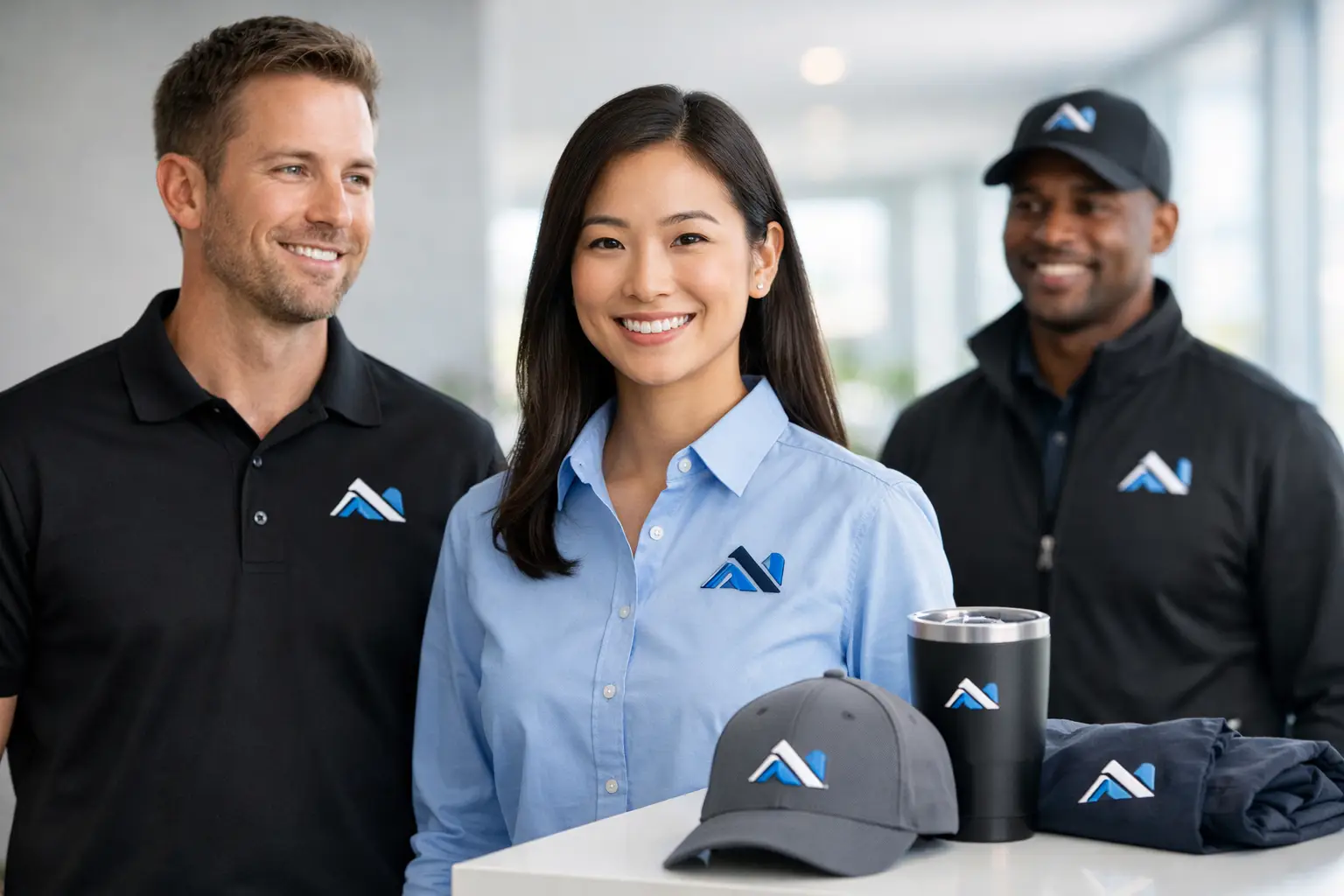
A staff uniform does more than put a logo on a shirt. It tells customers who can help them, gives employees a more consistent appearance, and makes your business easier to recognize at events, job sites, and in the community. The best branded apparel for staff teams is comfortable enough to be worn without complaint, durable enough for the workday, and decorated clearly enough to represent your business well.
The right choice is rarely one garment for everyone. A restaurant server, a construction crew member, an office receptionist, and an event volunteer all need different things from branded clothing. The strongest programs begin with the role, the environment, and the way the garment will be used – then match the apparel and decoration method to those needs.
Start With the Work Your Team Does
Before choosing colors or placing a logo, consider where and how the apparel will be worn. This practical step prevents common problems, such as ordering lightweight cotton shirts for outdoor crews or selecting embroidered outerwear for staff who need a soft, flexible layer beneath safety equipment.
For customer-facing teams, appearance and easy care often lead the decision. Polos, button-down shirts, branded cardigans, and clean quarter-zips create a polished look for retail, hospitality, office, and service staff. A consistent logo placement on the left chest gives employees a professional, approachable appearance without making the garment feel overdesigned.
For active teams, performance fabrics usually make more sense. Moisture-wicking tees, lightweight polos, hoodies, and durable work shirts are better suited to crews who move between job sites, work outdoors, or handle physical tasks. In Kamloops and throughout the Interior, seasonal conditions matter. A summer event shirt may need breathability and sun coverage, while fall and winter staff apparel often calls for layers that hold up to frequent wear.
Volunteer groups and event teams are a different case. Visibility tends to matter more than long-term durability. A bright, well-printed T-shirt can help attendees identify organizers quickly and create a unified presence in photographs. If the apparel is being worn for one event only, a more economical garment may be the sensible choice. For a recurring annual event, it can be worth investing in a better shirt that volunteers will want to wear again.
Best Branded Apparel for Staff Teams by Garment Type
A well-rounded apparel program often uses a small mix of garments rather than forcing one item to suit every employee and season. Each item should have a purpose.
Polos for daily customer contact
Polos remain a dependable choice for businesses that need a neat, recognizable uniform without looking overly formal. They work well for front desks, sales teams, trades representatives, service advisors, and community organizations. Cotton-blend polos offer a familiar feel, while performance polos dry faster and are often better for staff who are moving throughout the day.
Choose a fabric weight that suits the job. A thin polo may be comfortable in hot weather but can show wear more quickly. A heavier fabric generally feels more substantial, though it may not be ideal for an active team in summer. Ask employees who will wear the item most often for feedback before committing to a large order.
T-shirts for crews, campaigns, and events
Branded T-shirts are flexible, cost-effective, and easy to distribute across a larger team. They are particularly useful for construction and landscaping crews, school programs, fundraisers, sports events, and staff appreciation initiatives.
Standard cotton shirts provide a reliable print surface and familiar comfort. Blended and performance fabrics are better for moisture management and active work. Dark shirts can be more forgiving in work environments, while light or high-visibility colors can improve recognition at public events. The trade-off is that garment color affects logo visibility, so the artwork may need a white underbase or an adjusted color version to stay readable.
Hoodies, crews, and quarter-zips for layers
Outer layers give staff apparel more year-round value. Hoodies are popular for casual teams and field crews because they provide warmth and a relaxed fit. Crewneck sweatshirts offer a cleaner option when a hood is not practical. Quarter-zips and fleece jackets can feel more refined for office staff, sales representatives, and team members meeting customers off-site.
Consider how a garment will be decorated before choosing it. A large, raised embroidered design can feel heavy on a lightweight fleece, while a screen-printed logo may be more comfortable on a hoodie. For professional outerwear, a modest embroidered chest logo is often the right balance of durability and appearance.
Jackets and workwear for long-term use
Jackets, vests, button-up work shirts, and coveralls are worthwhile when staff work outside or need clothing that projects a more established image. These garments cost more than T-shirts, so it pays to choose dependable sizes, colors, and logo placement from the start.
Workwear should be selected for its actual demands. Consider pocket access, abrasion resistance, warmth, weather protection, and whether employees need room to layer underneath. If a team wears hard hats, high-visibility gear, or tool belts, test the garment with that equipment before ordering for the full crew.
Choose Decoration That Matches the Garment
The decoration method affects how your apparel looks, feels, and lasts. It should be chosen alongside the garment, not as an afterthought.
Embroidery is a strong option for polos, button-down shirts, jackets, hats, and heavier fleece. It creates a textured, professional finish that stands up well to repeated washing. Fine details and very small lettering may need to be simplified, however, because thread has limits that ink does not.
Screen printing is often the best fit for T-shirts, sweatshirts, event apparel, and designs with larger graphics. It is especially cost-effective for larger quantities of the same design and produces bold, visible results. The number of ink colors, garment color, and print locations will affect cost and production planning.
For individual names, departments, or numbered garments, digital and variable decoration options may be appropriate depending on the product and quantity. This is useful for schools, sports teams, staff recognition programs, and organizations where each garment needs a different name or role. Provide the spelling and size information carefully, since personalized apparel is more difficult to correct after production.
Make Fit and Sizing Part of the Plan
Staff apparel only works when people can wear it comfortably. A good logo cannot compensate for shirts that are too short, too tight through the shoulders, or unavailable in the sizes your team needs.
Whenever possible, offer a broad size range and review the manufacturer’s size chart rather than relying on a familiar size label. Fits vary noticeably between brands, particularly in women’s cuts, unisex styles, fitted performance wear, and outerwear designed for layering. A sample garment or sizing set is helpful for larger orders because it lets employees confirm their size before production begins.
It is also worth considering whether your team needs a single uniform appearance or coordinated options. A front-office team may look cohesive in the same navy polo while allowing employees to choose between short-sleeve, long-sleeve, and quarter-zip styles. That approach can improve comfort without losing consistency.
Keep the Branding Clear and Consistent
Staff apparel is not the place to use every element of your brand at once. A logo, business name, phone number, website, slogan, and large graphic can compete for attention. For daily uniforms, a clean left-chest logo is often enough. A larger back print can be useful for mobile teams, event staff, or crews whose shirts are seen from a distance.
Use approved logo files and confirm that the colors are suitable for the garment. A design that looks sharp on white may disappear on charcoal or black. If your logo includes small type, consider a simplified apparel version that remains legible at chest size. Consistent colors, placement, and decoration across apparel, business cards, vehicle graphics, signage, and promotional items reinforce a more professional brand presence.
Order for the Full Program, Not Just the First Batch
The lowest per-item price is not always the best value. If you order exactly the number of shirts needed today, new hires and replacement requests can become difficult to match later. Ordering a modest number of common sizes in reserve can save time and preserve consistency.
Plan around your expected turnover, seasonal staffing, and upcoming events. Keep a record of the garment style, color, decoration location, and artwork used for each order. This makes repeat ordering much easier and reduces the risk of staff receiving mismatched apparel six months later.
For businesses managing several branded needs, coordinating apparel with printed materials can also simplify the process. A consistent visual identity across uniforms, forms, brochures, event signage, and promotional products helps customers recognize your team wherever they meet you.
The best staff apparel is the clothing employees reach for because it fits their work and feels good to wear. Start with a practical garment, apply a clear and durable decoration, and build a program that can grow as your team does. That is how branded apparel becomes a dependable part of your customer experience rather than another item sitting unused in a storage room.