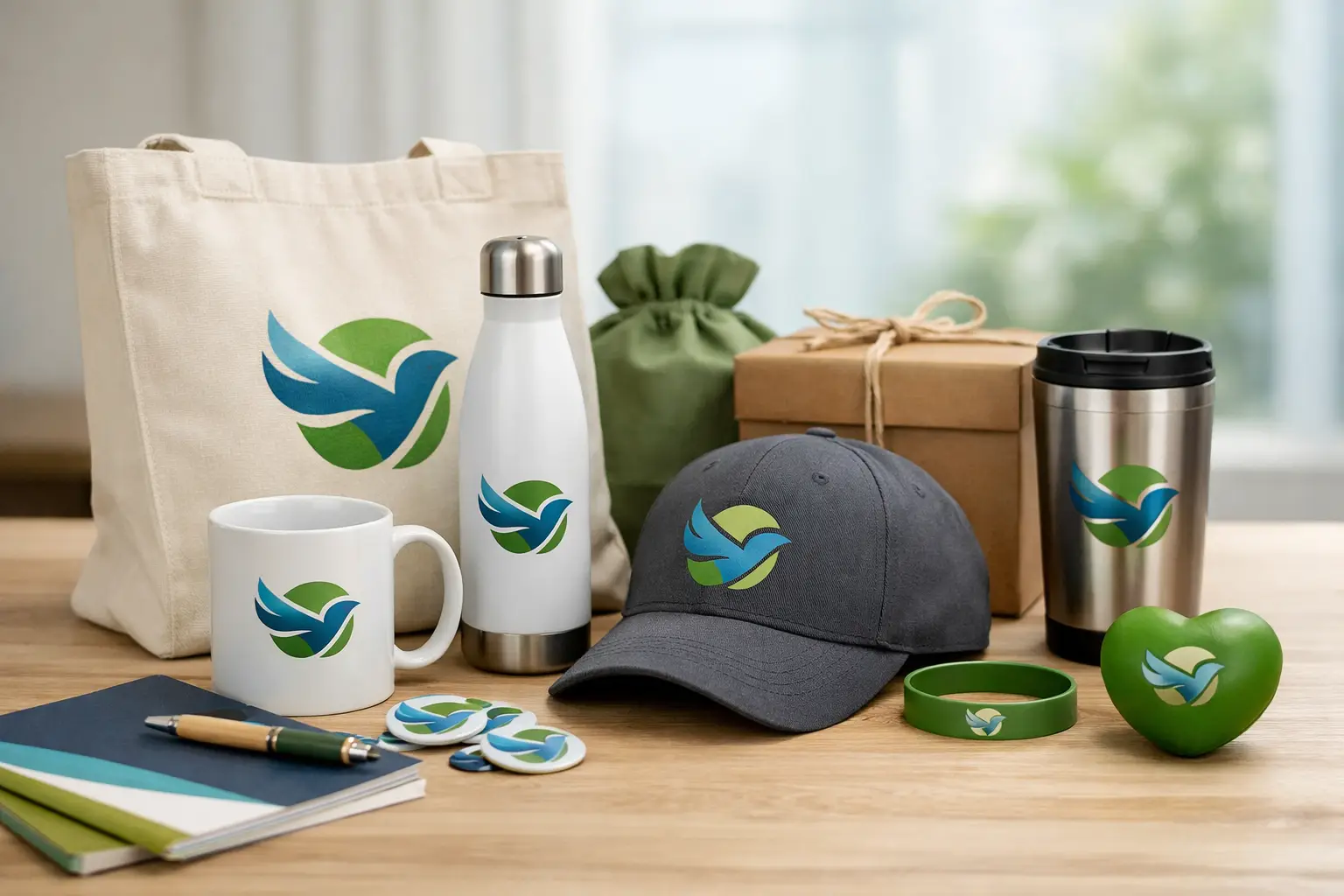
A donor leaves your fundraiser with a cheap giveaway, tosses it in a drawer, and forgets your organization by the next week. That is the problem with a lot of nonprofit merch. The best branded merchandise for nonprofits does more than display a logo – it keeps your mission visible, supports fundraising, and gives supporters something they will actually use.
For most nonprofits, branded merchandise has to work harder than it does for a typical business. Budgets are tighter, every purchase is scrutinized, and the goal is rarely just promotion. You may be trying to thank volunteers, stretch event dollars, build recognition in the community, or create an item supporters are happy to buy. That means the right product is not always the trendiest one. It is the one that fits your audience, your purpose, and your order size.
What makes the best branded merchandise for nonprofits?
The strongest merchandise choices usually check four boxes. They are useful, affordable, easy to brand clearly, and connected to the kind of support you want to build.
Useful items tend to last longer, which gives your organization more visibility over time. Affordable matters because many nonprofits need to divide spending across events, donor materials, signage, print pieces, and daily operations. Clear branding is just as important. If your logo is too detailed for the item or the imprint area is too small, the final product can look weak even if the item itself is good quality. And finally, the product should match the moment. A volunteer appreciation gift is different from a fundraising product, and both are different from a trade-show-style handout.
There is always a trade-off between quantity and perceived value. If you need broad reach at a public event, lower-cost items can make sense. If you are thanking key donors or board members, fewer higher-quality items usually make a better impression.
Best branded merchandise for nonprofits by real use case
T-shirts for visibility and team identity
Custom T-shirts remain one of the most effective nonprofit merchandise choices because they serve two jobs at once. They help staff and volunteers look organized at events, and they turn the people wearing them into moving visibility for your cause.
They work especially well for walks, runs, school events, food drives, and community campaigns. A good shirt can also be sold as part of a fundraiser. The key is not to overcrowd the design. A simple front logo with a clear campaign message usually performs better than trying to fit every sponsor and slogan onto one garment.
If budget is the main concern, standard cotton shirts are practical. If you want better long-term wear, a softer blend may be worth the added cost. It depends on whether the shirt is mainly for one event or meant to become an everyday favorite.
Tote bags for repeated exposure
Tote bags are one of the most dependable options because people keep using them. At grocery stores, meetings, libraries, schools, and community events, they show your brand in everyday settings without feeling overly promotional.
They are also a strong fit for nonprofits because they align well with educational materials, event packets, and donor gifts. If your organization hands out printed brochures, program materials, or welcome kits, a tote bag creates a useful package instead of another disposable giveaway.
The trade-off is that quality matters. A very thin bag may hit the lowest price point, but it often looks and feels temporary. A sturdier bag costs more upfront but tends to deliver more real-world use.
Water bottles for practical value
Water bottles are a solid choice for health, sports, school, youth, and outdoor-focused organizations. They have practical value, a visible imprint area, and good staying power when the quality is right.
For nonprofits, they can work as sponsor gifts, staff gear, volunteer thank-you items, or retail merchandise at events. They are especially effective when your audience already spends time on the go. If your supporters are parents, coaches, students, hikers, or event participants, bottles are often a natural fit.
The main consideration is price. Basic bottles can be affordable in volume, but premium insulated versions move into a higher-budget category. If fundraising revenue is the goal, the higher-end option may still make sense. If you are handing out hundreds at a public event, it may not.
Pens for reach on a tight budget
Pens are not exciting, but they remain effective. For nonprofit offices, outreach tables, registration desks, and community events, they offer broad distribution at a manageable cost.
They also pair well with printed materials. If your organization already uses brochures, pledge forms, newsletters, or event registration sheets, pens fit naturally into the package. That makes them a practical choice for groups that want branded merchandise to support existing outreach rather than carry the whole message alone.
The caution is simple: cheap pens that stop working reflect poorly on the organization. If you choose pens, choose writeability first and price second.
Hats and caps for long wear
Caps are often overlooked, but they can be one of the strongest apparel choices for nonprofits with active volunteer teams or outdoor events. They are easier to fit than shirts, they last well, and embroidered branding tends to give them a polished look.
They are a good option for animal rescues, recreation groups, environmental organizations, youth sports, and community festivals. They can also make excellent donor or volunteer appreciation items because they feel more substantial than a basic giveaway.
Because embroidery has its own production considerations, artwork should be clean and readable. Fine details do not always translate well into stitched designs.
Stickers for low-cost engagement
Stickers are simple, affordable, and especially useful when your audience includes students, families, or younger supporters. They are easy to hand out, easy to include in event kits, and easy to use as a small thank-you addition with mailed materials or order pickups.
They will not carry the same perceived value as a shirt or bottle, but they are strong for awareness. If your nonprofit wants broad visibility at a low cost, stickers can do that job well.
Mugs for donors, staff, and office use
Mugs are a classic branded product because they stay in circulation for a long time. In offices, homes, staff rooms, and meeting spaces, they offer steady exposure without asking much from the user.
For nonprofits, mugs tend to work best as appreciation items, campaign merchandise, or gifts tied to donor packages. They are less ideal for mass public distribution because they are bulkier to store and transport. Still, when the audience is right, they create a more lasting impression than many small giveaways.
Notebooks for programs and meetings
Notebooks are practical, professional, and especially useful for education, training, conference, and administrative settings. They fit naturally with nonprofits that run workshops, community sessions, board meetings, or school-related programs.
They also pair well with custom printing. If you are already producing inserts, folders, handouts, or event agendas, notebooks can be part of a more complete branded package. That kind of consistency matters. A notebook feels more valuable when it is part of a polished set rather than a standalone giveaway.
Hoodies for higher-value fundraising
If your supporters are enthusiastic about your mission, hoodies can be one of the best fundraising merchandise items you offer. People are far more likely to pay for apparel that feels premium and wearable beyond the event itself.
This works best when the design is strong enough to stand on its own. If the hoodie looks like something someone would actually choose to wear, it has real sales potential. If it looks like leftover event staff gear, it does not.
Because hoodies come with higher unit costs, they require better planning on sizing, quantity, and audience demand. They are not the safest choice for every campaign, but when the fit is right, they can outperform lower-cost items.
How to choose the right nonprofit merchandise for your organization
Start with the purpose before the product. Are you trying to raise money, thank supporters, equip volunteers, or increase awareness in the community? That decision should narrow your options quickly.
Then look at your audience. A school fundraiser, healthcare nonprofit, arts organization, and local service club will not all get the same results from the same item. The best choice is often the one that fits how your supporters already live and interact.
After that, think about production details. Your logo size, artwork complexity, timeline, and order quantity all affect what will work best. Some items look great with simple one-color branding. Others need embroidery, screen printing, or more careful layout decisions to hold up well.
This is where working with a local print and promotional partner can make a real difference. If your nonprofit is balancing apparel, printed materials, event signage, and promotional products at the same time, having one reliable source helps keep branding consistent and ordering simpler. For community organizations in Kamloops and surrounding areas, that kind of one-stop support can save time when deadlines are tight.
A quick note on quality versus budget
Nonprofits should absolutely watch costs, but the lowest price is not always the best value. An item that gets used for a year is usually a better investment than a cheaper one that gets discarded in a week.
It also helps to think beyond unit cost. Good merchandise supports credibility. When your printed logo is sharp, the material feels solid, and the item suits the audience, it reflects well on your organization. That matters when you are asking people to volunteer, donate, attend, or trust your work.
The best branded merchandise for nonprofits is not about ordering the most popular product on a list. It is about choosing items that make your mission more visible in a practical, lasting way. If a product helps people remember your organization after the event is over, it is doing its job.