
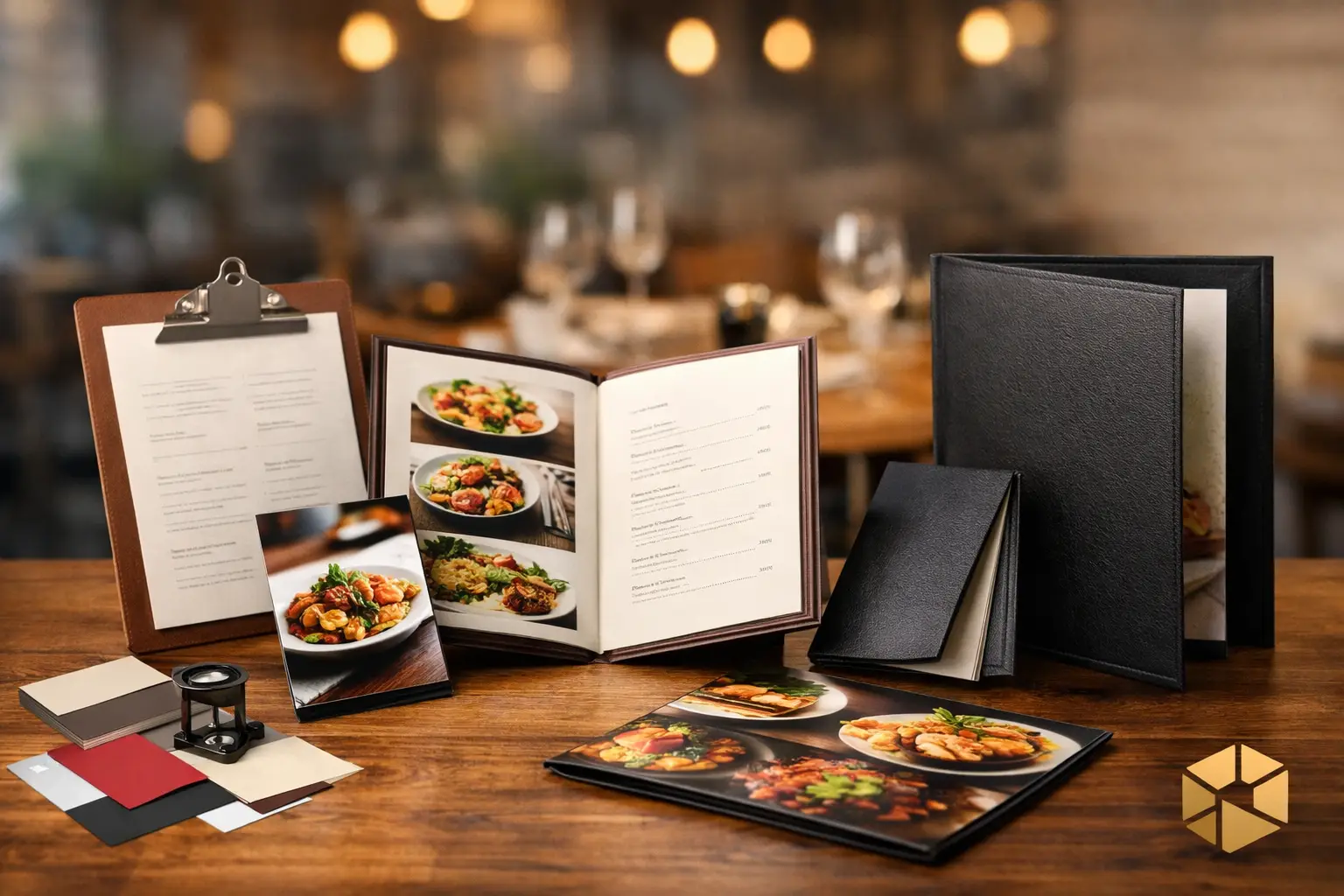
A menu that curls at the corners, smudges after a few cleanings, or feels flimsy in a guest’s hands sends a message before the food arrives. When owners ask about the best restaurant menu printing options, they are usually balancing three things at once: appearance, durability, and the reality of reprinting when prices or specials change.
The right choice depends on how your menu is used. A fine dining dining room, a busy family restaurant, a bar with frequent rotating taps, and a takeout-heavy counter service spot will not benefit from the same print setup. Good menu printing is less about picking the fanciest stock and more about matching materials and format to traffic, cleanup needs, and update frequency.
How to choose the best restaurant menu printing options
Start with daily use. If menus stay on tables through multiple seatings, they need to handle moisture, fingerprints, and regular sanitizing. If they are handed out once and discarded, cost per piece matters more than heavy-duty finishing. If your pricing changes often, you also want a format that does not force a full redesign every time one item moves by a dollar.
That is why menu printing should be treated as an operating decision, not just a design choice. Paper weight, coating, fold style, and print method all affect how the menu performs in service. A menu can look excellent on day one and still be the wrong fit if it slows staff down or requires constant replacement.
Flat paper menus for everyday flexibility
Flat menus are one of the most practical options for restaurants that update content regularly. They are simple to produce, easy to reorder, and cost-effective in moderate or larger runs. For breakfast spots, cafes, pubs, and casual restaurants, this format often gives the best balance of readability and value.
A flat menu also gives you room to scale. An 8.5 x 11 sheet works well for concise offerings, while larger sizes such as 11 x 17 provide more space without moving into booklet territory. The trade-off is durability. Without added protection, flat paper menus wear out quickly under heavy handling.
That is where stock and coating matter. A heavier text or cover stock gives the piece more substance, and a gloss or satin coating can improve resistance to moisture and surface marks. Gloss makes colors pop, but satin or matte can be easier to read under dining room lighting. If your menu includes many photos, gloss may work better. If it is text-heavy, a softer finish is often the smarter choice.
Folded menus when space is tight
Folded menus are useful when you need more sections without handing guests an oversized sheet. They are common for restaurants that serve lunch and dinner, offer extensive drinks, or want to separate desserts, specials, or catering information.
A bi-fold menu keeps things straightforward and easy to navigate. A tri-fold provides more panels, but it can feel crowded if the design is not carefully planned. That is the trade-off. Folding adds capacity, but too many panels can make the menu harder to scan, especially for first-time guests.
For restaurants with broad offerings, folded menus are often one of the best restaurant menu printing options because they preserve table space while organizing information more clearly. They also give you a more polished presentation than a single oversized sheet. Still, if your content changes weekly, repeated reprints of folded menus can become less economical than simpler formats.
Laminated menus for high-touch dining rooms
If your menus are used all day, every day, lamination deserves a serious look. Laminated menus are durable, easy to wipe down, and better suited to repeated handling than standard coated paper. Diners notice when a menu feels clean and sturdy, even if they do not think about the print process behind it.
This option makes sense for family restaurants, diners, pizza shops, and any operation where menus remain in circulation for longer periods. The downside is flexibility. Once laminated, a menu is not easy to revise. If your prices, beer list, or market items change often, fully laminated menus can become expensive to replace before they wear out.
A good middle ground is using laminated core menus for stable items and pairing them with separate inserts for seasonal changes or limited-time offers. That approach protects your main investment while keeping updates manageable.
Synthetic stock for moisture and wear
Some of the best-performing menus are printed on synthetic materials rather than traditional paper stocks. Synthetic menu stock resists tearing, water damage, and heavy wear, making it a strong choice for patio service, bar environments, poolside dining, or fast-paced restaurants where spills are common.
It costs more upfront than standard paper, but it often lasts much longer. That can make it more cost-effective over time, especially if you are replacing damaged menus every few weeks. Synthetic stock also feels different in the hand. Some restaurants like that more substantial, durable feel. Others prefer the familiar texture of paper for a warmer presentation.
This is a clear it-depends decision. If your brand leans upscale and tactile details matter, a premium paper with a protective finish may fit better. If survival in a high-spill environment is the priority, synthetic is hard to beat.
Booklet menus for larger offerings
Restaurants with extensive selections sometimes need booklet menus. Think large family restaurants, multi-page drink programs, sushi menus, or operations combining dine-in, takeout, catering, and specialty sections in one piece.
Booklets create structure. They make it easier to separate categories and maintain a cleaner layout, which helps customers make decisions faster. But they also come with higher production costs and more planning. A booklet only works when the content is stable enough to justify the investment.
If your menu changes frequently, a booklet can quickly become outdated. In that case, a cover with replaceable interior pages may be the better route. Many restaurants find that using printed covers plus updated inserts gives them the polished look of a booklet without full reprint costs every time the menu shifts.
Disposable and takeout menus still matter
Even with digital ordering, printed takeout menus remain useful. They travel home, sit on kitchen counters, and remind customers where to order next time. For restaurants that rely on pickup, delivery, or direct phone orders, a well-printed takeout menu is still a strong marketing piece.
These menus should prioritize clarity and affordability. Lighter stocks can work well here because they are meant for short-term use. The most common mistake is trying to fit too much onto a small sheet. Dense takeout menus may save paper, but they often lose orders when customers cannot quickly find what they want.
For this use, the best menu printing option is usually a clean flat format with strong readability and practical quantities. If you update pricing often, digital printing is especially useful because it supports shorter runs without forcing you into large-volume orders.
Paper, finish, and print method affect the result
Restaurants often focus on size and format first, but material choices shape the guest experience just as much. Heavier stock feels more substantial. Coatings affect wipeability and glare. Sharp digital printing improves small text and keeps brand colors consistent.
Shorter runs are typically best handled with digital production, especially when menus need periodic updates. Larger, stable orders may offer better unit pricing with other methods, but many restaurants benefit from the speed and flexibility of digital printing. That is especially true when seasonal revisions, event menus, or region-specific versions are part of the plan.
A local print partner can also help you avoid over-ordering. That matters more than many buyers expect. Ordering too many menus to save a few cents per piece does not help if a pricing update makes half the stack unusable.
Matching the menu to the restaurant
A steakhouse, coffee shop, brewery, and school cafeteria do not need the same menu solution. The best restaurant menu printing options are the ones that fit how your business actually operates.
If your menu changes rarely and gets heavy daily use, laminated or synthetic stock is a smart investment. If you run frequent specials or market pricing, flat or folded menus with shorter print runs are usually more practical. If presentation is central to the brand, premium stock and thoughtful finishing can elevate the experience without overcomplicating service.
For many restaurants in Kamloops and surrounding communities, the best results come from a mix rather than a single format. A durable dine-in menu, a lower-cost takeout menu, and a small printed insert for updates often work better together than trying to force one piece to do every job.
The strongest menu is not the one with the most expensive finish. It is the one that looks professional on the table, holds up in service, and stays easy to update as your business changes.