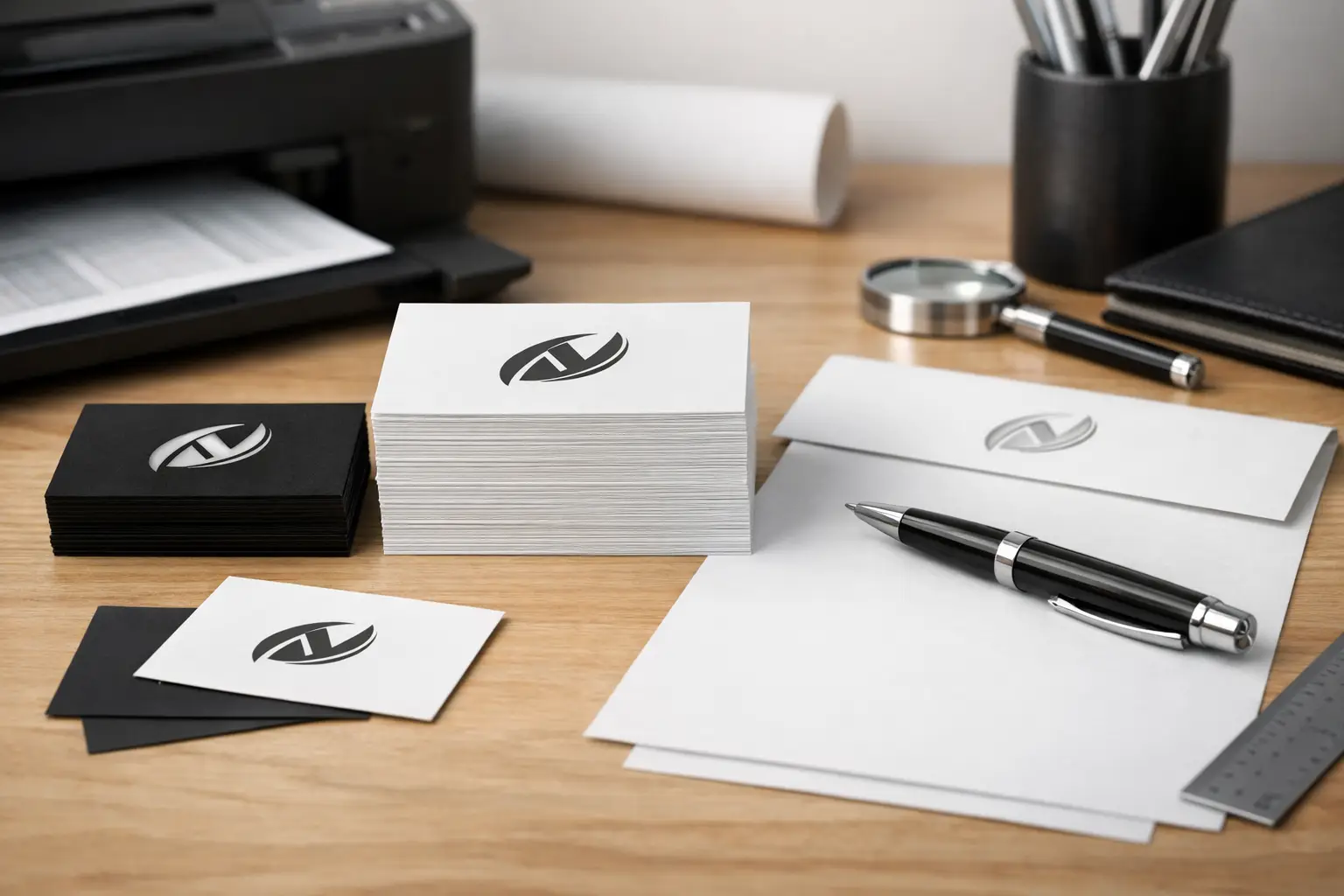
A missed detail on a business card gets noticed fast. So does a letterhead that looks slightly off-brand, an envelope that prints poorly, or a form that slows down staff because the layout was never quite right. Business cards and stationery printing may look simple from the outside, but for most organizations, these pieces do real work every day.
For small and mid-sized businesses, schools, nonprofits, and offices, printed materials still carry weight in ways digital tools cannot replace. A business card starts a conversation. A branded envelope adds credibility before the envelope is even opened. An invoice, purchase order, notepad, or presentation folder helps a team stay organized while reinforcing a professional image. When these pieces are planned properly, they support both brand consistency and day-to-day efficiency.
Why business cards and stationery printing still matters
There is a tendency to treat printed office materials as routine supplies. That usually leads to rushed decisions, inconsistent layouts, or reorders that never quite match the original. The better approach is to see print as part of how your business shows up in the market.
A business card is often the smallest piece in the package, but it can leave the strongest first impression. Weight, finish, readability, and print clarity all signal something about your standards. The same goes for letterheads and envelopes. If your materials look polished and consistent, clients assume your operation is organized. If they feel generic or mismatched, that impression can work against you.
There is also the practical side. Good stationery is not only about appearance. It should make internal processes easier. Forms need enough writing space. Invoices should be easy to read and file. Labels need to hold up in real working conditions. Presentation folders should fit the documents they are meant to carry. Strong print planning saves time long after the order is delivered.
What should be included in a stationery package?
The answer depends on how your organization operates. Some businesses only need business cards, letterheads, and envelopes. Others need a broader set of materials that support finance, sales, administration, and customer service.
A typical stationery package may include business cards, letterhead, envelopes, notepads, invoices, carbonless forms, labels, and presentation folders. For some companies, newsletters, brochures, menus, or booklets also belong in the same family because they are regularly used as part of customer communication. The right package is the one that reflects how your team actually works, not a standard checklist copied from another company.
This is where local guidance matters. A shop that handles a wide range of commercial printing can usually spot gaps before they become problems. Maybe your cards look great, but your envelope size does not suit your mailing needs. Maybe your forms need numbering, duplicate copies, or variable data. Maybe your front desk uses branded note pads constantly, but no one has thought to include them in regular ordering. A complete approach avoids piecemeal decisions.
Business cards and stationery printing should match your brand
Consistency matters more than decoration. The goal is not to make every item flashy. The goal is to make each piece clearly part of the same brand system.
That starts with the basics: logo placement, typefaces, color accuracy, spacing, and contact information. If those elements shift from one product to another, the result feels less professional even when the print quality is good. A card with one blue tone and a letterhead with another is a small mismatch, but customers notice more than many businesses expect.
It also helps to think about hierarchy. Not every printed piece has the same job. A business card needs fast readability. A letterhead should look clean and formal. An invoice needs structure and clarity first. A presentation folder has more room to support visual branding. Matching your brand does not mean using the same layout everywhere. It means making sure every piece feels connected.
Paper, finish, and format are not minor details
These choices affect both perception and usability. A heavier stock on a business card usually feels more substantial, but there is a point where thicker does not necessarily mean better. If the card is difficult to write on or does not fit standard holders comfortably, the premium feel may come with a trade-off.
For stationery, usability often matters more than dramatic finishes. Letterheads and forms need to run cleanly through office printers if they will be overprinted later. Envelopes need suitable paper and adhesive for mailing. Notepads should be easy to write on without ink smearing. Gloss may look sharp on some marketing pieces, but an uncoated sheet is often the better choice for office use.
Size and format deserve equal attention. Standard sizes usually keep costs under control and simplify filing, mailing, and storage. Custom sizes can stand out, but they should serve a real purpose. If a non-standard format creates extra postage costs or awkward handling, the visual difference may not be worth it.
The cost question: where to spend and where to simplify
Most organizations are balancing quality, quantity, and budget. That is normal. The key is knowing where quality has the biggest impact.
Business cards are usually worth doing well because they are directly tied to personal introductions and sales conversations. Letterhead and envelopes also carry visible brand value, especially for firms that send proposals, contracts, statements, or formal correspondence. Internal forms, on the other hand, may not need premium paper if function is the priority.
This is where experienced print advice helps. You may be able to simplify one item so you can improve another. You may choose a more economical stock for high-volume forms while keeping a stronger finish for customer-facing pieces. You may also save money by planning several related items together instead of ordering in small disconnected batches.
Why one print partner usually works better
Managing business cards with one supplier, forms with another, and promotional materials somewhere else often leads to inconsistency. It also takes more staff time than many offices realize. Different files, different reorder processes, different quality standards, and different turnaround expectations create unnecessary friction.
A full-service printer can make that easier. When one partner handles business cards, stationery, brochures, labels, signage, and even branded apparel or promotional products, your brand standards are easier to maintain. Reorders are faster because the files and specifications are already on hand. Questions get answered by a team that understands your history, your preferences, and your deadlines.
For organizations in Kamloops and the surrounding area, that local relationship can be especially valuable when timelines are tight or projects need hands-on attention. A dependable print partner is not just producing pieces. They are helping your business stay organized and present itself well.
Common mistakes that lead to reprints
Most print problems are avoidable. Outdated contact information is one of the most common issues, especially on business cards. Another is sending artwork that was built for screen use rather than print, which can affect sharpness and color. Inconsistent logo files also create trouble, particularly when different departments place separate orders.
There are also functional mistakes. A form may look fine on screen but fail in actual use because spacing is too tight. An envelope design may ignore postal requirements. A presentation folder may not fit the booklet it is meant to hold. These issues are rarely dramatic, but they create waste and frustration.
Proofing matters here. Not just proofreading for spelling, but reviewing the piece as a working tool. Can staff use it easily? Does it match existing materials? Will it print, fold, write on, or mail the way it needs to? Those questions matter just as much as visual design.
Planning for reorders saves time later
The best stationery systems are easy to maintain. That means setting standard specs, confirming approved artwork, and thinking ahead about reorder cycles. If your office regularly goes through cards, invoices, labels, or notepads, it helps to have consistent formats and a reliable production plan.
Variable data can also improve efficiency when names, departments, branch details, or numbering need to change from one set to the next. Instead of rebuilding materials every time, your printer can work from a system that keeps the overall look consistent while updating the details that need to change.
That kind of planning is especially useful for growing businesses, multi-person sales teams, schools, and organizations with several departments. It reduces delays, limits errors, and keeps your printed materials aligned over time.
The best printed pieces are not always the fanciest ones. They are the ones that look right, work hard, and arrive when you need them. When your business cards and stationery are built with that standard in mind, they stop being just office supplies and start doing what good print should do – support your business every day.