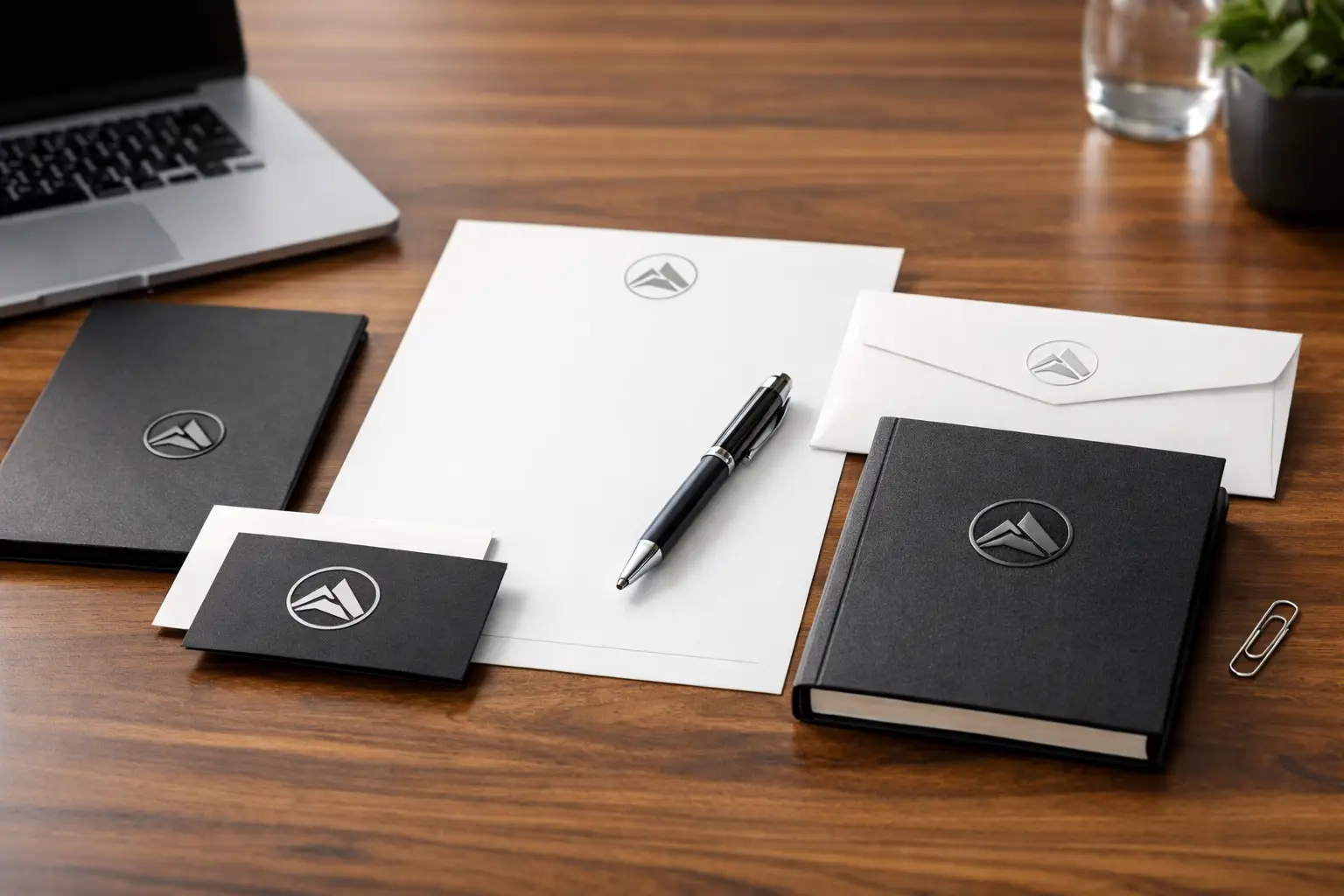
A handwritten note on a generic pad, an invoice with mismatched fonts, and an envelope that does not match the letter inside all send the same message – this business stationary was treated as an afterthought. Customers notice more than most companies expect. They notice when printed materials feel organized, consistent, and credible, and they notice when they do not.
For many businesses, business stationary is still doing real work every day. It shows up in quotes, invoices, letterheads, forms, presentation folders, and envelopes. Even in offices that rely heavily on email and digital files, printed materials remain part of sales conversations, internal workflows, customer communication, and brand presentation. When those pieces are handled properly, they support both professionalism and efficiency.
What business stationary really includes
The term gets used loosely, but in practice business stationary usually refers to the printed office materials a company uses repeatedly. That often starts with letterheads, envelopes, notepads, invoices, carbonless forms, business cards, labels, and presentation folders. For some organizations, it also includes appointment cards, purchase orders, receipt books, internal forms, and branded inserts.
The key difference is function. These are not one-time promotional pieces. They are operational print materials that move through the business every week. Because they are used often, small design or print issues become expensive fast. A form that is hard to read slows staff down. An envelope window placed incorrectly causes mailing problems. A letterhead with poor reproduction weakens the presentation of every document that leaves the office.
That is why business stationary should be planned as a system rather than ordered item by item with no connection between them.
Why business stationary still matters
A lot of companies assume printed stationery matters less now because so much communication is digital. That is only partly true. The volume may be lower than it once was, but the importance of each printed touchpoint is often higher.
When a prospect receives a printed proposal in a clean folder, when a customer signs a clearly designed work order, or when a donor receives a letter on proper letterhead, the material carries weight. It signals that the organization pays attention to details. In industries where trust matters – legal, construction, healthcare, education, finance, trades, nonprofits, and local services – that signal still counts.
There is also a practical side. Printed materials create consistency across teams. If staff members are pulling forms from different templates, printing homemade labels, or ordering cards from different sources, the result is not just visual inconsistency. It creates mistakes, reordering headaches, and extra admin work.
Good stationery helps a business stay organized. Great stationery does that while reinforcing the brand every time it is used.
The most common problems with business stationary
Many companies do not have a stationery problem because they lack branding. They have a stationery problem because their materials grew over time without a plan.
One common issue is inconsistency. The logo looks different on the envelope than it does on the invoice. Contact details are outdated on one form but correct on another. Paper stocks vary. Colors shift from piece to piece. These seem minor until they appear together in a client package.
Another issue is ordering purely on price. Cost matters, especially for recurring items, but the lowest-cost option is not always the lowest-cost result. Thin paper can feel insubstantial. Poor registration makes forms look sloppy. Weak color control affects logos and branded elements. If a job has to be reprinted or staff avoid using it because it looks poor, the savings disappear.
There is also the problem of overordering or underordering. Ordering too much ties up budget and storage space. Ordering too little creates rush situations and interruptions. This is where working with an experienced print provider makes a difference. The right quantities depend on usage patterns, versioning, and how often details change.
How to build a better stationery set
The best approach starts with identifying what your team actually uses. Not what used to be used five years ago, and not what seems standard for every business, but what supports your current workflow.
A professional stationery set often begins with business cards, letterhead, envelopes, and at least one core form such as an invoice, quote sheet, intake sheet, or work order. From there, it can expand based on the business. A contractor may need carbonless forms and job folders. A school or nonprofit may need newsletters, donation forms, and event inserts. A clinic may need appointment cards, labels, and patient-facing forms.
Once the core pieces are clear, design consistency becomes the next priority. The logo, fonts, spacing, and color use should work together across every item. This does not mean every piece needs to be identical. It means they should clearly belong to the same organization.
Paper choice matters more than many buyers expect. A letterhead should run well through office printers if it will be used for overprinting. Envelopes need the right size, seal, and window position if they are part of billing or mailing systems. Forms need to match how they are filled out, handled, and filed. Glossy stock may look sharp on a card, but it is often a poor choice for something that needs to be written on.
Business stationary and brand trust
Brand trust is built in small moments. A polished sales meeting matters, but so does the envelope that arrives before it and the document left behind after it. Business stationary supports those moments quietly.
This is especially true for local organizations that depend on repeat business and referrals. People may not talk about your letterhead directly, but they do form impressions from it. Printed materials that look considered and consistent suggest a business that is established, prepared, and dependable.
That does not mean stationery has to be flashy. In fact, the opposite is often better. Clean design, readable type, quality stock, and accurate color usually outperform trendy layouts. The goal is clarity and confidence, not decoration.
When customization makes sense
Not every stationery order should be a standard run. Some businesses benefit from custom numbering, variable data, versioned forms, or department-specific sets. This is especially helpful when materials serve both branding and operational needs.
For example, a company with multiple staff members may want personalized business cards but standardized notepads and letterhead. A nonprofit may need event-specific response forms without changing its main stationery system. A business with field crews may need duplicate or triplicate carbonless forms with job tracking numbers.
These details affect how smoothly the materials work in day-to-day use. They also influence how efficiently reorders can be managed. Customization is worthwhile when it supports workflow, accuracy, or customer experience. It is less useful when it is added only for appearance.
Why working with one print partner helps
Stationery is easier to manage when it is not scattered across multiple vendors. Using one provider for business cards, forms, folders, envelopes, labels, and related print pieces improves consistency and saves time. It also gives you a better chance of keeping colors, file versions, and specs under control.
For businesses in Kamloops and surrounding communities, that local relationship can be especially valuable. Questions get answered faster. Reorders are simpler. Adjustments can be made before a small issue turns into a larger one. Noran Printing works with many organizations that want exactly that kind of practical support – dependable production, clear communication, and print materials that perform the way they should.
A good print partner does more than take orders. They help spot problems before they affect the finished piece. They can recommend stock changes, quantity adjustments, and format improvements based on how the item will be used. That kind of guidance matters most with recurring operational materials, where one smart decision can improve every reorder that follows.
A smarter way to review your current stationery
If your printed materials have not been reviewed in a while, start with a simple audit. Pull every regularly used item into one place and compare them. Look at logos, addresses, phone numbers, colors, margins, and paper stocks. Ask whether each item still serves a real purpose and whether staff are using the current version.
You may find that one outdated form is causing more friction than expected. You may also find gaps, such as the need for presentation folders, branded notepads, or cleaner invoice design. Often the biggest improvement is not a full rebrand. It is tightening up the details on the materials already in circulation.
Business stationary works best when it feels ordinary to your team and impressive to the people receiving it. That balance is the mark of a well-run print system. If your materials support the work, reflect the brand properly, and hold up under daily use, they are doing exactly what they should – helping your business look ready before you say a word.