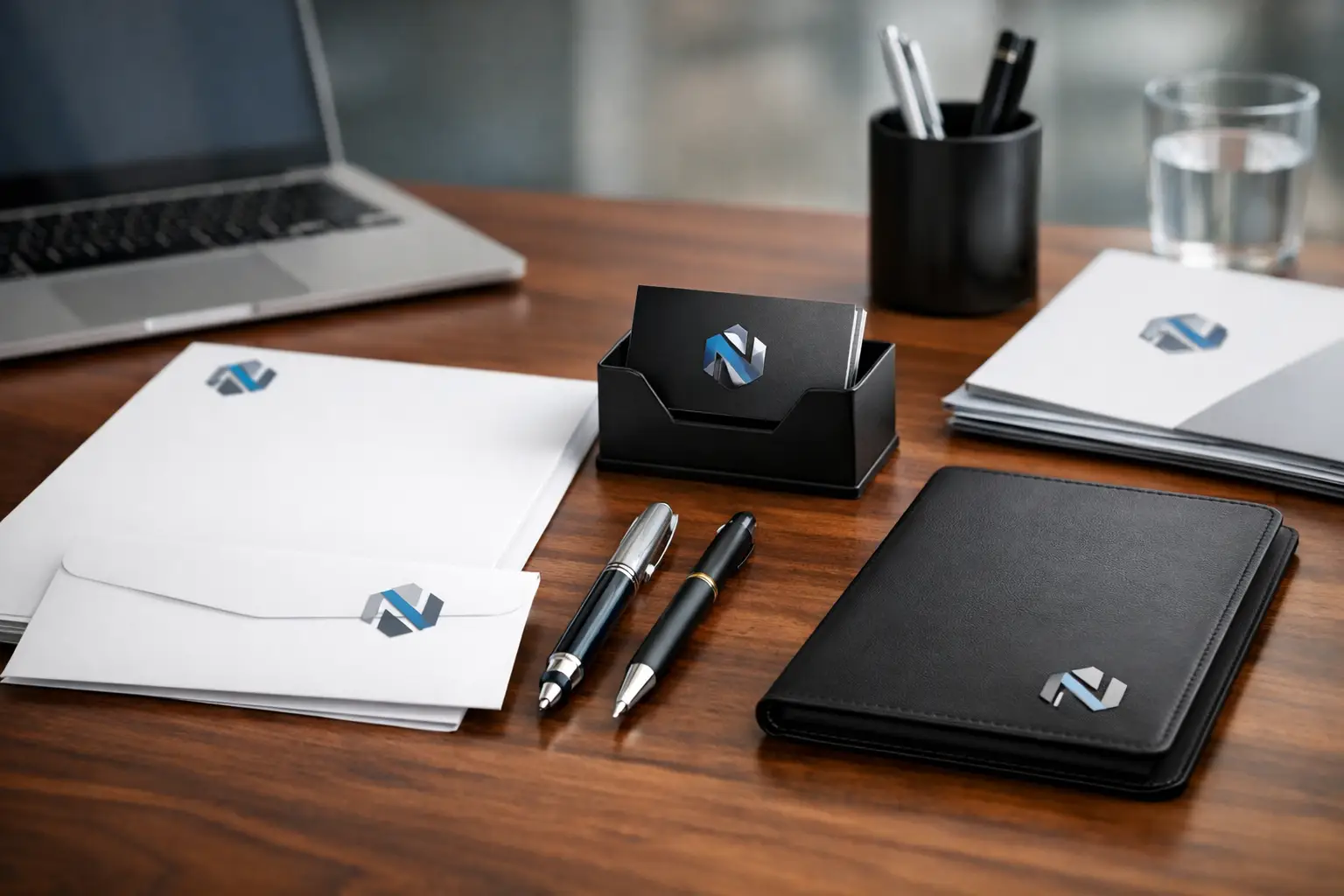
A mismatched letterhead, a low-quality envelope, and a business card that feels nothing like the rest of your brand can send the wrong message before a conversation even starts. Business stationery printing is not just about putting a logo on paper. It is about creating a set of materials that makes your company look organized, established, and ready to do business.
For many companies, stationery still plays a daily role in quotes, invoices, contracts, presentation folders, forms, and direct mail. Even in offices that run mostly digital, printed materials show up at key moments – the moments when professionalism matters most. A polished stationery package gives your team consistency, helps customers recognize your brand, and supports the kind of detail that people notice.
What business stationery printing includes
Business stationery printing usually covers the core printed pieces a company uses for communication and operations. That often starts with business cards, letterheads, and envelopes, but it rarely ends there. Many organizations also need invoice books, carbonless forms, notepads, labels, presentation folders, inserts, and branded sheets for proposals or internal use.
The right mix depends on how your business operates. A contractor may need work order forms and quote sheets. A medical office may need appointment cards and privacy forms. A nonprofit may rely on donation forms, event handouts, and thank-you cards. The goal is not to print everything possible. It is to print the materials your team actually uses, in a way that supports daily workflow and presents a clear, consistent brand.
Why business stationery printing still matters
Printed stationery does a job that digital files cannot always replace. It creates a physical impression. When a customer receives a professionally printed letter or invoice, the business behind it feels more established. When staff hand over a clean, well-made business card, it says the company pays attention to details.
That matters because buyers often judge reliability through small signals. They notice paper weight, print sharpness, color accuracy, and whether all the pieces look like they belong together. If your envelope uses one logo version, your card uses another, and your forms look generic, it can make the business feel fragmented.
There is also a practical side. Good stationery supports efficiency. Well-designed forms are easier to complete. Properly set up envelopes run better through office equipment. Presentation folders help sales teams keep documents organized. A notepad with contact details built in can save time and reduce repeat questions. Business stationery is part branding, part operations.
The difference between basic print and professional stationery
Not all printed stationery performs the same way. The difference usually comes down to setup, material choices, and print quality. A business card printed on thin stock may save money upfront, but it can undermine the impression you want to make. A letterhead that looks fine on screen may produce poor results once it goes through a desktop printer if the file was not built correctly.
Professional business stationery printing takes these real-world uses into account. It looks at how pieces will be handled, mailed, written on, filed, or inserted into folders. It also considers consistency across the full set. Colors should match from one item to the next. Typography should stay uniform. Logos should reproduce clearly at different sizes.
This is where working with an experienced print provider makes a difference. It is not just about running a file. It is about making sure the final product works as intended and reflects your business properly.
Choosing the right stationery set for your business
The best place to start is with use, not design trends. Ask what your staff reaches for most often. If your office sends formal correspondence, letterheads and envelopes may be essential. If your sales team is client-facing, business cards and presentation folders may matter more. If your operation depends on paperwork, forms and invoices should be a priority.
After that, think about frequency. Some items need larger quantities because they move quickly. Others are better ordered in smaller runs, especially if names, titles, or contact details may change. This is where digital printing can be especially useful. It allows businesses to print what they need without overcommitting to large inventory.
There is also room for tiered quality. Not every item needs premium stock, but some pieces should feel stronger because they carry more weight with customers. Business cards, presentation folders, and client-facing correspondence often deserve more attention than internal forms. A good print shop can help you balance appearance, function, and budget without overbuilding the job.
Paper, finish, and print details that affect results
Paper choice changes more than appearance. It affects durability, writability, mailing performance, and overall feel. Uncoated stocks are often a smart choice for letterheads and forms because they are easy to write on and work well with office printers. Heavier cover stocks are better suited for business cards and folders where stiffness adds value.
Finish matters too. A smooth, clean finish can look refined and professional. A heavier texture may suit some brands, but it can also affect how small text or fine lines reproduce. If your stationery includes forms, NCR sets, or variable data, those production needs should shape the paper choice from the start.
Then there is color. Brand consistency is not always as simple as using the same logo file. Different papers and print methods can shift the final look. If your brand relies on specific colors, quality control becomes important. That is one reason local businesses often prefer working with a shop that can review proofs, discuss expectations, and maintain a higher level of consistency from order to order.
When customization makes business stationery more useful
Customization is one of the most practical advantages in modern business stationery printing. It can be as simple as adding department-specific contact information or as advanced as variable data printing for personalized names, account numbers, or location details.
This is especially useful for companies with multiple staff members, service categories, or recurring form needs. Instead of using generic templates for everything, you can print materials that are tailored to how the business actually runs. Personalized stationery often reduces handwriting, improves legibility, and makes the experience better for both staff and customers.
It also helps with growth. As your business expands, standardized but flexible stationery gives you a cleaner way to onboard new staff, support new divisions, or refresh contact details without rebuilding your entire printed system.
Working with one print partner saves time
Many businesses do not need just stationery. They also need brochures, labels, signage, promotional products, booklets, and event materials. Managing those items through multiple vendors often creates delays, inconsistency, and extra back-and-forth.
That is why a one-stop print shop model works so well for many organizations. When your print partner understands your brand files, preferred materials, and usual timelines, reordering becomes easier. Quality stays more consistent. Problems get solved faster. For businesses in Kamloops and surrounding communities, that kind of dependable local support can make recurring print work much easier to manage.
Noran Printing serves many organizations that want that kind of continuity – not just a printer, but a reliable production partner that can handle everyday stationery along with larger branded projects when needed.
Common mistakes to avoid with business stationery printing
One of the most common mistakes is treating each item as a separate order instead of part of a full set. That often leads to inconsistent branding. Another is choosing the cheapest option without thinking about use. Thin paper, poor registration, and weak design setup can cost more later when materials need to be replaced.
It is also easy to overorder. Contact information changes, staff changes, and branding evolves. Some items make sense in bulk, but others are better printed in smaller quantities. The right quantity depends on how stable the information is and how quickly the item moves.
Finally, do not overlook proofs. A proof is where spacing, spelling, alignment, and color concerns get caught before production. For stationery, those small details matter because the finished pieces are often used in formal, customer-facing situations.
A better standard for everyday print
Business stationery should make daily work easier and every customer touchpoint more professional. When the materials are well planned, well printed, and consistent across the board, they do more than look good. They support trust.
If your current stationery feels pieced together, outdated, or inconsistent, that is usually a sign it is time to review the full set instead of reordering one item at a time. A careful print approach pays off in presentation, organization, and day-to-day efficiency. The best stationery is not flashy. It is dependable, practical, and ready to represent your business every time it leaves the office.