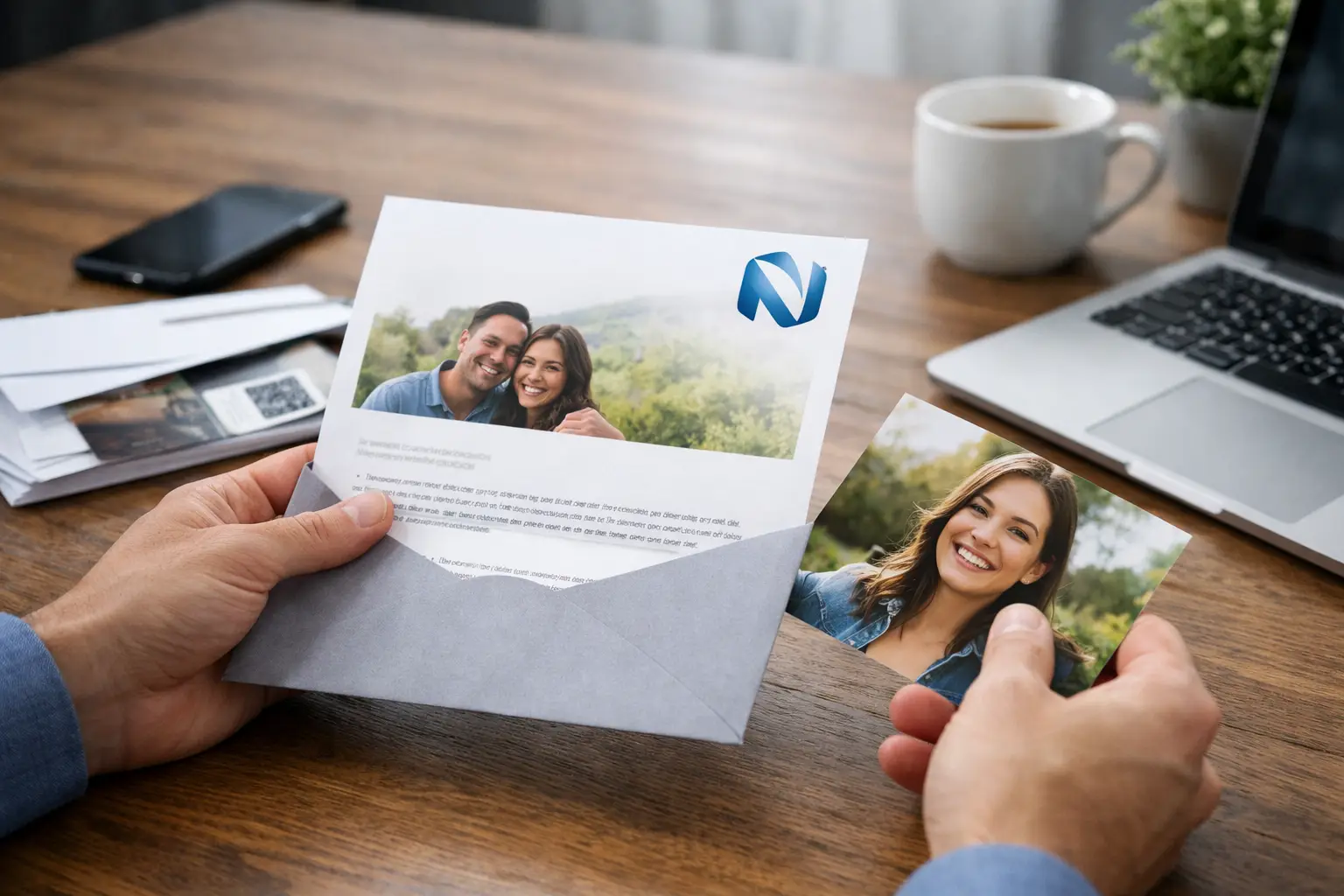
A postcard addressed to “Current Resident” may reach a mailbox, but it rarely feels like it was meant for the person holding it. A well-planned case study direct mail personalization campaign shows the difference: the same printed piece can become far more relevant when the message, offer, and timing reflect what the recipient actually needs.
For local businesses and organizations, personalized direct mail is not about adding a first name to the top of a postcard and hoping for the best. It is about using customer information responsibly to create a useful reason to respond. When the data is accurate and the print is executed consistently, direct mail becomes a practical tool for bringing customers back, filling appointments, promoting seasonal services, and strengthening relationships.
What This Direct Mail Personalization Case Study Shows
Consider a representative scenario involving a local home services company. The business has a solid customer list, but repeat work is inconsistent. Some customers booked a furnace tune-up last fall, others called for emergency repairs, and some requested estimates but never moved forward. Sending one generic mailer to all of them would be simple, but it would also treat three very different groups exactly the same.
Instead, the company divides its list into three segments. Recent maintenance customers receive a reminder for the next recommended service interval. Past repair customers receive an offer for a preventative inspection. Estimate-only contacts receive a message that addresses the service they asked about, along with a clear deadline for a limited-time offer.
The design remains on-brand across all versions. The logo, colors, contact information, and core message are consistent. What changes is the recipient name, service reference, offer, call to action, and in some cases, the image or headline. Variable data printing makes these differences possible within one coordinated production run.
The campaign does not need to be complicated to work. Its advantage comes from relevance. A homeowner who sees a reminder tied to a service they previously requested has a more credible reason to pay attention than someone receiving a broad message that could apply to anyone.
The result to look for is response quality, not just volume
A campaign like this should not be judged only by how many postcards are mailed. The useful measures are inquiries, booked appointments, redeemed offers, quote requests, and revenue connected to the campaign. A smaller list with a higher response rate can be more valuable than a large, untargeted mail drop.
This is especially true for businesses with high-value services, recurring customer needs, or a limited local service area. Printing fewer pieces with better targeting can reduce wasted spend while making the offer feel more timely.
Personalization Starts With a Clean Customer List
The quality of a personalized mail campaign is tied directly to the quality of the information behind it. Before a design is approved, take time to review names, mailing addresses, postal codes, customer categories, and the fields that will appear on the printed piece.
For example, a dental office may organize its list by patients due for checkups, families with multiple appointments, and inactive patients who have not visited in more than a year. A restaurant may separate frequent customers from nearby households that have not yet tried a new menu. A school or community organization may tailor its communication by grade, program, event history, or donor status.
The data should be current, appropriate, and limited to information that supports the message. Personalization can feel helpful, but it can also feel intrusive if it references details a recipient does not expect to see. Use information customers have willingly provided, keep the message professional, and avoid overly specific language when a broader reference will do the job.
Address accuracy matters just as much. Undeliverable mail adds cost and can create a poor impression. Reviewing the list before production helps reduce duplicates, outdated records, incorrect unit numbers, and formatting problems that could interfere with mailing.
Make the Offer Match the Recipient
A name alone is not a strategy. The best personalized campaigns connect the recipient to a relevant next step.
A fitness studio might send a returning-member offer to former members while offering a first-class promotion to prospects. An auto shop could send tire rotation reminders based on a customer’s last service date, then use a different message for customers due for seasonal maintenance. A nonprofit can recognize prior supporters and invite them to participate in the next local initiative.
The offer does not always need to be a discount. Depending on the business, it may be a reminder, a complimentary consultation, early registration, a service deadline, a new product announcement, or an invitation to an event. The right choice depends on the customer relationship and the value of the action you want them to take.
Keep the call to action simple. Ask the recipient to call, scan a QR code, visit in person, return a form, or bring in the mailer. One primary action is usually stronger than asking people to do several things at once.
Design Still Does the Heavy Lifting
Personalized information gets attention, but design determines whether the piece is easy to understand. The message should be clear within a few seconds: who is contacting the recipient, why the mailer matters, what the offer is, and how to respond.
A postcard is often an effective format for straightforward promotions because the message is visible immediately. A letter package may be better when the offer needs explanation, documentation, or a more formal approach. Folded brochures can work well for services with several options, while a personalized folder or booklet may suit a higher-value sales presentation.
Variable data printing can also support customized images, promotional codes, maps, or location-specific details. Still, more variation is not always better. Every added version requires more planning, more data review, and careful proofing. For many campaigns, changing the headline, recipient name, offer, and response code provides enough relevance without making production unnecessarily complex.
Professional color consistency is also worth protecting. When a campaign includes postcards, envelopes, follow-up materials, signage, and promotional items, the brand should look like one organization across every piece. Reliable print production keeps that experience consistent.
Test Before Scaling Up
Direct mail offers a major advantage over broad advertising: it can be measured. Use a unique offer code, dedicated phone number, QR code, landing-page reference, or customer response field to identify which version produced the inquiry.
If the list is large enough, test one meaningful variable at a time. You might compare two headlines, two offers, or a postcard against a letter. Avoid changing the audience, format, offer, and message all at once. If everything changes, it becomes difficult to know what influenced the result.
A reasonable first campaign can be a controlled mailing to a defined segment rather than the entire database. This gives the business a chance to review response patterns and improve the next run. It also helps determine whether the audience needs a stronger offer, a different message, or better timing.
Timing depends on the industry. Seasonal services need advance notice. Appointment-based businesses may benefit from reminders near a recommended service interval. Event organizers need enough lead time for recipients to plan, but not so much that the invitation gets forgotten. The strongest schedule comes from customer behavior, not a generic mailing calendar.
Where Local Print Support Makes a Difference
A personalized campaign has several moving parts: data preparation, variable fields, design setup, proofing, print quality, finishing, and mailing coordination. When any one of those pieces is rushed, the campaign can lose credibility.
Working with an experienced local print partner gives businesses a practical point of contact for decisions about format, paper stock, quantities, personalization fields, and turnaround. For organizations in Kamloops and surrounding communities, Noran Printing can help bring business printing, variable data projects, promotional materials, and related campaign pieces together under one roof.
That support is particularly valuable when a campaign includes more than a mailer. A personalized postcard can be reinforced by matching counter cards, appointment forms, presentation folders, event signage, or branded apparel for staff. Consistent materials make the promotion easier to recognize wherever customers encounter it.
The best place to begin is not with a large mailing quantity. Start with a customer group you understand, an offer that solves a real need, and a way to track responses. When each printed piece gives its recipient a clear reason to act, personalized direct mail earns its place in the marketing plan.