A table full of giveaway items can look impressive at an event, but most businesses are not trying to impress a table. They are trying to stay visible after the event is over. That is why the best corporate swag ideas are not the cheapest items in bulk or the trendiest products on a vendor sheet. They are the pieces people actually keep, use, and connect with your brand.
For business owners, office managers, school administrators, and event coordinators, swag works best when it supports a real goal. Sometimes that goal is attendance. Sometimes it is staff recognition. Sometimes it is getting your name back into a customer’s office, vehicle, or home. The right item depends on who will receive it, how often they will use it, and whether your logo belongs on something practical or something more promotional.
What makes corporate swag ideas worth ordering
Useful always beats flashy over the long run. A branded item earns its value when it stays in circulation. If someone uses your pen for three months, carries your tote every week, or wears your embroidered cap on weekends, your business gets repeated exposure without having to ask for attention again.
That does not mean every item needs to be premium. Budget still matters, especially for schools, nonprofits, and businesses ordering for large events. The better question is whether the item fits the audience. A low-cost handout can work well at a busy trade show. A staff anniversary gift or client thank-you item needs a little more staying power.
Print quality matters here too. A useful product with a faded logo, poor alignment, or weak stitching does not help your reputation. Swag reflects the same standards as your business cards, forms, signage, and presentation materials. If the branding looks rushed, people notice.
15 corporate swag ideas that hold their value
1. Branded pens
Pens remain one of the most practical promotional products because they move. They get picked up at reception desks, tucked into meeting folders, and shared between coworkers. They also pair naturally with printed materials like notepads, presentation folders, and forms.
The trade-off is simple. Cheap pens disappear fast and may not write well. A slightly better pen usually delivers more brand exposure because people keep it longer.
2. Notepads and memo pads
For offices, schools, and service businesses, paper still has a place. Branded notepads are useful at front desks, in meeting rooms, and as leave-behind items for clients. They are especially effective for organizations that want branding tied to everyday operations instead of novelty.
This is also one of the easiest products to customize with contact details, appointment reminders, or service notes.
3. Tote bags
A good tote bag keeps working long after an event ends. People use them for groceries, paperwork, trade show materials, library books, and daily errands. That makes them one of the stronger choices when you want repeated visibility in public settings.
The key is quality and design. A bag that feels flimsy often gets tossed into a closet. A sturdy tote with clean printing has much better staying power.
4. Water bottles
Reusable water bottles are a strong fit for employee programs, schools, fitness-related organizations, and community events. They offer solid perceived value and regular use, especially when the bottle style feels current and durable.
This category has more cost range than many buyers expect. Basic bottles work for volume giveaways. Higher-end insulated options make more sense for staff gifts or preferred clients.
5. Mugs and tumblers
Desk-friendly swag has an advantage because it stays visible during the workday. Mugs and tumblers are often used in offices, at home, and during commutes. They are familiar, practical, and easy to brand well.
It depends on your audience, though. A ceramic mug can feel right for office appreciation gifts, while a travel tumbler may suit field teams or active professionals better.
6. T-shirts
Branded apparel can create reach that few other items match, but only if people want to wear it. A shirt with a large promotional graphic may work for event volunteers. A cleaner design with a smaller logo is more likely to become part of someone’s regular rotation.
Fabric quality matters. If the shirt is uncomfortable or the print feels heavy, the brand exposure ends quickly.
7. Embroidered caps
Caps are one of the most reliable apparel choices for broad audiences because sizing is simpler and the product feels casual and usable. They work well for staff uniforms, community events, outdoor businesses, sports groups, and corporate giveaways.
Embroidery tends to give caps a more finished, durable look, especially for logos that need a professional presentation.
8. Hoodies and crewnecks
For employee appreciation, school spirit wear, and higher-value promotional campaigns, branded sweatshirts can make a strong impression. They cost more than basic giveaway items, but they also tend to be kept longer.
This is a better fit for internal culture, team identity, or targeted gifting than for mass distribution.
9. Laptop sleeves or tech pouches
If your audience includes office staff, remote workers, students, or administrative teams, a practical tech accessory can be a smart move. Tech pouches are useful without being overly expensive, and they align well with modern work habits.
These items benefit from clean branding. A subtle logo usually feels more professional than an oversized imprint.
10. Phone stands or desk accessories
Simple desk items can be surprisingly effective because they stay in view. A phone stand, mouse pad, or cable organizer can earn daily use in offices and home workspaces.
The appeal here is consistency rather than excitement. These are not dramatic giveaways, but they can keep your brand present in a quiet, dependable way.
11. Calendars
A well-designed calendar still works, especially for businesses that want year-round visibility. It suits offices, service providers, schools, and organizations with repeat client contact. When done well, it becomes both a functional item and a branding piece.
The challenge is timing. Calendars are seasonal, so they need to be planned and ordered early enough to be useful.
12. Stickers and decals
For certain audiences, especially schools, youth programs, and event attendees, stickers can be an easy add-on. They are affordable, light, and simple to distribute in volume.
They are not a standalone premium swag strategy, but they can support a broader package well.
13. Lanyards
Lanyards remain practical for conferences, staff IDs, schools, and community events. They are one of those products that make more sense in operational settings than as general lifestyle swag.
That is the main decision point. If people need them, they work. If they do not, they become clutter.
14. Printed folders with branded inserts
Not every swag item needs to be a novelty product. For professional meetings, recruitment events, onboarding packages, and presentations, branded folders with useful printed inserts can do more for your image than a random giveaway item.
This is especially true when your audience expects polished business materials. A thoughtful folder package signals organization and credibility.
15. Combo kits
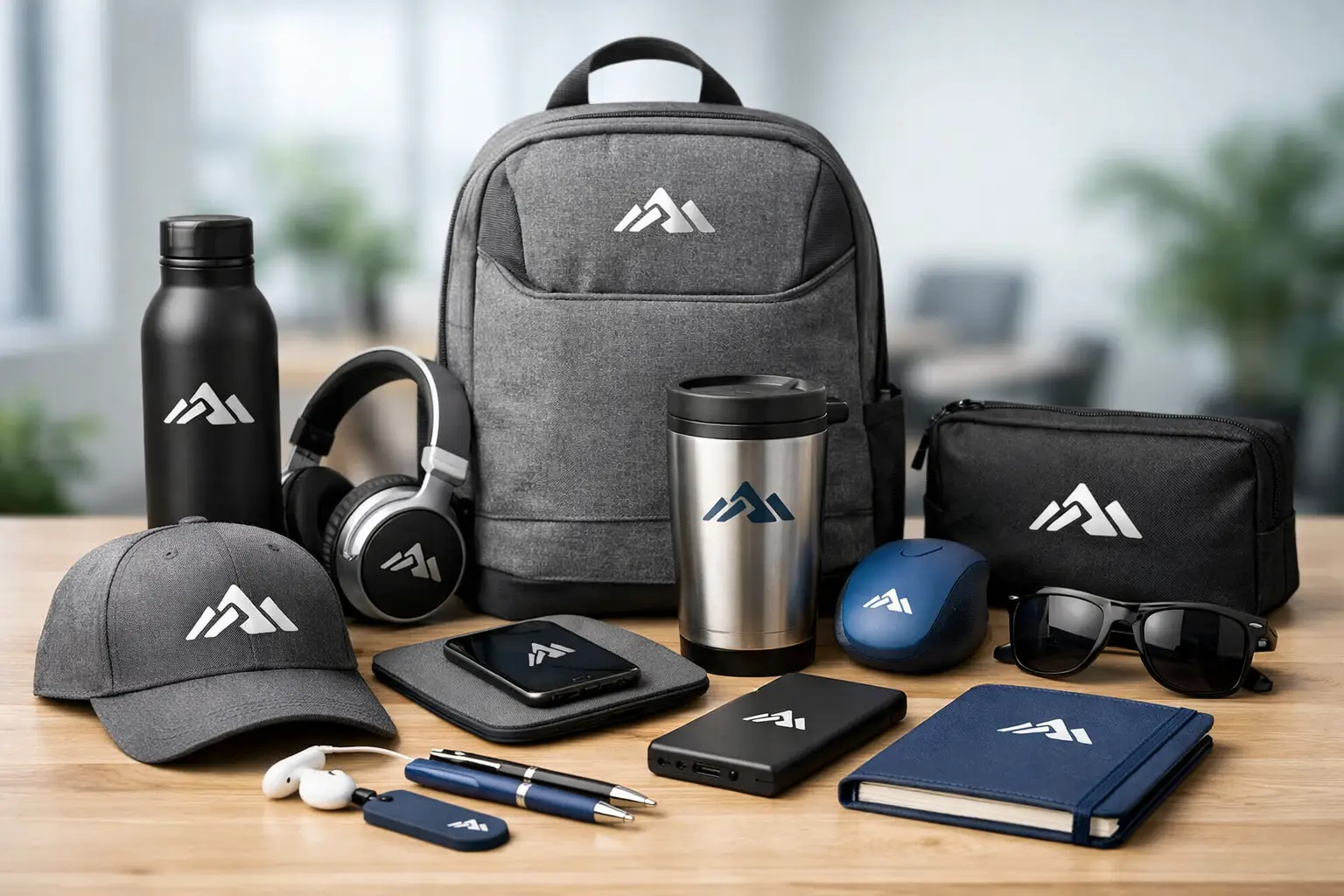
Sometimes the best option is not one item but a small branded set. A notebook, pen, and mug can make a strong employee welcome kit. A tote with a brochure, notepad, and water bottle works well for events. Combining products can raise perceived value without requiring a premium item in every slot.
The important part is consistency. The kit should feel intentional, not like leftover pieces combined to meet a budget.
How to choose the right corporate swag ideas for your audience
Start with use case, not product category. A giveaway for a public event has different needs than a staff gift, donor package, school orientation kit, or client thank-you. If you begin by asking what people will actually do with the item, your choices become much clearer.
Audience matters just as much as budget. Office teams usually respond well to desk items, drinkware, and practical paper products. Field crews may get more value from caps, outerwear, and durable bottles. Schools and community groups often need products that are affordable, easy to distribute, and appropriate for a wide age range.
Branding style deserves attention too. Some logos work well embroidered on apparel. Others show better in print on paper goods, totes, or drinkware. If your logo has fine detail, gradients, or small type, it may need adjustment depending on the product.
Why one vendor often makes the process easier
Swag rarely lives on its own. It is usually tied to brochures, event signage, forms, handouts, folders, postcards, or apparel. When those pieces are handled together, the brand presentation is more consistent and the ordering process gets simpler.
That is one reason many businesses prefer a one-stop local print partner. You can align colors across print and promotional products, ask practical questions about quantities and timelines, and avoid juggling separate suppliers for paper materials, apparel, and event items. For organizations in Kamloops and surrounding communities, that local coordination can save time when deadlines are tight or details change late in the process.
Good swag should feel like an extension of your business, not an afterthought. If the item is useful, well produced, and right for the audience, it keeps working long after the handoff. The best choice is usually the one people reach for without thinking, and see your name every time they do.