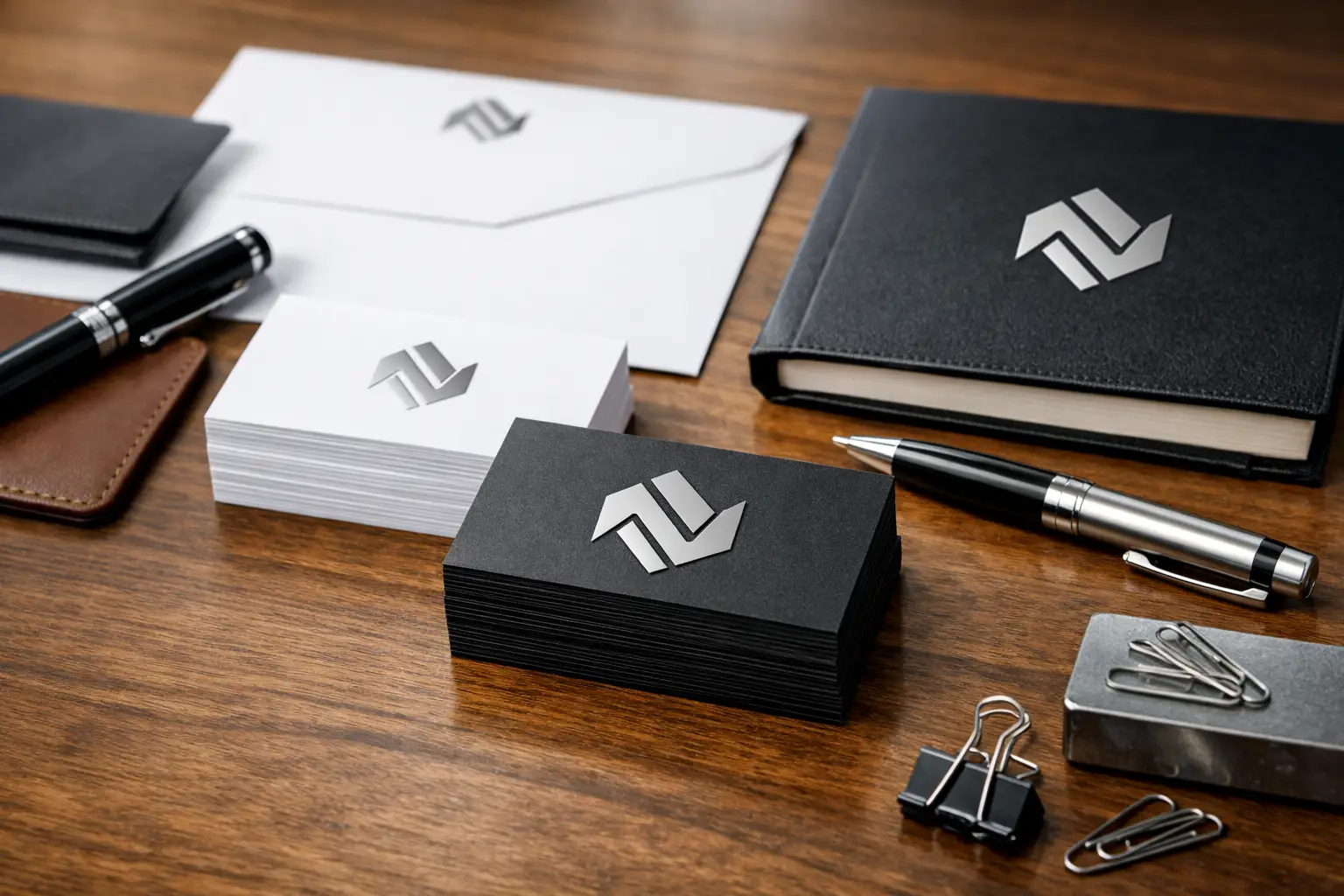
A rushed handshake, a proposal left behind after a meeting, an invoice mailed to a client, a welcome letter tucked into a package – these are small moments, but they shape how people judge your business. Custom business cards and stationery do more than carry contact details or letterhead. They signal that your company is organized, established, and serious about the way it presents itself.
For many businesses, print is still one of the clearest ways to create trust. A well-made card feels different from a quick online template printed on thin stock. A branded envelope gets opened faster than a plain one. A clean invoice or form reduces confusion and makes daily operations easier. The value is not just visual. It is practical.
Why custom business cards and stationery still matter
There is a tendency to treat printed materials as secondary because so much communication happens digitally. That is a mistake for businesses that want to look credible in person and consistent across every customer interaction. Print fills the gaps that email signatures and social profiles cannot.
A business card still matters because it is immediate. It works at trade events, sales calls, community fundraisers, front counters, and job sites. It does not depend on battery life, signal strength, or whether someone remembers your name later. If the design is clear and the print quality is strong, it leaves a professional impression in seconds.
Stationery matters for a different reason. It supports the day-to-day documents that clients, vendors, donors, parents, or patients actually see. Letterheads, envelopes, invoices, forms, presentation folders, and notepads create consistency. When those materials match your branding and are printed properly, your business looks coordinated rather than pieced together.
That consistency becomes even more important for organizations that send out recurring documents. Schools, contractors, medical offices, nonprofits, property managers, and service businesses often handle a steady flow of paperwork. If those materials look generic or inconsistent, the organization can appear less established than it really is.
What strong custom business cards and stationery should do
Good print design is not only about looking sharp. It needs to work in real conditions. A business card should be easy to read under poor lighting and simple to scan quickly. A letterhead should leave enough room for content while still carrying the brand. An invoice should support accurate processing before it ever tries to impress anyone.
This is where many businesses go wrong. They focus on style first and function second. Heavy design, tiny text, low-contrast colors, or crowded layouts may look fine on a screen, but they often fail once printed. The best custom business cards and stationery balance appearance with usability.
That usually means keeping a few fundamentals in place. Contact details must be obvious. Brand colors should reproduce accurately in print, not just digitally. Paper choice should match the purpose. And the final product should feel like it belongs to the business that uses it, whether that business is formal, creative, technical, community-based, or service-driven.
Choosing the right pieces for your business
Not every company needs a full stationery package, but most need more than they think. The right mix depends on how your team communicates and what customers receive from you.
A business card is the starting point for most organizations because it is flexible and affordable. From there, letterheads and envelopes make sense for businesses that send estimates, contracts, notices, or official correspondence. Invoices, NCR forms, and work orders are essential for companies that need paperwork to move with the job. Presentation folders can make a strong difference for firms that hand over proposals, onboarding materials, or event packages.
There is no single standard set. A law office and a landscaping company will not need the same pieces. A school district, community group, and retail business each have different priorities too. The best approach is to look at what your business sends out every week, not what a generic branding checklist says you should order.
That practical view can save money. It also keeps your print materials relevant. Ordering stationery that never gets used is wasteful. On the other hand, underestimating what you need can create delays, especially when multiple departments or locations rely on the same branded materials.
Paper, finish, and print quality make a real difference
People notice quality even when they do not comment on it directly. Weight, texture, finish, and print sharpness all affect how your materials are perceived. A card printed on substantial stock with crisp color and clean trimming feels deliberate. A flimsy card with muddy tones does not.
The same applies to stationery. A letterhead printed with accurate color and strong registration gives your documents authority. Envelopes that match the rest of the package create a more polished presentation. Labels, forms, and inserts that print clearly make daily use easier for staff and customers alike.
This is one reason working with an experienced print provider matters. On screen, many choices look similar. In production, they are not. Some finishes feel elegant but are hard to write on. Some paper stocks suit cards but not forms. Some colors need adjustment to print consistently across different items. Getting those decisions right takes print knowledge, not just design software.
The value of ordering through one print partner
When business cards, letterheads, envelopes, forms, brochures, and other branded materials are ordered from different vendors at different times, inconsistency creeps in. Logos shift. Colors drift. Paper sizes vary. That may sound minor, but over time it weakens the overall presentation of the business.
Using one print partner helps keep branding aligned and reordering simpler. It also reduces the time spent repeating instructions, checking proofs across vendors, and troubleshooting quality issues after delivery. For office managers and operations staff, that matters just as much as the printed result.
This is especially useful for organizations with recurring needs. If your team regularly orders invoices, business cards for new hires, event materials, and promotional pieces, a single source creates continuity. It becomes easier to manage updates, maintain templates, and keep materials available when they are needed.
For local businesses and organizations in Kamloops, that relationship has another advantage. You can have real conversations about timelines, quantities, revisions, and use cases with a printer who understands the needs of the regional business community. That kind of service tends to prevent mistakes before they happen.
When custom printing needs to be more than basic
Some businesses need more than standard stationery. They may require variable data printing for personalized mailers, numbered forms for tracking, branded folders for presentations, or labels that support inventory and packaging. Others want printed materials that tie into signage, promotional products, embroidery, or apparel so the branding stays consistent across everything customers see.
That is where broader production capability becomes valuable. A one-stop print shop can support the paper materials that keep the business running and the promotional materials that help it grow. Instead of treating business cards and stationery as isolated items, the brand can be managed as a complete system.
That does not mean every company needs every option. It means the print program should fit the way the business actually operates. A growing company may start with cards, envelopes, and invoices, then add presentation folders, labels, and event materials as needs expand. A reliable print partner can help pace those decisions realistically.
A few common mistakes worth avoiding
The most common problem is ordering too quickly without thinking through use. Businesses often reprint old layouts that no longer reflect current branding, staff titles, or contact details. Others choose the cheapest paper available, then wonder why the finished piece feels underwhelming.
Another issue is overdesign. Special finishes and premium stocks can look excellent, but only when they suit the brand and purpose. A high-end card may fit a financial advisor or design firm. A field service company may benefit more from clarity, durability, and easy readability. Good printing is not about choosing the fanciest option. It is about choosing the right one.
Proofing also deserves more attention than it usually gets. Spelling, phone numbers, suite numbers, licensing information, and email addresses should all be checked carefully. Once materials are printed in quantity, small errors become expensive.
If your business relies on printed communication, custom business cards and stationery are not extras. They are working tools that support credibility, consistency, and efficiency. The right pieces make your organization look prepared because it is prepared. And when your print materials reflect the same care you bring to your service, people notice that too.