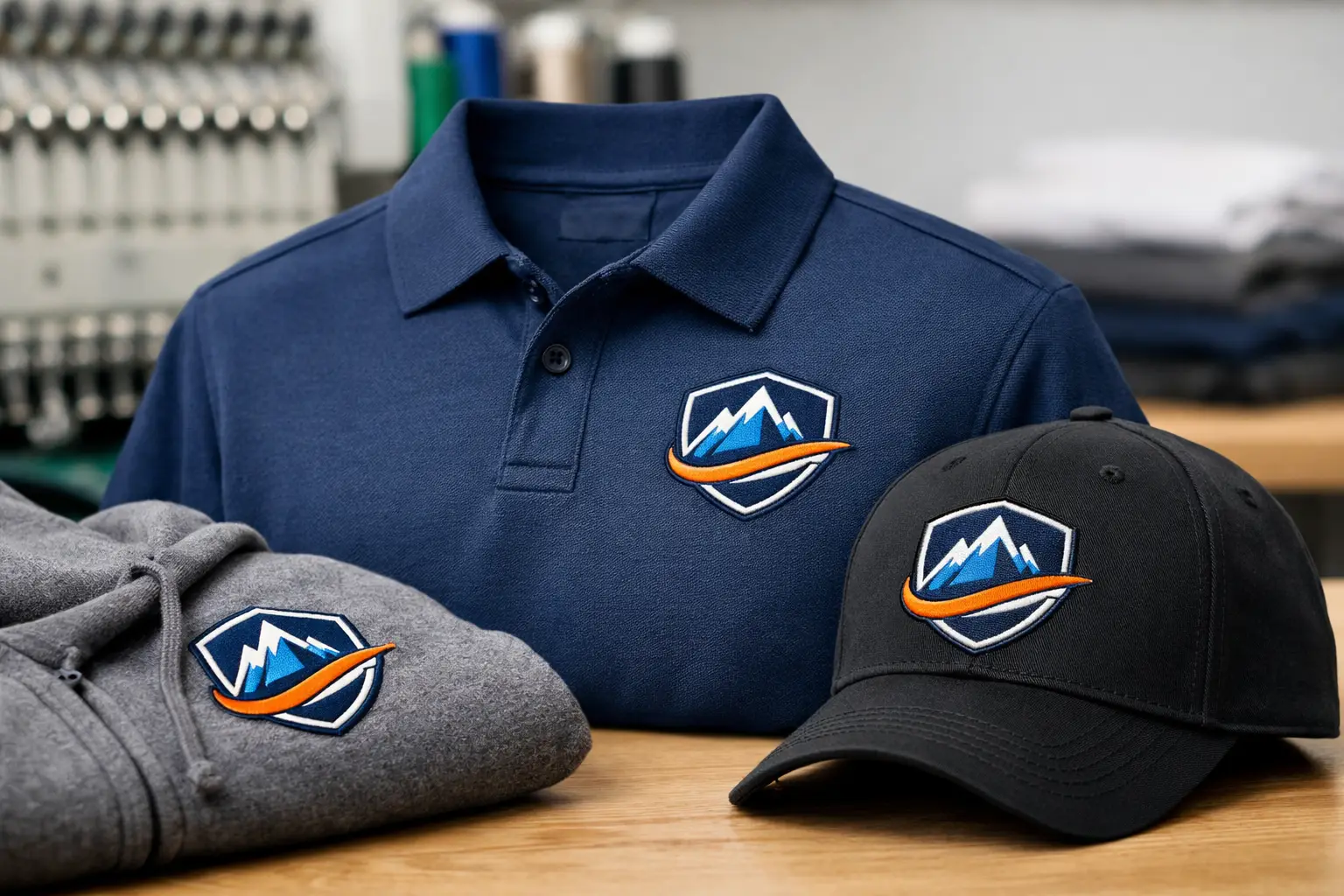
A polo that still looks sharp after a full season of washes tells people something about your business before anyone says a word. That is the value of custom embroidered apparel – it creates a professional, durable branded look that holds up on the job, at events, and in everyday wear.
For many businesses and organizations, embroidery is not just a decoration choice. It is a practical branding decision. When a logo is stitched rather than printed, it adds texture, structure, and a sense of permanence that works especially well for uniforms, outerwear, hats, and team apparel. It signals that your brand takes presentation seriously.
Why custom embroidered apparel works so well
Embroidery has a different presence than other apparel decoration methods. Ink sits on the surface. Thread becomes part of the garment. That difference matters when your staff is customer-facing, moving between jobsites, or wearing branded gear repeatedly through the week.
A stitched logo tends to look more refined on business apparel. It works well on collared shirts, jackets, fleece, button-downs, and caps because it adds definition without making the garment feel overly promotional. For companies that want their team to look branded but still professional, embroidery often strikes the right balance.
Durability is another major reason customers choose it. A well-digitized design and quality stitching can hold up through frequent use, which makes embroidery a strong option for workwear and repeat-use items. That does not mean it is right for every fabric or every logo, but when the garment and design are a good match, it delivers long-term value.
Where custom embroidered apparel makes the most sense
Not every branded garment needs embroidery. The best results usually come when the apparel has some structure and the logo does not depend on extremely fine detail or large full-front artwork.
Best fits for embroidery
Polos are one of the most common choices because they present well in offices, retail settings, trade environments, and service businesses. Hats are also a natural fit. Embroidery gives caps a finished, high-quality look that printed decoration rarely matches. Jackets, vests, fleece pullovers, and durable work shirts also perform well because the fabric can support stitching without distortion.
For schools, teams, and local organizations, embroidery is often the better choice for staff apparel, coaching gear, club jackets, and volunteer uniforms. It creates a consistent identity and tends to hold up better over time than lighter-weight printed alternatives.
When another method may be better
There are trade-offs. If your design includes gradients, tiny lettering, photographic elements, or a large graphic across the chest or back, screen printing or another decoration method may produce a cleaner result. Thin performance fabrics can also be tricky, depending on the garment and stitch density.
That is why the apparel choice and the logo setup matter just as much as the embroidery machine itself. Good results come from matching the right decoration method to the intended use, not forcing every logo onto every garment.
The design side matters more than most people expect
A logo on paper does not automatically translate perfectly to thread. Embroidery uses stitches, direction, density, and underlay to create the finished image, so artwork usually needs to be prepared specifically for that process.
This is where many orders either go right or go wrong. Fine lines may need to be thickened. Small text may need to be simplified. Tight spacing can close up once stitched. A strong embroidery file accounts for those changes so the final result reads clearly from a normal viewing distance.
Size and placement affect the final look
Left chest embroidery is popular for a reason. It is visible, professional, and proportionate on polos, jackets, and woven shirts. But the same logo that looks balanced on a jacket may be too detailed for a cap front or too dense for a lightweight shirt.
Placement should reflect how the garment will be worn. Staff uniforms usually benefit from a clean, consistent location. Event apparel may allow for a slightly bolder approach. The key is keeping the logo readable and the garment comfortable.
Choosing garments for embroidered apparel
The garment itself has a big impact on the finished product. Better embroidery cannot fully rescue a poor apparel choice.
Structured fabrics usually perform best. Pique polos, woven shirts, fleece, soft shell jackets, and twill caps all tend to handle stitching well. Very stretchy, thin, or loosely knit garments may pucker or shift if the design is too dense. In those cases, a different garment or a different decoration method may be the smarter choice.
Comfort matters too. A uniform has to be worn, not just approved. If staff will wear it all day, fabric weight, fit, and washability are part of the branding decision. A polished logo on an uncomfortable shirt will not get the use you want from it.
For businesses managing apparel across seasons, it often makes sense to build a small coordinated lineup rather than order one item in isolation. A polo for everyday wear, a fleece or jacket for cooler weather, and a cap for outdoor visibility can give your team a consistent look across different roles and conditions.
What businesses gain from a consistent embroidered look
The immediate benefit is visibility, but the longer-term benefit is consistency. When your team shows up in coordinated embroidered apparel, it builds recognition in small moments – service calls, deliveries, front counter interactions, school events, trade shows, and community sponsorships.
That consistency is especially useful for growing businesses. It helps customers identify your staff quickly and reinforces trust. For offices, trades, nonprofits, schools, and event teams, branded apparel can also create a stronger sense of unity internally. People tend to take more pride in what they wear when it looks professional and holds up well.
There is also a practical advantage in working with one provider that can support both apparel and other branded materials. When uniforms, promotional items, signage, and printed pieces are managed together, the brand stays more consistent and the ordering process gets simpler. For many organizations, that saves time as much as it improves presentation.
How to order custom embroidered apparel without costly mistakes
The most efficient orders usually start with a few clear decisions. What garments will be worn most often? Who is wearing them? How many pieces will need reorders later? Is the logo already suitable for embroidery, or does it need adjustment?
Quantities matter because embroidery setup is different from garment cost. Ordering too narrowly can make repeat orders harder to manage, especially if garments change seasonally or sizes go out of stock. On the other hand, over-ordering specialty items that will not be used often can tie up budget. The right order size depends on your team, your turnover, and how frequently the apparel will be worn.
It also helps to think beyond the first order. If your staff grows or you run recurring events, choose apparel and logo applications that can be repeated consistently. A dependable local production partner can make that much easier by keeping records, matching previous work, and guiding you when substitutions are needed.
For organizations in Kamloops and the surrounding area, that local support can be more valuable than it seems at first. Being able to review options, ask practical questions, and reorder through a familiar team reduces delays and helps keep quality consistent from one run to the next.
Custom embroidered apparel is an investment in everyday presentation
Some marketing pieces are designed for a short campaign. Branded apparel often works much longer than that. A well-made embroidered shirt or cap can represent your business for months or years, often in settings where first impressions matter most.
That is why quality should lead the decision. Good garments, clean digitizing, accurate stitching, and reliable production make the difference between apparel that gets worn regularly and apparel that ends up in a drawer. Custom embroidered apparel works best when it feels like part of your operation, not an afterthought.
If you want branded clothing that looks professional, lasts through real use, and supports a consistent image across your team, embroidery remains one of the most dependable choices available. The best results come from treating it like any other business asset – choose carefully, produce it well, and make sure it reflects the standard you want people to associate with your name.