A product can be well made, competitively priced, and ready for the shelf – but if the label looks off, customers notice immediately. Custom labels for product packaging do more than identify what is inside. They shape first impressions, support compliance, reinforce brand consistency, and help products hold up in real-world conditions from shipping to storage to handling.
For many businesses, labels get treated like a last-step detail. That usually leads to rushed decisions, mismatched colors, poor adhesion, or materials that do not suit the environment. A better approach is to treat packaging labels as part of the product itself. When the label is right, the package looks finished, credible, and ready to sell.
Why custom labels for product packaging matter
A label has a job to do in a very small amount of space. It needs to be attractive enough to catch attention, clear enough to communicate key information, and durable enough to stay intact through handling. If one of those pieces fails, the label stops doing its job.
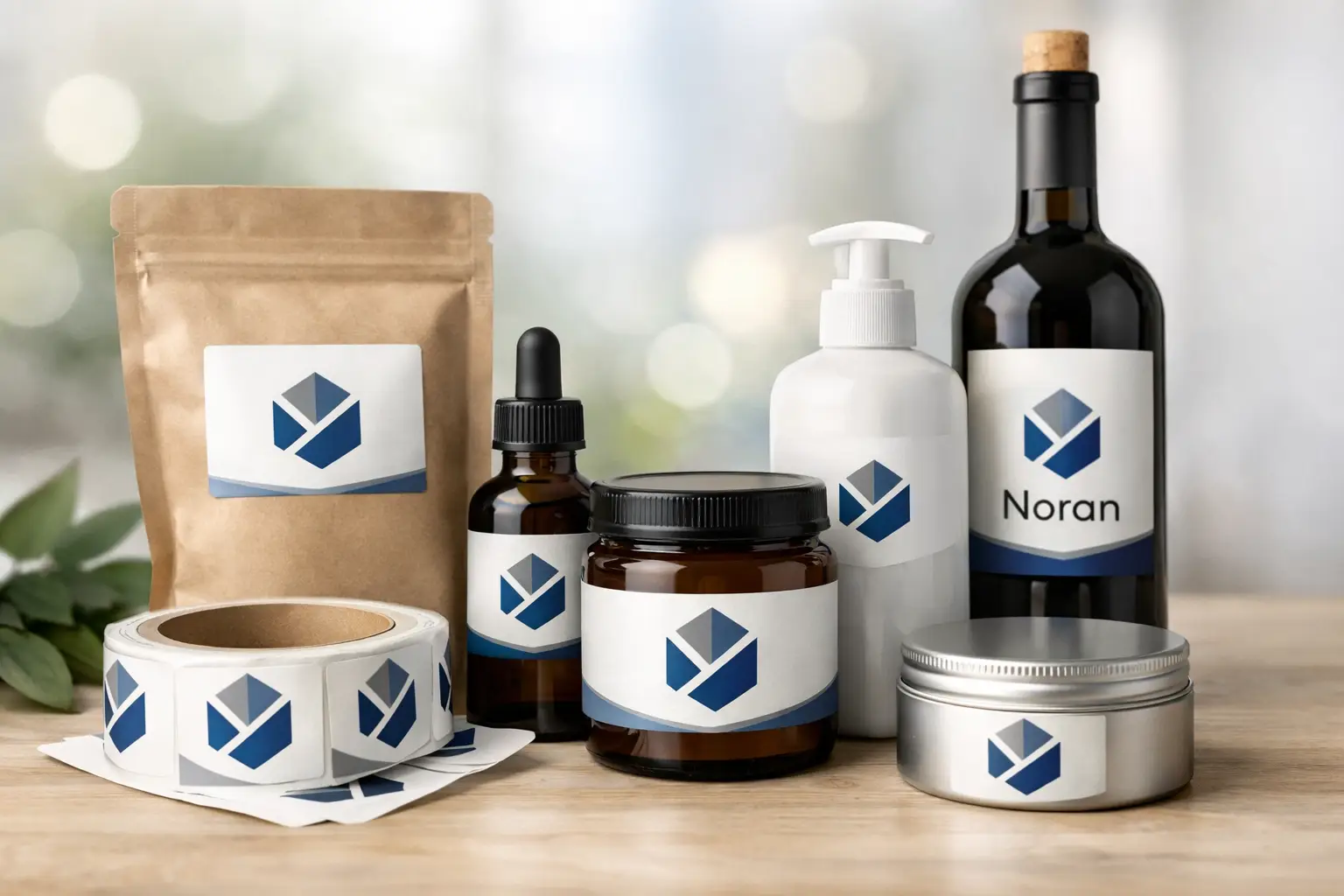
That is why custom labels for product packaging are worth planning carefully. A coffee bag, cosmetic jar, food container, supplement bottle, retail box, or cleaning product all ask different things from a label. Some need moisture resistance. Some need sharp small text. Some need strong adhesive for curved containers. Others need variable data, short runs, or easy version changes for seasonal products.
The right label helps a business look established, even if the product line is new. It also reduces the risk of reprints, waste, and packaging problems that show up after the order is finished.
Start with the package, not just the artwork
One of the most common mistakes in label buying is designing artwork before thinking about the surface it will be applied to. A flat label on a tapered bottle behaves differently than one on a straight-sided jar. A refrigerated item has different requirements than a dry shelf product. Even the finish of the container matters because some materials accept labels more easily than others.
Before finalizing design, it helps to answer a few practical questions. What is the packaging material? Will the product be squeezed, chilled, handled frequently, or exposed to oil, water, or sunlight? Is the label machine-applied or hand-applied? Will the container shape create wrinkles or lifting at the edges?
These details affect material choice, adhesive performance, and final size. They also affect how the design should be laid out. Text that looks fine on a screen may become hard to read once wrapped around a small bottle or interrupted by a seam.
Choosing materials for custom labels for product packaging
Label stock is not one-size-fits-all. Paper labels can be an excellent fit for dry goods, boxed items, and many retail applications where texture and cost control matter. Film labels are often the better choice when durability is the priority. They tend to hold up better against moisture, oils, abrasion, and temperature changes.
Finish matters too. A matte finish gives a more understated, refined look and can reduce glare. Gloss tends to increase visual pop and can make colors feel more vibrant. Neither is automatically better. It depends on the product, the brand style, and the conditions the package will face.
Adhesive selection is just as important as the face stock. A standard adhesive may work perfectly on cartons and jars, but specialty surfaces or colder conditions may call for something more specific. That is one reason packaging labels should be discussed with a print provider early instead of ordered as a generic commodity.
Good label design balances branding and function
Strong packaging design does not mean filling every inch of space. In most cases, clarity wins. Customers should be able to understand what the product is, who it is for, and any essential details within seconds.
Brand consistency matters here. Fonts, logo treatment, color use, and overall layout should align with the rest of your printed materials and marketing. A product label that looks disconnected from your business card, brochure, menu, or point-of-sale display can make the brand feel less established.
At the same time, packaging labels have practical limits. Tiny text, low-contrast color combinations, and crowded layouts often create production and readability issues. A design may look polished on a large proof but become difficult to read once reduced to final size. This is especially true for products that require ingredients, directions, warnings, or barcode placement.
The best results usually come from designing with production realities in mind. That means allowing for bleed, keeping important content away from trim edges, and making sure brand colors can reproduce consistently across print runs.
Compliance and readability are part of quality
For many products, the label is not just a branding piece. It is also a source of required information. That can include ingredients, weight, usage instructions, contact details, safety messaging, batch numbers, or expiry information. Depending on the product category, the rules may be simple or more involved, but the basic principle is the same – if information must be there, it needs to be readable and placed intentionally.
This is where businesses benefit from slowing down before printing. A visually strong label that misses critical information can lead to costly corrections. So can a layout that technically includes everything but makes it hard for customers to find. Good label printing supports both presentation and practical use.
Variable data can also be useful for businesses managing multiple versions of a product. Different scents, flavors, SKUs, lot codes, or event-specific packaging can often be handled more efficiently when the print process supports controlled variation without rebuilding the entire job from scratch.
Short runs, versioning, and growing product lines
Not every business needs massive quantities of labels. In fact, many small and midsize companies are better served by shorter, smarter runs. If you are testing a new product, updating packaging, launching a seasonal item, or managing several SKUs, flexibility matters.
That is one of the practical advantages of working with a full-service local printer. You can adjust quantities to match demand more realistically, review proofs with a real person, and make changes before small issues become expensive ones. For organizations managing events, fundraising products, school merchandise, or limited-edition items, that flexibility is often more valuable than chasing the lowest unit price on a generic online order.
There is always a trade-off. Higher volumes can reduce cost per label, but they also increase the risk of sitting on outdated inventory if packaging details change. Smaller runs may cost more per piece, but they can reduce waste and make updates easier. The right choice depends on how stable your product line is and how often your packaging changes.
Print quality shows up in ways customers notice
Customers may not know what press a label was printed on, but they notice the result. They see muddy colors, fuzzy text, weak contrast, and labels that peel or wrinkle. They also notice when everything looks sharp, aligned, and intentional.
Consistent print quality is especially important when labels are part of a wider branded system. If your packaging sits beside printed inserts, presentation materials, signage, or promotional items, visual consistency strengthens trust. It signals that the business pays attention to details.
That is where an experienced print partner adds value. Good production support means more than pressing print. It means checking files, watching color, confirming stock choices, and catching problems before they affect the finished piece. For businesses that order regularly, that reliability saves time and helps maintain a professional standard across every reorder.
When local service makes the process easier
Packaging jobs often involve decisions that are easier to make with direct guidance. A local print shop can help you compare label materials, review size options, test readability, and align labels with other printed materials your business already uses. That matters when you want packaging to feel like part of a complete brand system, not a separate purchase from a disconnected vendor.
For businesses in Kamloops and surrounding communities, working with a provider like Noran Printing can also simplify repeat orders and product updates. When one team understands your brand, your timelines, and your recurring print needs, the process tends to be faster and more consistent.
Custom labels for product packaging work best when they are planned with the same care as the product inside. If the label fits the package, reflects the brand, and holds up where it needs to, it does more than decorate – it helps your product look ready, credible, and worth picking up.