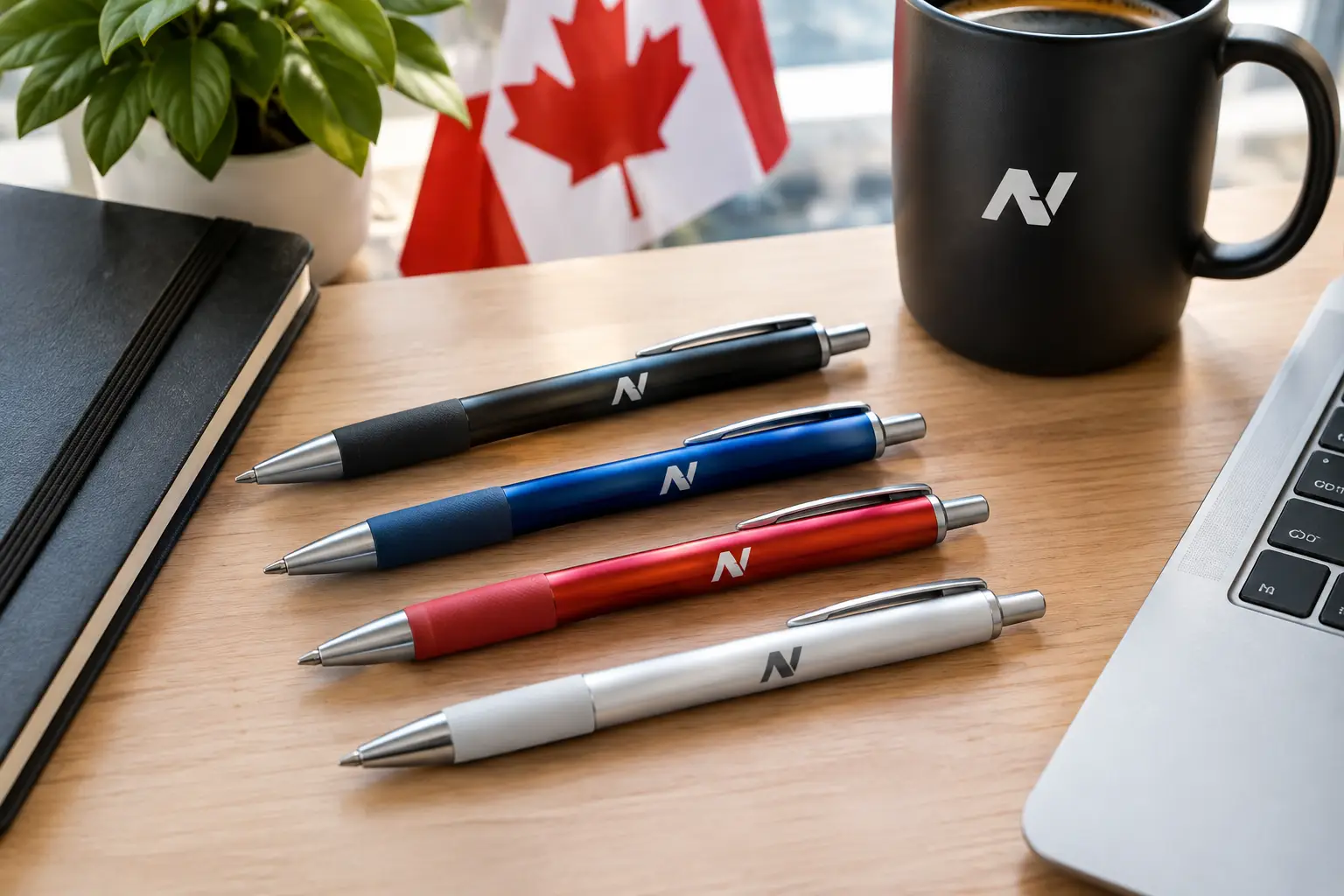
A pen disappears from the front counter, gets borrowed in a meeting, lands in a contractor’s truck, or travels home in a customer’s pocket. That is precisely why custom pens remain one of the most practical promotional products a business can order. They are useful, affordable, and seen repeatedly in ordinary moments when your name needs to be easy to find.
For businesses, schools, community groups, and event organizers, the right pen is not simply a giveaway. It is a small piece of branded equipment that represents the standard behind your organization. A pen that writes smoothly and carries a clear imprint gives people a reason to keep it. A pen that skips, smudges, or breaks quickly does the opposite.
Why Promotional Pens Still Earn Their Place
Digital marketing has its role, but it cannot sit beside a phone, rest on a reception desk, or help someone complete a form. Promotional pens work because they solve an immediate, everyday need. They are used at service counters, open houses, trade shows, school registrations, fundraising events, and staff meetings.
Unlike a one-time flyer, a useful pen can stay in circulation for months. Each use places your business name, phone number, website, or short message in front of the person holding it and often the people around them. For a local service business, that familiarity matters. When a customer needs a plumber, insurer, restaurant, nonprofit, or professional service, the name already sitting in their desk drawer has a head start.
Pens also work well across audiences. They are appropriate for long-standing clients, prospective customers, office staff, volunteers, students, and event attendees. The key is matching the product to the setting rather than treating every pen as the same.
Choosing Custom Pens for the Job
The best choice begins with how and where people will use it. A high-volume community event calls for a different pen than a client thank-you package or an executive meeting. Budget matters, but so does the message the item sends about your business.
Start With the Intended Use
For broad distribution, such as festivals, grand openings, mailers, and information tables, a dependable plastic click pen is often the sensible choice. It is easy to carry, fast to distribute, and cost-effective at larger quantities. The priority is a comfortable grip, reliable ink, and a clean imprint that remains readable.
For front-desk use, staff kits, and customer paperwork, consider a more substantial pen. Metal barrels, soft-touch finishes, stylus tips, or contoured grips can make a modest product feel more intentional. These options cost more per piece, but they are more likely to be retained and used often.
Premium pens are best reserved for situations where presentation is part of the relationship. They can suit closing gifts, employee recognition, board meetings, donor packages, or professional welcome kits. In these cases, the pen should align with the rest of the package, including presentation folders, business cards, notebooks, and branded apparel.
Choose Ink People Want to Use
A branded pen is only valuable if it writes well. Ballpoint ink remains a practical standard for everyday forms, signatures, notes, and office tasks. Gel ink can provide a smoother writing experience and a more polished feel, though it may not be the right fit for every environment or price point.
Blue ink is commonly preferred for signing documents because it helps distinguish an original from a photocopy. Black ink is clean, professional, and versatile for general office use. If you are ordering pens for a particular operation, ask the people using them every day what they prefer. Reception teams, sales staff, and administrators usually have a clear opinion after dealing with unreliable pens.
Ink color should also be considered alongside the barrel color. A pen can look impressive in a digital proof but become difficult to identify when mixed into a shared cup. Choose colors that support visibility and fit your established brand standards.
Keep the Imprint Clear
Pens have limited print space. That limitation is useful because it forces a business to focus on the information that matters most. Your logo and company name should be easy to read at a glance. A phone number, short web address, or concise service line can be added if space permits without making the barrel look crowded.
Fine details and small text rarely reproduce as clearly on a pen as they do on a brochure or letterhead. A simplified logo version may be the stronger choice. High-contrast imprint colors generally offer the best readability, while a subtle tone-on-tone treatment may look refined but can be harder to see in daily use.
Before production, review the proof at the actual size of the print area. Ask whether important details, including punctuation in a web address or small logo elements, remain legible. That quick check prevents a common mistake: approving a design that looks good enlarged on a screen but is too busy once printed.
Make Pens Part of a Larger Branded System
Custom pens work hardest when they support materials your customers already receive. Place them near invoice pads, order forms, menus, clipboards, brochures, appointment cards, or presentation folders. A customer who needs a pen to complete paperwork should not have to search for one, and the pen they use should reinforce who made the process easier.
For events, pair pens with a useful printed item instead of placing them alone in a bowl. A pen attached to a notepad, registration form, program, or information package has a purpose from the start. For sales meetings, include a quality pen with a branded notebook or folder. This creates a more organized presentation and gives the recipient something they can continue using after the meeting.
Consistency matters here. Your pen does not need to duplicate every color and detail from your other materials, but it should clearly belong to the same organization. Use the same logo treatment, type style where possible, and core brand colors used on business cards, signage, and promotional materials.
Order Quantities With Real Distribution in Mind
Businesses sometimes order too few pens because the unit price looks higher at a small quantity. Others order a large quantity without a plan for where they will go. A better approach is to estimate how pens will move through your organization over several months.
Consider the pens needed for customer-facing spaces, staff use, event tables, sales calls, welcome packages, and replacement stock. Then separate those needs by product level. A lower-cost pen may be right for broad public distribution, while a more substantial option can be reserved for staff and key clients. Using two styles can make the budget work harder without lowering the standard where it counts.
Timing is equally important. Promotional products often require artwork review, production, and delivery time, especially when quantities are large or the item has special finishes. Order ahead of trade shows, school seasons, conferences, holiday campaigns, and major community events. Rushing can reduce your product choices and limit the time available to check artwork properly.
Get Practical Help Before You Commit
A reliable print partner can help narrow the choices based on budget, audience, desired quantity, and brand requirements. That guidance is especially valuable when you are coordinating several items at once, such as printed forms, apparel, signage, and promotional products. Noran Printing helps Kamloops-area organizations bring those pieces together with consistent production standards and hands-on service.
The right pen is the one people reach for without thinking twice. Choose one that writes reliably, presents your name clearly, and fits naturally into the work your customers and staff do every day. When that happens, a small promotional item becomes a steady reminder that your business is prepared, professional, and easy to remember.