If you have ever approved a business card reorder, rushed a flyer run for an event, or priced out a large batch of brochures, you have probably run into the question of digital printing vs offset. It sounds technical at first, but for most businesses the decision comes down to a few practical issues: how many pieces you need, how fast you need them, how exact the color needs to be, and whether anything changes from one piece to the next.
For local businesses and organizations, that choice affects more than just price. It affects turnaround, consistency, and how smoothly your print order fits into the rest of your day. A good print partner should be able to guide that decision quickly, but it helps to understand the basics so you can ask better questions and avoid paying for the wrong process.
What digital printing vs offset really means
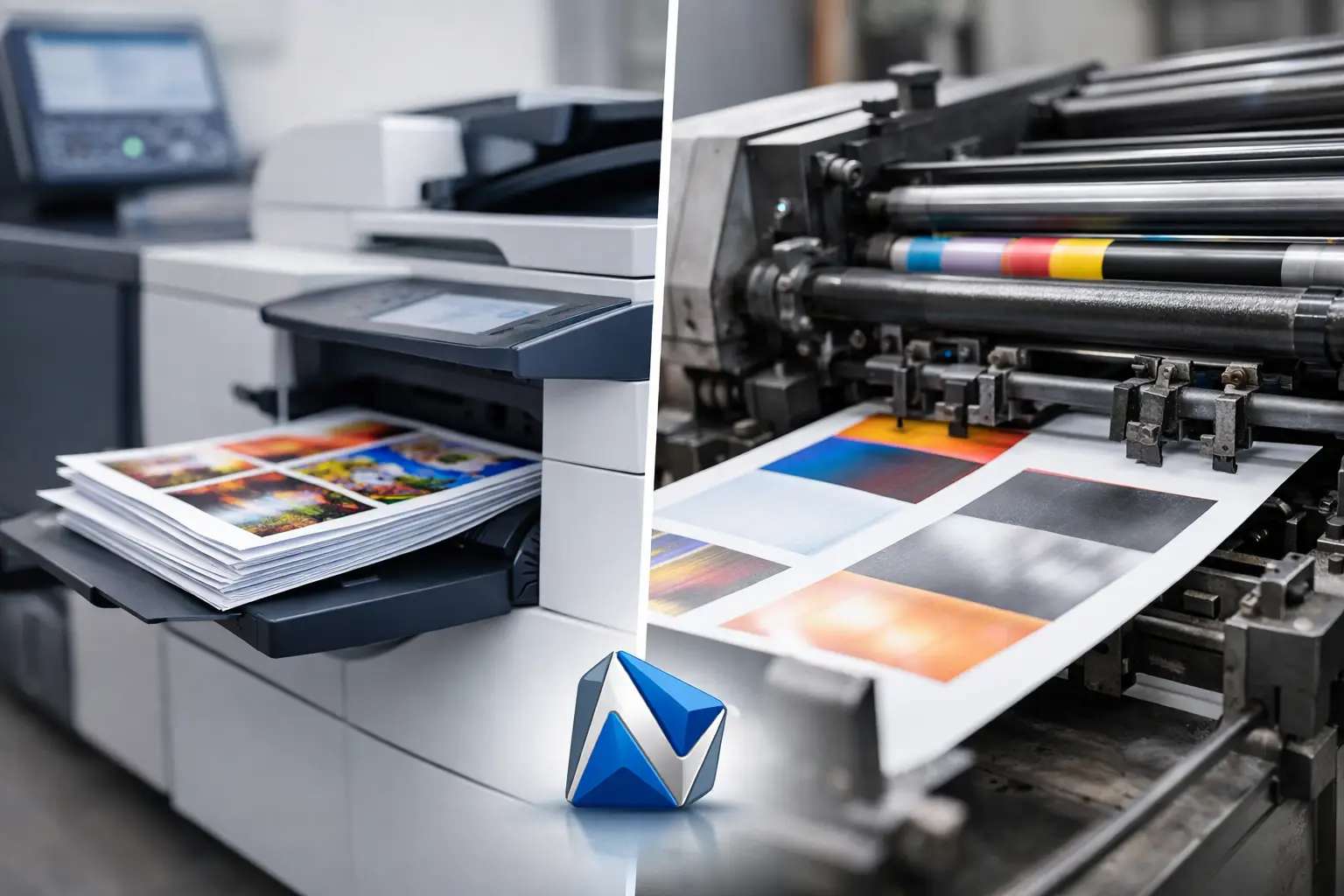
Digital printing produces printed pieces directly from a digital file. There are no plates involved, which makes setup faster and more flexible. This is why digital is often the first choice for short runs, quick reorders, and jobs that need variable information such as names, addresses, numbering, or custom versions.
Offset printing uses metal plates and ink transferred through rollers onto paper. The setup takes more time, but once the press is running, it becomes very efficient for larger quantities. Offset has been the standard for commercial printing for years because it delivers strong consistency and excellent image reproduction across long runs.
Neither method is automatically better. The right one depends on the job.
When digital printing is the better fit
Digital printing works best when speed and flexibility matter more than very high volume. If you need 100 flyers for a weekend event, 250 menus with a recent price update, or a short run of presentation folders inserts that may change again next month, digital usually makes sense.
Because there are no plates to create, setup is simpler and production can begin quickly. That keeps costs lower on shorter runs. It also makes digital practical for businesses that order in smaller batches to avoid waste. Instead of printing 5,000 pieces and storing them, you can print what you need now and reorder later if details change.
This method is also ideal for variable data printing. If each piece needs a different name, address, account number, or code, digital handles that efficiently. For organizations sending personalized mailers or businesses printing numbered forms, this can be a major advantage.
Digital printing has improved significantly over the years. For many day-to-day business materials, the quality is excellent. Business cards, brochures, newsletters, postcards, booklets, labels, and forms can all look sharp and professional when produced digitally on the right equipment and stock.
When offset printing makes more sense
Offset becomes more attractive as quantities go up. The upfront setup is higher because plates need to be created and the press must be prepared, but that setup cost gets spread across the full run. Once you move into higher volumes, offset often becomes more economical per piece.
This matters for items that are ordered in bulk and used steadily over time. Think large brochure runs, major direct mail campaigns, multi-thousand flyer distributions, or standardized forms used throughout the year. If the content is stable and the quantity is substantial, offset can offer very strong value.
Offset is also a strong choice when color precision is especially important. Brand-sensitive materials sometimes require a specific ink match that needs to stay consistent from the first sheet to the last. Offset printing is well known for that level of control, especially when using spot colors.
For certain paper types, specialty finishes, and highly detailed image work, offset may still have the edge. That does not mean digital falls short in general. It simply means some projects benefit from the added control and press characteristics that offset provides.
Cost is not just about the quote
Many buyers ask one fair question first: which is cheaper?
The honest answer is that it depends on quantity, setup, and how likely the piece is to change. Digital printing is usually cheaper for short runs because there are no plate costs and less setup time. Offset usually wins on unit cost for larger runs because the press becomes more efficient over volume.
But the lowest quote on paper is not always the lowest real cost. If you print a large offset run of forms, menus, or brochures and then have to replace them because pricing, staff information, or services changed, that savings disappears quickly. On the other hand, if you order a very large quantity digitally when the design is stable and repeat use is certain, you may be paying more than necessary.
This is why a practical print discussion matters. The right production method should reflect how the material will actually be used, not just the number attached to the first estimate.
Speed and turnaround often decide the job
In real business settings, deadlines have a way of settling the debate.
Digital printing is usually the faster route from approved file to finished product. That speed matters for event materials, short-notice promotions, updated handouts, meeting packets, and restocks of everyday items. If timing is tight, digital is often the strongest option.
Offset takes longer to set up, so it is not usually the first choice for urgent small jobs. However, for planned large-volume printing, the extra setup time can be worth it. If you know a campaign is coming and have time to prepare properly, offset may deliver the best balance of quality and per-piece value.
For many organizations, the smartest approach is not choosing one method forever. It is using digital for short-term needs and offset for long-range volume printing when the timing and quantity support it.
How quality compares in real-world business printing
The quality conversation around digital printing vs offset is often oversimplified. People sometimes assume offset is always better, but that is not a useful way to evaluate modern print buying.
For many standard commercial print products, digital quality is more than sufficient. In fact, for business cards, postcards, brochures, newsletters, booklets, and short-run marketing pieces, most customers are very happy with the result. High-speed digital press technology produces crisp text, solid graphics, and strong image quality.
Offset still has advantages in certain situations. Very long runs, exact brand color matching, and specialized ink requirements may point toward offset. Some jobs also benefit from the subtle look and consistency that offset can provide on specific stocks.
The real question is not which process sounds more premium. The real question is whether the printed piece will look right for its purpose, hold up in use, and represent your business well. A dependable print shop should judge that based on the project, not on a blanket preference.
Choosing the right method for common print jobs
If you are ordering business cards in small batches, personalized postcards, short-run booklets, event flyers, or updated menus, digital printing is often the practical choice. It gives you speed, flexibility, and less risk if details change.
If you are producing a high-volume brochure order, a long-run newsletter, or a major campaign with stable artwork and a need for tight color control, offset may be the better investment.
Forms are a good example of where the answer can go either way. Numbered or customized forms often lean digital. Standardized forms printed in large quantities may be better suited to offset. The same kind of logic applies to envelopes, letterheads, inserts, and promotional handouts.
This is one reason businesses value a one-stop print partner. When the same provider can handle short-run digital work, larger commercial jobs, and related branded materials, you get more practical recommendations and less guesswork.
What to ask before you place the order
Before choosing a print method, it helps to answer a few simple questions. How many pieces do you actually need right now? Is the content likely to change soon? Do you need each piece to be identical, or personalized? Is exact brand color matching critical? And how fast do you need the job completed?
Those answers usually point in the right direction quickly. If you are unsure, ask your printer to quote both methods when appropriate. An experienced shop can explain the trade-offs clearly and help you avoid overordering, underordering, or choosing a process that does not match the job.
At Noran Printing, that kind of guidance is part of the service. For business buyers, schools, community groups, and organizations managing recurring print needs, clear advice can save both time and budget.
The best print decisions are rarely about picking sides. They are about matching the method to the job, so your materials arrive on time, look professional, and work as hard as you do.