
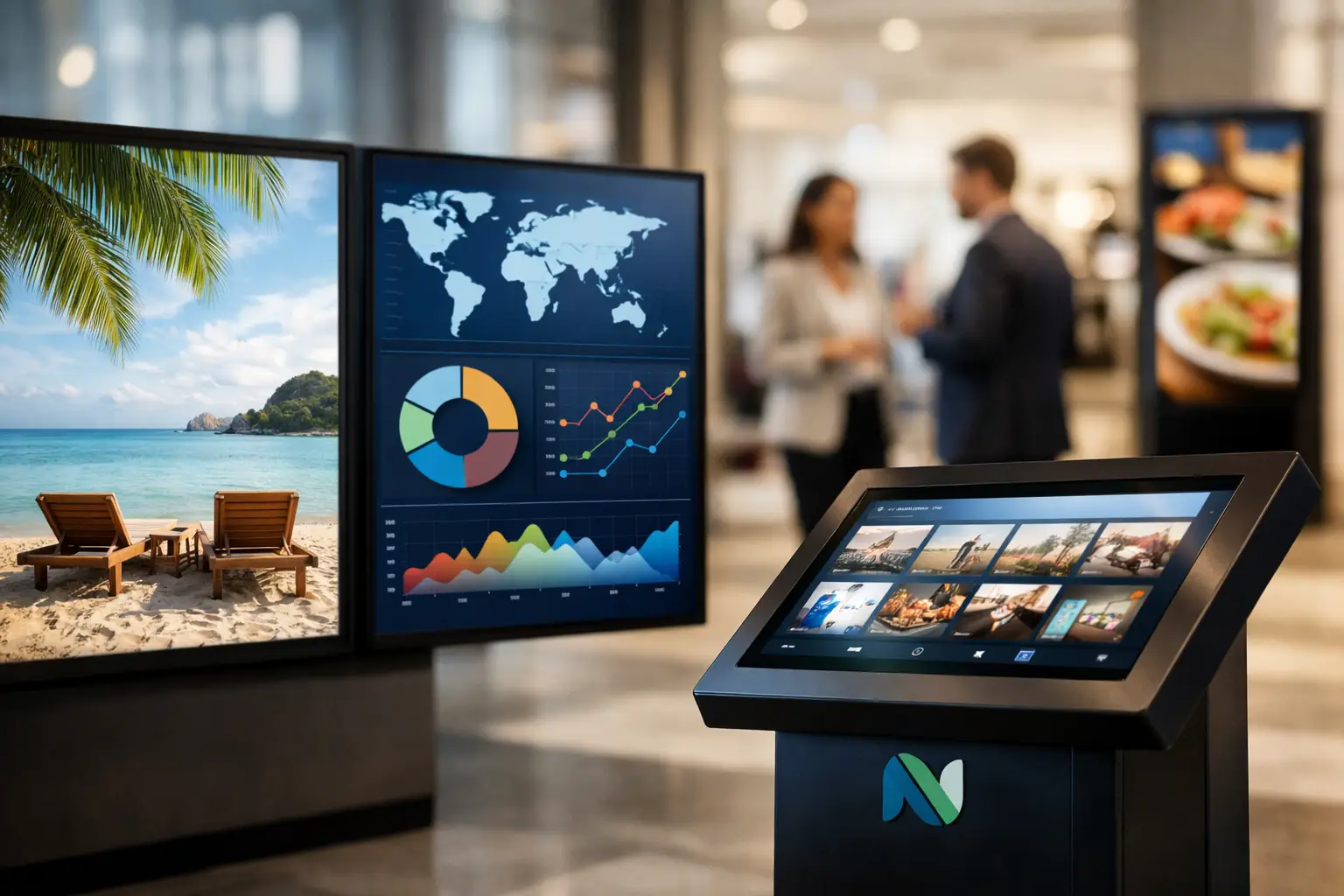
A lobby screen that still runs the same slide deck from six months ago is not helping anyone. The most useful digital signage trends are not about bigger screens or flashier motion. They are about making messages easier to update, easier to target, and more relevant to the people standing in front of them.
For businesses, schools, community organizations, and event venues, that shift matters. Digital signage has moved well beyond basic announcements. It now plays a practical role in promotions, wayfinding, internal communication, scheduling, and brand consistency. The real question is not whether to use it. It is how to use it well.
Digital signage trends are moving toward utility
One of the biggest changes in recent years is the move away from novelty. Screens used to be installed because they looked modern. Now buyers expect them to solve a communication problem.
That has changed the way organizations plan content. A restaurant may use a screen to adjust menus throughout the day. A school may switch between reminders, event notices, and emergency updates. A retail store may rotate promotions based on inventory or season. In each case, the screen earns its place because it does something print alone cannot do in real time.
That does not mean static print is less valuable. In many settings, printed signage and digital displays work better together. Permanent branded graphics, posters, window decals, and directional signs provide consistency, while digital screens handle updates and time-sensitive messages. For many organizations, the strongest approach is not either-or. It is using each format where it performs best.
Content is getting shorter, clearer, and more location-specific
A common mistake with digital signage is treating it like a webpage or brochure. People do not stand in front of a hallway screen ready to read paragraphs. They glance. They move on. The content has to respect that.
That is why one of the most useful digital signage trends is the shift toward shorter messages, stronger hierarchy, and cleaner layouts. Fewer words. Larger type. Clear calls to action. Better contrast. Smarter pacing.
Location matters just as much as design. A waiting room display can support longer dwell time, so it may carry service highlights, upcoming events, or educational content. A screen near a checkout counter needs to be immediate and promotional. An office entrance may focus on welcome messaging, directions, or current announcements.
This sounds simple, but it changes results. When the content fits the space, people actually absorb it. When it does not, the screen becomes background noise.
Motion is being used more carefully
Animation still has value, but constant movement can work against readability. More businesses are learning that subtle motion often performs better than aggressive transitions.
A slight fade, a timed content change, or a short video loop can help draw attention. But if every item flies, spins, or flashes, viewers stop processing the message. Good digital signage feels deliberate. It does not fight for attention at the expense of clarity.
Real-time updates are becoming the standard
Speed is one of the clearest advantages of digital signage, and more organizations are building around that strength. If a promotion changes, an event starts late, a room assignment moves, or weather affects operations, the screen can reflect that quickly.
This is especially useful for businesses with frequent updates or multiple audiences throughout the day. A fitness center can promote morning classes, then switch to personal training offers by afternoon. A conference venue can update schedules between sessions. A community center can rotate programming by age group, date, or department.
The trade-off is that real-time capability only helps if someone is managing content consistently. A neglected screen is often worse than a printed sign because it suggests the information may be unreliable. Businesses considering digital signage should think beyond installation. They should also plan who updates content, how often, and with what approval process.
Better integration with business data
Another of the more meaningful digital signage trends is integration. Screens are no longer isolated devices that only play uploaded images. They can now connect with calendars, menu systems, room booking tools, dashboards, event feeds, and other operational data sources.
That opens the door to practical uses. A dealership can display current offers tied to inventory. A school can pull announcements from a central calendar. A hotel can show meeting room assignments pulled from booking software. A clinic can display queue information or service reminders.
The advantage is consistency and efficiency. The challenge is complexity. Not every business needs advanced integration, and not every screen benefits from automated data feeds. For a small local business, a simple, well-managed content schedule may be more dependable than an overbuilt system. The right setup depends on how often information changes and how critical accuracy is.
Screens are becoming part of the physical environment
Placement used to be an afterthought. Put a screen on a wall, turn it on, and call it done. That approach wastes a lot of potential.
Now, more organizations are treating screens as part of the overall customer environment. That means considering line of sight, lighting, viewing distance, surrounding materials, and how the display fits with other branded elements in the space.
This is where experience in signage and print matters. A digital screen does not live alone. It shares space with window graphics, wall displays, posters, directional signs, counters, menus, and branded interiors. When those elements work together, the result feels organized and professional. When they compete, the space feels cluttered.
For local businesses updating a showroom, office, lobby, or event setup, it often makes sense to plan signage as a full system rather than as separate purchases made over time.
Interactive displays are growing, but selectively
Interactivity gets attention, and in the right setting it can be very effective. Touchscreens can help with directories, product browsing, self-service check-in, or visitor information.
Still, this is one of those areas where it depends. Interactive displays require more planning, more maintenance, and a clearer user path than standard screens. If the audience is in a hurry, or if the information can be delivered more simply through passive signage, interactivity may not add much value.
For many organizations, a non-interactive screen with clear content is still the smarter investment. Interactive signage makes the most sense when users genuinely need to search, select, or navigate.
Content scheduling is getting more strategic
One screen can now serve multiple purposes throughout the day. That flexibility is shaping how businesses think about messaging.
Instead of running the same loop all week, organizations are segmenting content by time, audience, and business goal. Morning messaging might focus on operational updates. Midday might shift to promotions or reminders. Evening content might highlight upcoming events or next-day information.
This matters because context changes. A screen near a school office should not show the same content during student arrival, parent pickup, and after-hours rentals. A restaurant should not promote lunch specials at dinner. A retail screen should not keep pushing sold-out items.
The trend here is not just automation. It is better planning. Strong content calendars lead to stronger results.
Measurement is becoming more practical
For years, digital signage was sometimes sold on vague promises about engagement. Buyers are now asking better questions. Did the promotion increase response? Did fewer people ask for directions? Did event attendance improve? Did internal announcements reach staff more reliably?
That is a healthy shift. Not every screen needs deep analytics, but every signage investment should have a job to do. If the goal is to reinforce branding, support sales, reduce confusion, or improve communication, the content and placement should reflect that goal.
This is especially important for smaller organizations managing budgets carefully. A digital display should not be purchased simply because it looks current. It should support a business function and justify ongoing content effort.
What these digital signage trends mean for local organizations
For many businesses and institutions, the biggest opportunity is not chasing every new feature. It is getting the basics right. Clear content. Smart placement. Consistent updates. Good integration with the rest of the space.
That is often where the best returns come from. A thoughtfully placed screen in a reception area, retail floor, cafeteria, or event venue can improve communication every day. Add strong supporting print materials around it, and the whole environment works harder.
At Noran Printing, we see this firsthand with organizations that want practical signage solutions, not unnecessary complexity. They need messaging that looks professional, stays current, and fits the real pace of daily operations.
The businesses that get the most from digital signage are usually the ones that treat it as part of a larger communication system. They know when to use motion, when to stay simple, and when printed materials still do the job better. That balance is where good signage stops being decoration and starts becoming useful.