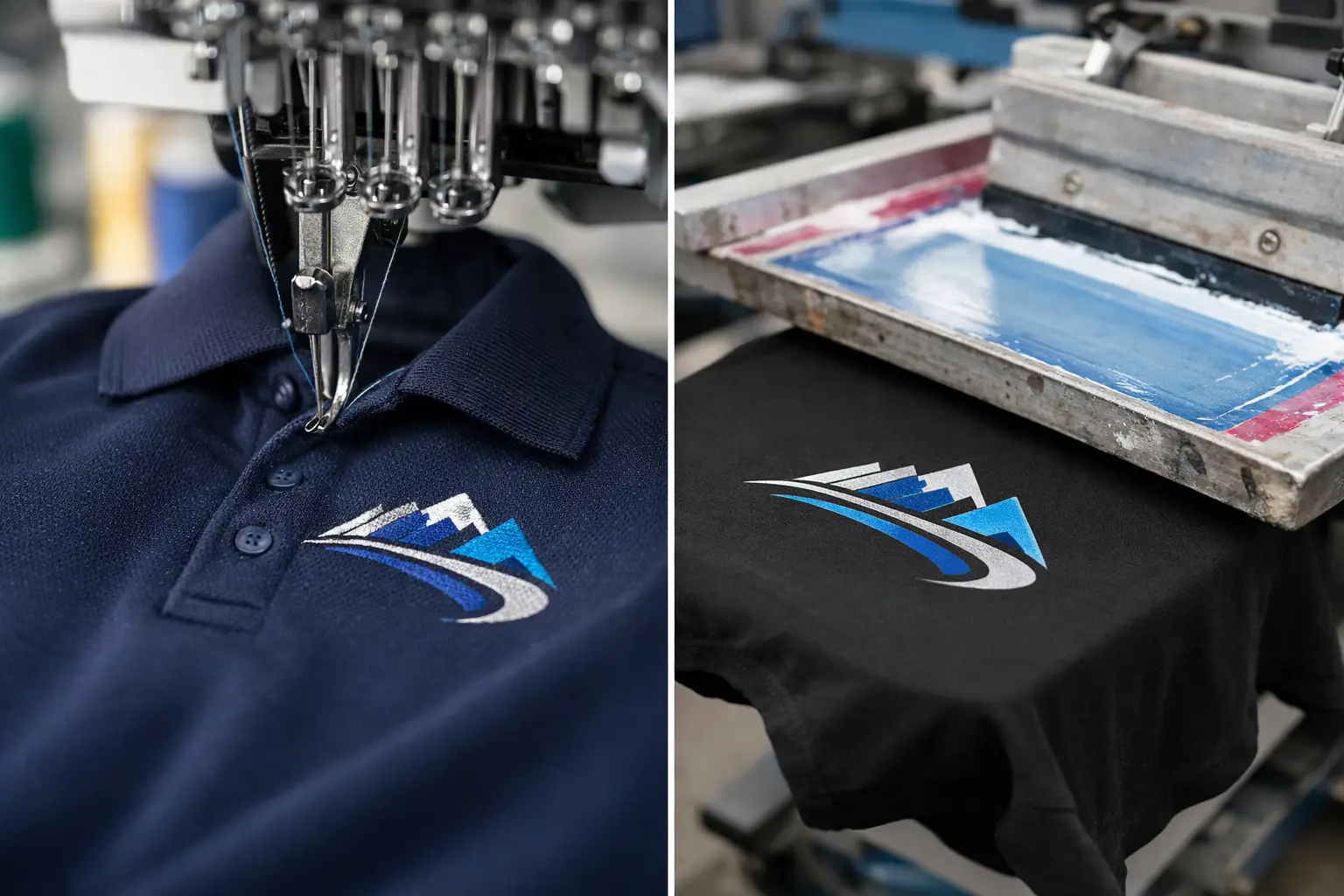
A front-desk polo, a contractor hoodie, and a volunteer event T-shirt should not always be decorated the same way. That is where the decision between embroidered uniforms vs screen printing matters. The right method affects how your brand looks, how long the apparel lasts, how comfortable it feels, and how far your budget goes.
For many businesses and organizations, this is not really a design question. It is an operations question. You need uniforms that look professional, hold up to regular use, and make sense for the type of garment and the number of pieces you are ordering. Embroidery and screen printing can both do that well, but they do it in different ways.
Embroidered uniforms vs screen printing: the core difference
Embroidery uses stitched thread to create a logo or design directly on the garment. It adds texture, dimension, and a more structured appearance. You see it most often on polos, button-down shirts, jackets, hats, and heavier workwear.
Screen printing applies ink to the fabric surface through a stencil process. It is a strong option for larger graphics, bold artwork, and high-quantity runs. It is commonly used on T-shirts, hoodies, team apparel, and event garments.
If you want the shortest version, embroidery usually leans more premium and durable for uniform programs, while screen printing usually gives you more flexibility for larger designs and lower per-piece pricing on volume orders. That said, the best choice depends on fabric, logo style, wear conditions, and budget.
When embroidery makes more sense
Embroidery is often the better fit when your goal is a polished, long-term uniform. A stitched logo on a left chest polo or work shirt tends to read as more formal and established than a printed mark. For customer-facing teams, office staff, hospitality workers, trades, and service businesses, that can make a real difference.
It also performs well on garments that need to stand up to repeated wear. Jackets, fleece, work shirts, and caps generally handle embroidery very well because the fabric can support the stitching without losing shape. The finished result feels permanent and substantial, which is one reason many companies choose it for core staff apparel.
There is also a branding advantage. Embroidery gives logos a tactile quality that often looks strong on simpler marks – especially text logos, icons, and classic emblems. If your logo has clean lines and limited color changes, embroidery can present it in a sharp, professional way.
The trade-off is detail. Fine gradients, tiny text, and highly intricate artwork do not always translate cleanly into thread. Some logos need adjustment before they can be embroidered well. There is also the question of garment feel. A heavily stitched area can feel thicker and less flexible than print, especially on lightweight apparel.
Where screen printing has the edge
Screen printing shines when you need visual impact, quantity, or larger artwork. If you are ordering shirts for an event, a school group, a recreation program, a campaign, or a seasonal promotion, screen printing is often the most practical route.
It handles bold graphics better than embroidery, especially across the full front or back of a shirt. You can reproduce larger logos, slogans, and graphic layouts without adding weight or stiffness to the garment. On lightweight cotton and performance tees, that matters.
Cost is another major reason buyers choose screen printing. Once setup is complete, the per-piece cost usually becomes more economical on larger runs. If you need dozens or hundreds of shirts, screen printing can stretch the budget further than embroidery.
It is also the better fit for artwork with more design freedom. While every print method has limits, screen printing can handle shapes, fills, and graphic elements that would be difficult or expensive to stitch. If your design is meant to be seen from a distance or carries more of a promotional than uniform function, print often makes more sense.
The trade-off is that it generally looks less formal than embroidery. Even when executed well, screen printing tends to feel more casual. That is not a problem for many uses, but it is something to consider if your apparel is part of a professional daily uniform.
Cost depends on more than the decoration method
Buyers often ask which option is cheaper, but that question needs context. Embroidery usually has a higher per-item cost, especially if the logo is large or stitch-heavy. A small left chest logo on polos may be manageable, but a full-back embroidered design can become expensive quickly.
Screen printing often starts with setup costs tied to the number of colors and screens required. On small runs, those setup costs can make the order less cost-effective. On larger runs, the price per shirt usually drops enough to make screen printing the stronger value.
Garment type affects the equation too. Embroidering structured polos, outerwear, and hats is common and efficient. Printing on those same items may be less practical or less attractive. On basic T-shirts, the opposite is often true.
This is why a quick price comparison can be misleading. The better question is which method gives you the right look and durability for the garments you actually need.
Appearance, comfort, and brand impression
Uniform apparel does a job before anyone speaks. It tells customers whether your team looks organized, established, and ready to represent the business well. That first impression matters just as much as decoration cost.
Embroidery usually gives a stronger impression of permanence and professionalism. It works especially well for businesses that want a clean, consistent staff appearance across locations or departments. Medical offices, financial services, hospitality teams, contractors, and municipal or institutional staff often lean this way for good reason.
Screen printing creates a different kind of impact. It feels more energetic, more graphic, and often more approachable. For community events, school programs, recreation teams, fundraisers, and promotional apparel, that can be exactly right.
Comfort should not be overlooked either. A printed design sits flatter and lighter on many garments, which can make it more comfortable for activewear or all-day casual use. Embroidery, while durable, introduces thickness where the stitching sits. On outerwear and heavier garments, that is rarely an issue. On thin shirts, it can be.
Matching the method to the garment
One of the most common mistakes in apparel decoration is choosing the method first and the garment second. In practice, those decisions should work together.
Embroidery is usually ideal for polos, woven shirts, fleece, jackets, vests, hats, and sturdier workwear. These pieces benefit from the elevated look and can support the stitching well.
Screen printing is often the stronger choice for T-shirts, sweatshirts, athletic shirts, and promotional apparel where larger graphics or softer wearability matter more. It is also useful when you need front and back decoration or multiple design placements without driving the cost too high.
In some cases, a mixed approach works best. A business might use embroidered polos for daily staff uniforms and screen-printed shirts for events, outreach, or seasonal campaigns. That gives you a consistent brand while using each method where it performs best.
How to choose for your order
If you are deciding between embroidered uniforms vs screen printing, start with four practical questions. How often will the garment be worn? What kind of impression should it make? How detailed is the logo? How many pieces do you need?
For long-term employee uniforms, embroidery often delivers the better return because it holds its shape, looks established, and suits the garments most teams actually wear on the job. For short-run promotions, large event orders, or bold graphic apparel, screen printing usually offers better value and more visual range.
It is also worth thinking about consistency across your broader branded materials. Many organizations want apparel, forms, signage, promotional items, and printed pieces to feel coordinated. Working with one experienced provider can make those decisions easier because the recommendation is based on how the pieces work together, not just on one item in isolation.
For businesses and organizations in Kamloops, that local guidance matters when deadlines are tight and apparel needs are tied to real operations, not just marketing ideas.
A good uniform choice is not the one that sounds more premium or costs less on paper. It is the one that fits the job, the garment, and the way your team actually works. If you start there, the right decoration method usually becomes clear.