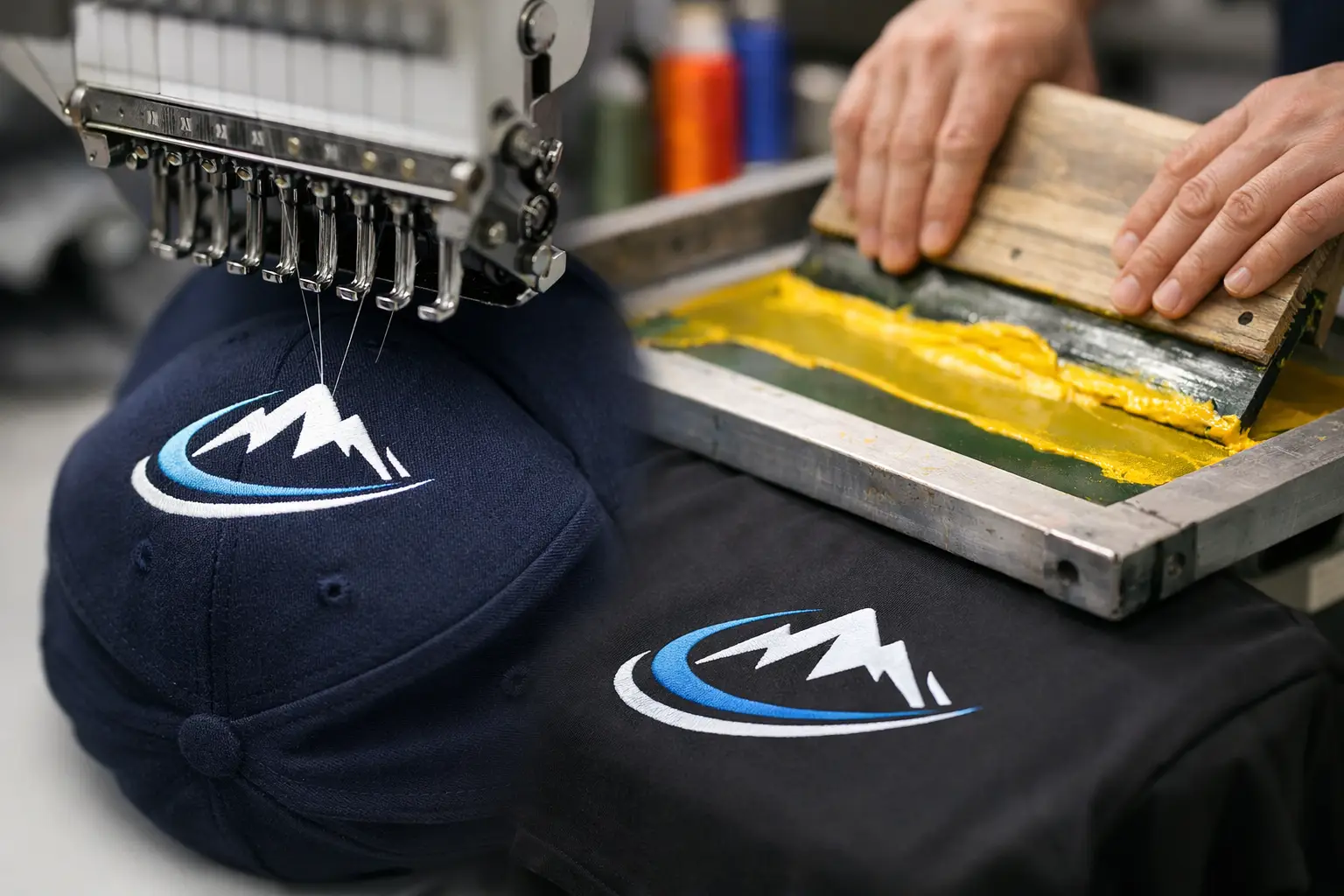
A staff jacket, a fundraiser T-shirt, and a set of work shirts can all carry the same logo, but they should not all be decorated the same way. That is where embroidery and screen printing become a practical business decision, not just a design choice. The right method affects durability, appearance, comfort, budget, and how your brand is perceived every time someone wears it.
For many businesses and organizations, the question is not which method is better overall. It is which method is better for this item, this logo, and this use. When you look at apparel ordering that way, the decision gets much clearer.
What embroidery and screen printing each do best
Embroidery uses thread stitched directly into the garment. It creates a textured, dimensional finish that feels substantial and polished. On polos, jackets, hats, and workwear, embroidery often gives a stronger professional impression because it looks permanent and structured.
Screen printing applies ink to the fabric through a stencil process. It produces a smooth printed graphic that can handle larger designs, bold artwork, and strong visual coverage across the front, back, or sleeves. For T-shirts, event apparel, team shirts, and promotional clothing, screen printing is often the more flexible and cost-effective option.
Neither method is automatically the right answer every time. A clean left-chest company logo on a collared shirt usually leans toward embroidery. A full-front graphic for a school event usually leans toward screen printing. The garment, the logo, and the purpose all matter.
How to choose between embroidery and screen printing
The fastest way to narrow the choice is to think about where the logo will sit and how the garment will be used. Small placement areas, especially on structured garments, tend to suit embroidery well. Larger artwork and more graphic-heavy designs generally fit screen printing better.
There is also a brand perception piece. Embroidery often reads as premium, uniform-ready, and long-term. Screen printing can feel more casual, energetic, and promotional. That does not mean one is more valuable than the other. It means they communicate differently.
Budget plays a role too. Embroidery is usually priced around stitch count and setup, while screen printing is shaped by factors such as number of colors, print locations, and quantity. For larger runs of shirts with the same design, screen printing often becomes more economical. For smaller logo placements on higher-value garments, embroidery can make more sense.
When embroidery is the better fit
Embroidery works especially well when you want apparel to feel like part of a uniform or long-term brand asset. Think staff polos, outerwear, hats, and button-down work shirts. The stitched finish holds up well and adds visual depth that printed ink cannot replicate in the same way.
It is also a smart choice when your logo is simple, clean, and compact. Text, icons, and basic shapes usually translate well into thread. If the design is being placed on a left chest, sleeve, or cap front, embroidery is often the stronger option.
That said, embroidery has limits. Very fine detail, tiny lettering, gradients, and complex shading do not always convert cleanly into stitches. Thick stitching can also be less comfortable on lightweight garments, especially if the design area is large. A logo that looks excellent on a jacket may not be ideal across the front of a soft T-shirt.
When screen printing is the better fit
Screen printing shines when you need impact. Large logos, back prints, event graphics, team names, and bold promotional apparel all benefit from the crisp, graphic look of ink on fabric. It is especially effective for T-shirts, hoodies, and high-volume orders where visual consistency and cost control matter.
If your artwork includes broader coverage, stronger contrast, or multiple print placements, screen printing is usually easier to execute well. It also keeps the garment lighter and more flexible than a large embroidered design would.
The trade-off is that screen printing does not create the same textured, elevated feel as embroidery. On some garments, especially premium collared apparel or structured headwear, a printed logo may look less refined than a stitched one. Durability is still strong when the job is done correctly, but the look and feel are different by design.
The logo itself matters more than many buyers expect
One of the most common mistakes in custom apparel ordering is assuming a single logo file should be used the same way on every item. In practice, a logo often needs to be adapted for decoration method and garment type.
A detailed logo with small text may need a simplified embroidered version for hats or left-chest polos. A one-color event logo may be perfect for screen printing on shirts but too broad or dense for stitching. Good production planning means looking at the artwork before the order is placed, not after garments are already chosen.
This is where working with an experienced local print partner can save time and avoid rework. A quick conversation about logo size, garment type, and intended use can prevent common issues such as unreadable text, heavy stitching, or artwork that looks good on screen but not on fabric.
Garment choice changes the outcome
The same decoration method can look very different depending on the material. Heavy jackets, fleece, work shirts, and structured caps tend to support embroidery well because they can carry the weight and definition of the stitching. Lightweight performance shirts or thin fashion tees may not.
Screen printing also behaves differently across garment types. Cotton shirts generally print very well, while blends and specialty fabrics may require specific inks or production adjustments. Dark garments, light garments, and athletic wear can all affect how the final print appears.
That is why apparel selection should happen alongside decoration planning. Choosing the garment first and asking questions later can lead to compromises. A better process is to decide what the apparel needs to do, then match the decoration method to both the logo and the fabric.
Order size, repeat use, and budget planning
For businesses, schools, and organizations placing recurring apparel orders, the smartest decision is often the one that works over time, not just on one purchase order. If you are outfitting staff every season, consistency matters. If you are ordering for a one-day event, speed and unit cost may matter more.
Embroidery often makes sense for employee apparel that will be worn regularly and needs to maintain a professional appearance. Screen printing often makes more sense for campaign shirts, fundraising apparel, youth programs, and larger event runs where quantity and visibility are priorities.
There are also situations where using both methods is the right move. A business might choose embroidered polos for front-facing staff and screen-printed T-shirts for community events or volunteer days. A school might use embroidery for faculty apparel and screen printing for student spirit wear. Matching the method to the purpose usually gives the best return.
Why one vendor for apparel and print can make life easier
Many organizations are not just ordering shirts. They are also managing business cards, forms, event posters, handouts, signage, and promotional materials. Handling those needs through one dependable print provider can reduce errors, save time, and create more brand consistency across every item.
That matters even more when deadlines are tight or multiple departments are involved. Having one team that understands your logo usage, color expectations, and production standards can make apparel ordering more efficient. It also means you are less likely to repeat setup conversations or chase approvals across several suppliers.
For businesses and organizations in Kamloops and the surrounding area, that local coordination can be a real advantage. When you need practical guidance, dependable turnaround, and quality control you can count on, it helps to work with a shop that handles branded materials as part of a broader service model rather than as a one-off add-on.
A better question than which is better
The better question is not embroidery or screen printing. It is what do you need this garment to do for your brand. If the goal is a polished, durable uniform look, embroidery is often the right choice. If the goal is reach, visibility, and cost-effective impact on apparel, screen printing is often the better fit.
The strongest apparel programs usually come from making those decisions item by item instead of forcing one method onto every order. When the decoration, garment, and logo all line up, the result looks better, wears better, and works harder for your business.
If you are planning branded apparel, start with the real-world use of the piece. A good print partner can help with the rest, and that usually leads to better results than choosing based on price alone.