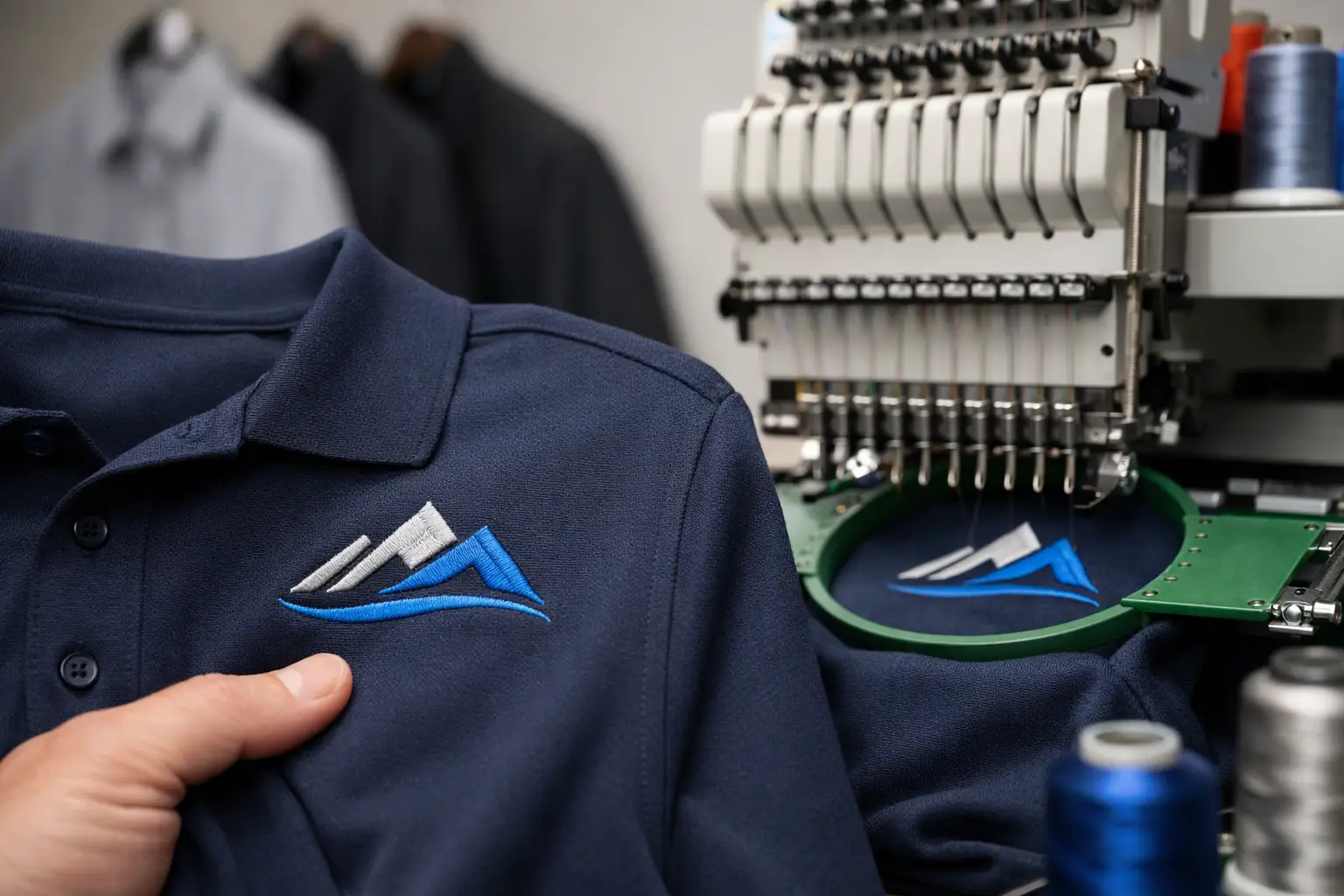
A polo with a crisp stitched logo says something before your staff says a word. It tells customers your business is organized, established, and paying attention to details. That is why embroidery for corporate apparel remains one of the most reliable choices for companies that want branded clothing to look professional on day one and still look professional after repeated wear.
For many businesses, the appeal is simple. Embroidery holds up well, adds texture and depth, and gives uniforms and branded apparel a more permanent feel than many other decoration methods. It is especially well suited to workplaces where staff are customer-facing, apparel is worn often, and the brand needs to look consistent across departments, locations, or events.
Why embroidery for corporate apparel still works
Corporate apparel has to do more than carry a logo. It needs to represent your company in sales meetings, on job sites, at trade shows, behind counters, and during community events. Embroidery works in these settings because it balances appearance and durability better than most options.
A stitched logo has structure. It looks clean on polos, jackets, fleece, button-downs, hats, and outerwear. It also handles repeated washing better than many printed applications, which matters when uniforms are part of daily operations. If your team wears branded apparel every week, not just once or twice a year, that long-term performance matters.
There is also a perception advantage. Embroidery tends to read as more premium, especially for service businesses, professional offices, hospitality teams, schools, and organizations that want a neat, established look. Screen printing can be the better fit for bold artwork or large-run promotional shirts, but embroidery often wins when the goal is polished presentation.
Where embroidery makes the most sense
Not every garment needs embroidery, and not every logo should be stitched at the same size or location. The best results come from matching the method to the use case.
For everyday staff uniforms, left-chest embroidery is the standard for a reason. It is readable without being oversized, and it suits most polos, woven shirts, quarter-zips, and jackets. For outerwear, embroidery also performs well because the thicker fabric supports the stitching and gives the logo a strong, clean finish.
Hats are another natural fit. A well-digitized logo can look sharp on structured caps, toques, and other headwear, making them useful for both staff use and promotional distribution. On the other hand, lightweight performance shirts or very thin fabrics can be trickier. Embroidery can still work, but backing, stitch density, and logo size need more attention to avoid puckering or distortion.
That is where guidance from an experienced print and apparel provider matters. A design that looks good on a business card does not automatically translate well to thread.
What logos work best in embroidery
The strongest embroidered logos are usually simple, clear, and scaled correctly. Fine outlines, tiny text, gradients, and highly detailed artwork often need adjustment before they stitch well. Embroidery is a physical process, not a flat print surface, so there are practical limits.
Small lettering is one of the most common issues. If your logo includes a tagline or secondary line of text, it may need to be enlarged, simplified, or removed for smaller applications. This is not about changing your brand. It is about making sure the finished piece looks clean instead of crowded.
Color also behaves differently in thread than in print. Thread has sheen and texture, which can make some shades appear richer or slightly different from ink on paper. Most of the time, that is a benefit, but brand-sensitive businesses should still review thread selections carefully. If consistency matters across uniforms, brochures, forms, signage, and promotional items, having one local partner oversee branded output can help keep everything aligned.
Choosing the right garments
Good embroidery starts with good apparel. A premium stitch job on a poor-quality shirt does not solve much. The fabric, fit, and function of the garment all affect how your brand is perceived.
Polos remain the most popular choice for corporate use because they bridge casual and professional well. They work for front-desk staff, sales teams, event crews, and service technicians. Button-down shirts can create a more formal look, while fleece and softshell jackets are practical for businesses with outdoor staff or cooler working conditions.
It helps to think beyond the logo and ask how the garment will actually be worn. Will employees be moving all day? Meeting clients? Working outside? Attending trade shows? A uniform program only works if staff will wear it comfortably and consistently.
This is also where budget decisions become more strategic. Sometimes a slightly better garment delivers more value because it lasts longer, fits better, and gets worn more often. Other times, a basic but dependable option is the right call for larger teams or temporary event use. It depends on the role, the environment, and how often replacement orders are likely to happen.
The setup process matters more than most buyers expect
One reason embroidery can look excellent or disappointing comes down to setup. Before stitching begins, artwork needs to be digitized. This means converting the logo into a stitch file that tells the machine how to sew the design.
Digitizing is not a basic file conversion. It requires judgment about stitch direction, density, underlay, sequencing, and compensation for fabric movement. A logo that is digitized properly will stitch cleaner, hold shape better, and look more consistent across garments.
That is why approval matters. Buyers should expect to review sizing, placement, and design treatment before a larger run moves ahead. If you are ordering for multiple staff roles, it is also worth checking whether each garment type needs the same application. A left-chest logo on a polo may need slightly different sizing than the same logo on a jacket or cap.
For businesses ordering on behalf of a team, getting this part right saves time later. It reduces rework, helps maintain consistency on repeat orders, and makes onboarding new staff easier when the branding standards are already established.
Embroidery versus screen printing
This is not really a question of which method is better overall. It is a question of which method fits the garment, the artwork, and the purpose.
Embroidery is usually the better choice when you want a refined, long-lasting logo on polos, jackets, hats, and workwear. It handles smaller logo placements well and gives apparel a structured, professional finish. Screen printing is often better for large designs, graphic-heavy artwork, and budget-conscious T-shirt runs where quantity is high and the look is more promotional than uniform-driven.
Many businesses use both. They might embroider staff polos and outerwear, then screen print event shirts or giveaway apparel. A one-stop shop approach helps here because you can keep the branding consistent while choosing the right production method for each item.
How to order embroidery for corporate apparel with fewer problems
The smoothest orders usually start with a few clear decisions. Know which garments are for everyday uniforms and which are for occasional use. Decide where the logo should appear and whether all team members need the same apparel. Think about sizing early, especially if multiple departments or locations are involved.
It also helps to share your logo in the best format available and mention any brand standards upfront. If exact thread matching, placement, or apparel style matters, say so early rather than after a proof is prepared. For repeat programs, keeping records of approved garments and embroidery files saves time and avoids guesswork.
Local service can make a real difference here. When you can ask questions, compare options, and reorder through a provider who already understands your business, the process tends to be faster and more accurate. For companies in Kamloops and surrounding communities, that kind of responsiveness is often as valuable as the stitching itself.
Noran Printing works with businesses and organizations that need that level of consistency across apparel, print, and branded materials. For teams that are tired of juggling multiple vendors, that can simplify more than just one order.
A better long-term branding choice
Embroidery is not the cheapest way to decorate every garment, and it is not the right solution for every design. But when appearance, durability, and professionalism matter, it remains one of the smartest investments in branded apparel.
If your team needs clothing that can stand up to regular wear while still representing your business well, embroidery is hard to beat. The right garment, the right logo treatment, and the right production partner make the difference between apparel that simply has a logo on it and apparel that actually strengthens your brand every time it is worn.