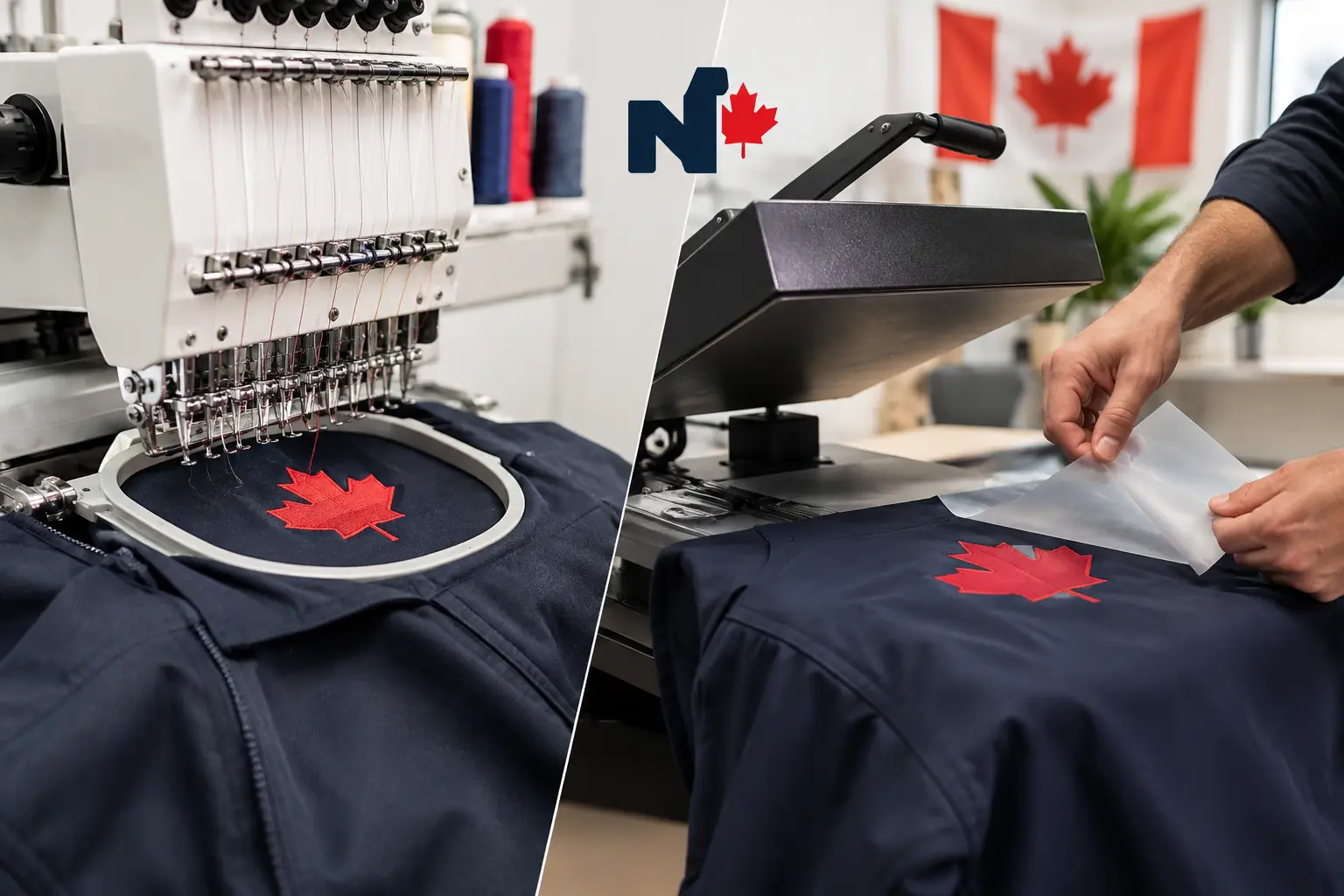
A logo can look excellent on a computer screen and still be the wrong choice for a jacket, polo, or event shirt. The decision between embroidery versus heat transfer affects how your apparel feels, how long it lasts, how clearly small details reproduce, and how your team is perceived when they wear it.
For uniforms, staff apparel, school gear, and promotional clothing, there is no single best decoration method. The right answer depends on the garment, artwork, quantity, budget, and job the item needs to do. A construction crew’s work jackets have different requirements than a one-day fundraiser shirt, and both deserve a finish that looks professional.
Embroidery Versus Heat Transfer: The Core Difference
Embroidery creates a design with thread stitched directly into the garment. It adds texture, dimension, and a traditional premium appearance. You see it most often on polos, button-up shirts, hats, fleece, outerwear, bags, and uniforms where a durable, established look matters.
Heat transfer applies a printed or cut design to the garment using heat and pressure. Depending on the process, it can reproduce full-color artwork, fine text, gradients, photographs, names, and detailed logos with a smooth finish. It is often a practical choice for T-shirts, athletic apparel, event wear, team names and numbers, and short-run orders.
Neither method is automatically more professional. The design and garment determine the result. A bold, simple logo on a heavyweight polo may look best embroidered. A logo with small type, multiple colors, or a detailed illustration may look sharper as a heat transfer.
When Embroidery Is the Better Choice
Embroidery is built for apparel that needs a polished, long-term uniform look. Thread holds up well through regular wear and laundering when the garment and design are properly matched. It also gives branded clothing a tactile quality that printed decoration cannot duplicate.
This makes embroidery a strong option for office uniforms, hospitality apparel, service teams, company outerwear, branded hats, and workwear. For many local businesses, an embroidered left-chest logo on a polo or jacket immediately communicates consistency and professionalism.
The process works particularly well with logos that have clear shapes and limited detail. Solid lettering, icons, and simple marks generally stitch cleanly. A logo does not need to be one color, but designs with fewer colors and less intricate detail are usually more efficient and easier to read in thread.
Embroidery also has limits worth considering. Very small text can become difficult to stitch clearly, especially on textured fabrics. Fine lines may need to be simplified, and color blends will not reproduce the same way they do in print. Stitching can also add weight and stiffness, which is rarely a concern on a jacket or polo but may be less comfortable on a lightweight performance shirt.
Large embroidered designs can become costly because stitch count drives production time. A small chest logo is usually an excellent embroidery application. A large, full-back graphic is generally not.
Garment construction matters
A quality result starts with the garment itself. Stable fabrics such as pique polos, twill, fleece, canvas bags, and structured caps support embroidery well. Thin, stretchy, or very lightweight materials require additional care to avoid puckering or distortion.
A dependable decorator will review the fabric, placement, and logo size before production. That review prevents a common mistake: choosing a decoration method based only on appearance without accounting for how the garment will behave once it is worn and washed.
When Heat Transfer Is the Better Choice
Heat transfer earns its place when artwork needs precision, color range, or flexibility. It can reproduce small text and fine details that may not translate cleanly into thread. It is also ideal when each garment needs different information, such as employee names, player numbers, department labels, or event roles.
For a charity run, tournament, staff event, school activity, or promotional campaign, heat transfer can provide vibrant graphics without the setup constraints associated with more traditional decoration methods. It is particularly useful for full-color logos and designs that include shading, photographic elements, or multiple colors.
Heat transfers are also well suited to performance apparel. Many athletic fabrics are lightweight, moisture-wicking, and stretchy. A properly selected transfer can preserve more of that flexibility than dense embroidery, especially for larger graphics or designs placed on the back of a shirt.
Modern heat transfer products are not all the same. Some use printed transfers, some use cut vinyl, and some are designed specifically for specialty fabrics. The best choice depends on the design, quantity, fabric, and expected use. A professional recommendation should account for all four rather than treating every transfer as interchangeable.
The main trade-off is feel and long-term wear. Heat transfers sit on the surface of the fabric, so a large design may feel more noticeable than ink or thread. Quality transfers applied correctly can last very well, but garment-care instructions matter. Excessive heat, harsh washing practices, or improper application can shorten their life.
Detail and color are heat transfer strengths
If your logo includes a thin tagline, a detailed crest, color gradients, or several shades that need to remain distinct, heat transfer may offer the clearest result. It gives organizations more freedom to use their existing brand artwork without simplifying it heavily for thread.
That can be especially valuable when apparel needs to match printed brochures, signage, presentation folders, or event materials. Keeping colors and logo details consistent across branded items helps customers recognize your organization quickly.
Compare the Practical Factors Before You Order
The fastest way to choose is to start with the garment’s purpose. Will it be worn every day on the job? Is it a giveaway for a weekend event? Does it need individual names? Is the logo simple enough to stitch well? These questions narrow the decision quickly.
Durability is important, but it should be understood in context. Embroidery is highly durable and often ideal for garments with a long service life. Heat transfer can also perform very well, particularly when a quality product is selected and applied to the right fabric. The better choice is the one that suits the garment’s use rather than the one with the broadest reputation for durability.
Budget is another practical consideration. Embroidery usually involves a one-time digitizing process to prepare artwork for stitching, and the stitch count affects the per-piece cost. Heat transfer may be more cost-effective for detailed multicolor artwork, small quantities, or personalized pieces. For larger orders with simple graphics, other apparel decoration methods may also deserve consideration.
Placement matters as much as method. A small embroidered logo on the left chest is a classic uniform choice. A full-color heat transfer on the back can provide strong visibility for an event, crew shirt, or team apparel. Many effective programs use both: embroidery for the front and a transfer for a larger, more detailed back design.
Avoid These Common Apparel Decoration Mistakes
The most expensive apparel order is often the one that has to be replaced. Avoid choosing a method solely because it worked on a different garment or because it is familiar. Fabric weight, stretch, texture, and intended use all change the recommendation.
Do not send artwork without considering its final size. A logo that looks readable at eight inches wide may lose critical detail at a three-inch chest placement. In many cases, simplifying a small logo variation produces a stronger branded result than forcing every line of the original artwork into a limited space.
It also helps to plan garment care before ordering. If uniforms will be washed frequently in commercial laundry conditions, say so early. If shirts are for an outdoor event, athletic use, or a specific safety role, those details affect both garment selection and decoration method.
Choosing With Confidence
For everyday uniforms, structured hats, polos, fleece, and outerwear, embroidery often delivers the enduring, professional finish businesses want. For detailed artwork, full-color graphics, lightweight performance apparel, and personalization, heat transfer often provides better clarity and flexibility.
The best results come from looking at the actual logo and garment together. At Noran Printing, that means helping customers make a practical choice before production begins, so their apparel supports the same dependable image as the rest of their printed and branded materials.
Bring the intended garment, logo, quantity, and use case into the conversation. A few minutes spent matching the decoration method to the job can turn a standard shirt or jacket into branded apparel your team will be proud to wear.