A promotional item is rarely judged by its logo first. People notice whether it is useful, comfortable, durable, and appropriate for the moment. That is why a guide to corporate promotional merchandise should start with the recipient, not the catalog. The right item can keep your business visible long after a meeting, community event, or staff appreciation day. The wrong one can become clutter before the event is over.
For businesses and organizations, promotional merchandise works best as a practical extension of the brand. It should carry the same care as your business cards, brochures, signage, and uniforms: clear messaging, accurate color, and a finish that reflects how you want to be remembered.
Start With the Purpose of the Item
Before choosing products, define what the merchandise needs to accomplish. A giveaway at a busy community event has different requirements than gifts for long-term clients or apparel for a staff team. Promotional products are often expected to do several jobs at once, but choosing one primary purpose keeps the decision focused.
For lead generation, low-cost and easy-to-carry items can make sense because you may need hundreds or thousands. For employee recognition, a higher-quality piece with a more personal feel is usually a better investment. For client gifts, usefulness and presentation matter more than reaching the lowest possible unit price.
Think about when and where the item will be used. A branded pen belongs naturally at a reception desk, conference table, or in a contractor’s vehicle. A water bottle may be more useful for a recreation program, workplace wellness initiative, or outdoor event. Embroidered jackets, hats, and polos build a professional team appearance, while tote bags can provide ongoing visibility in grocery stores, trade shows, and community spaces.
The setting also affects what is practical. If recipients will be traveling, bulky or fragile products may create inconvenience. If your event is outdoors, select items that hold up to weather and frequent handling. If the item is intended for a school, nonprofit, or public event, make sure the design is accessible and the product is suitable for a broad range of ages and needs.
Choose Merchandise People Will Actually Keep
The most effective promotional merchandise earns a place in everyday life. It does not need to be expensive, but it should have a clear use. This is where quality makes a measurable difference. A pen that writes smoothly, a tote with solid handles, or a mug that feels substantial gives people a better impression than a novelty item that fails quickly.
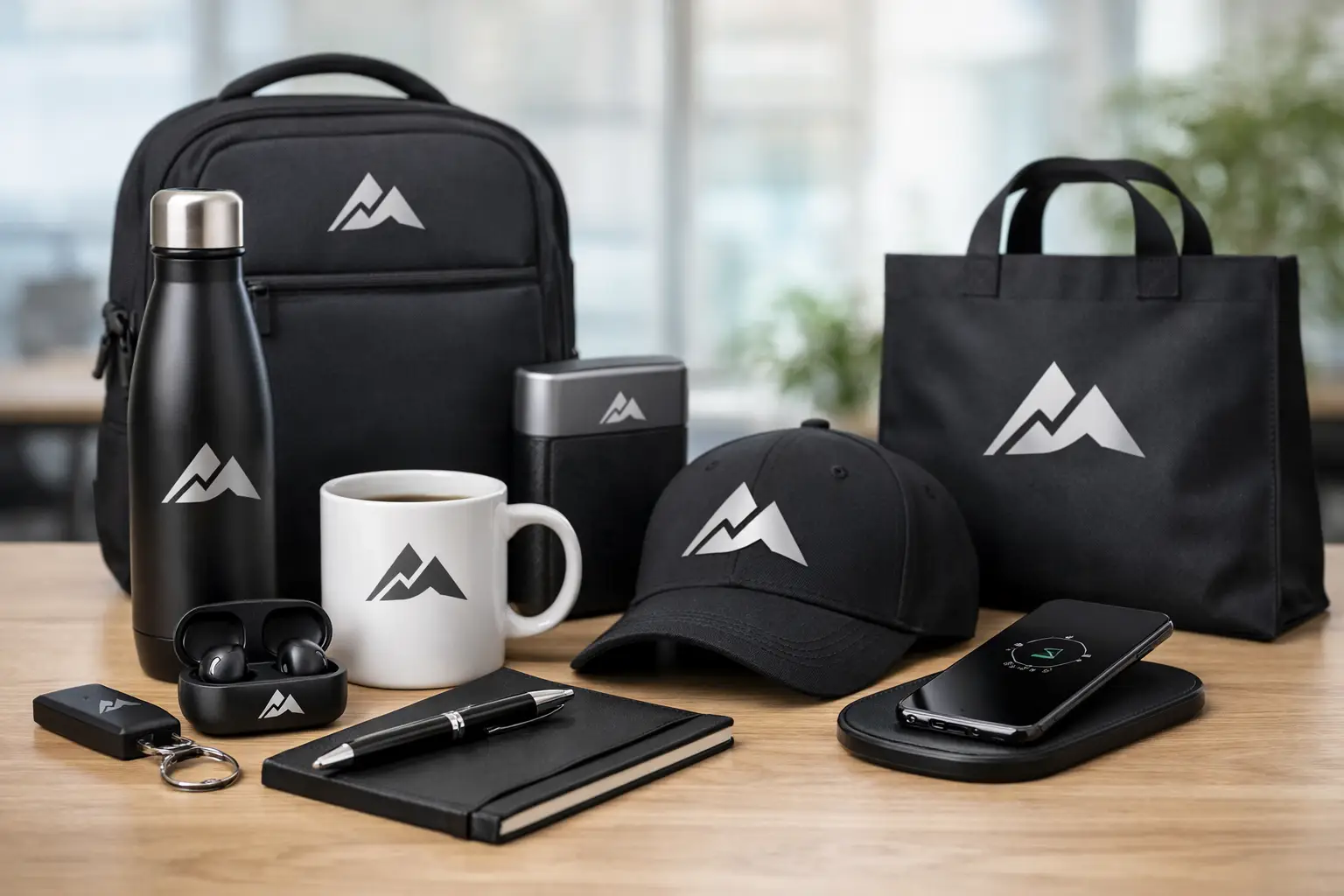
Useful choices often include drinkware, notebooks, pens, tote bags, apparel, keychains, tech accessories, desk items, and event-specific products. The best category depends on your audience. A construction company may get more value from durable workwear and insulated drinkware than from a desk accessory. An accounting office may prefer notebooks, folders, and quality pens for client meetings. A local festival might benefit from reusable bags, hats, or apparel that attendees will wear after the event.
Avoid selecting an item only because it is unusual. Novelty can attract attention, but it is not always memorable in the right way. A product should support the way your audience already works, travels, shops, or relaxes. If you cannot picture the recipient using it more than once, consider another option.
Match the Product to the Audience
Audience fit is often the difference between merchandise that performs and merchandise that sits in storage. Consider the recipient’s role, work environment, interests, and relationship with your organization. Employees may appreciate products that create belonging, such as embroidered apparel or a well-made travel mug. Prospective customers may respond better to a simple, useful giveaway with a straightforward call to action.
It also helps to consider whether the item is for a single decision-maker or a broader group. An executive client gift can justify a more refined presentation. A high-volume open house giveaway needs broad appeal, reasonable cost, and easy distribution. Neither approach is automatically better. The right choice depends on the relationship you are building.
Make the Branding Easy to Read
Promotional products offer limited space, so the design must be disciplined. Trying to include a logo, slogan, full service list, phone number, website, social handles, and several colors on a small item usually weakens the result. Your logo or organization name should be the priority, followed by only the information that genuinely helps the recipient reconnect with you.
A clean imprint is more likely to be read and remembered. On smaller products, a single-color logo may produce a stronger result than a crowded full-color layout. On apparel, embroidery can create a polished, long-lasting look, while screen printing may be the more effective option for larger artwork or event graphics. Print method is not just a production detail – it affects appearance, durability, cost, and what designs will reproduce well.
Color accuracy matters, particularly when your merchandise needs to align with existing printed materials, uniforms, signs, or brand standards. Provide approved logo files whenever possible and ask to review the artwork before production. A proof gives you the opportunity to catch issues with spelling, layout, sizing, or color choices before they become part of the finished order.
Keep the Message Relevant
A promotional item can carry more than a logo when there is a reason for it. A campaign message, anniversary date, event name, or program theme may add meaning and make the piece feel timely. But short-lived messaging can limit how long an item remains useful. If you want merchandise that stays in circulation for years, keep the design evergreen.
For seasonal campaigns or annual events, dated artwork can be exactly the right decision. The trade-off is that any remaining inventory may be harder to use later. Estimate your quantity carefully and avoid ordering far beyond what the event or campaign can realistically distribute.
Set a Budget Around Value, Not Unit Price
The lowest price per item is not always the lowest cost to your organization. A product that recipients discard quickly has little promotional value, even if it was inexpensive. At the same time, premium merchandise is not necessary for every purpose. A sound budget considers audience size, expected use, distribution method, artwork complexity, and how long you want the item to remain in circulation.
Quantity has a major effect on pricing, but ordering more only makes sense if you have a plan to use it. Consider your expected event attendance, sales team needs, employee count, and storage space. Add a sensible buffer, not an arbitrary surplus. Many organizations benefit from ordering core items in repeatable quantities while reserving higher-end products for clients, staff milestones, or special events.
Ask about setup charges, decoration locations, number of imprint colors, size options, and lead times early in the process. These factors can change the final cost significantly. A simple design with one decoration location may fit the budget well, while a multi-location or variable-size apparel order requires more planning.
Plan Production Before the Deadline Becomes Urgent
Promotional merchandise involves more steps than many buyers expect. Product availability, artwork preparation, proof approval, decoration, and shipping or pickup all take time. Apparel orders can require additional coordination because sizes and garment colors must be confirmed before production begins.
Start early, especially for conferences, school programs, staff events, holiday gifts, and summer promotions. Early planning gives you more product choices and more time to compare practical options. It also protects the quality of the final result. When a deadline is tight, stock availability may dictate the product instead of your actual needs.
A local print partner can be particularly valuable when you need coordinated materials. Your promotional products may need to match event banners, brochures, name badges, table signage, presentation folders, or printed handouts. Working with one provider helps keep branding consistent and reduces the time spent managing multiple orders.
A Guide to Corporate Promotional Merchandise That Builds Trust
The strongest promotional merchandise does not feel like an afterthought. It feels considered. It reflects what your organization does, respects the recipient’s time and preferences, and remains useful after the first interaction.
For Kamloops businesses, schools, and community organizations, that often means choosing dependable products and clean branding over excess. Noran Printing can help you compare options, prepare artwork, and coordinate promotional goods with the printed materials your team already relies on. Start with the audience, choose for usefulness, and give your brand a place in the everyday moments that matter.