
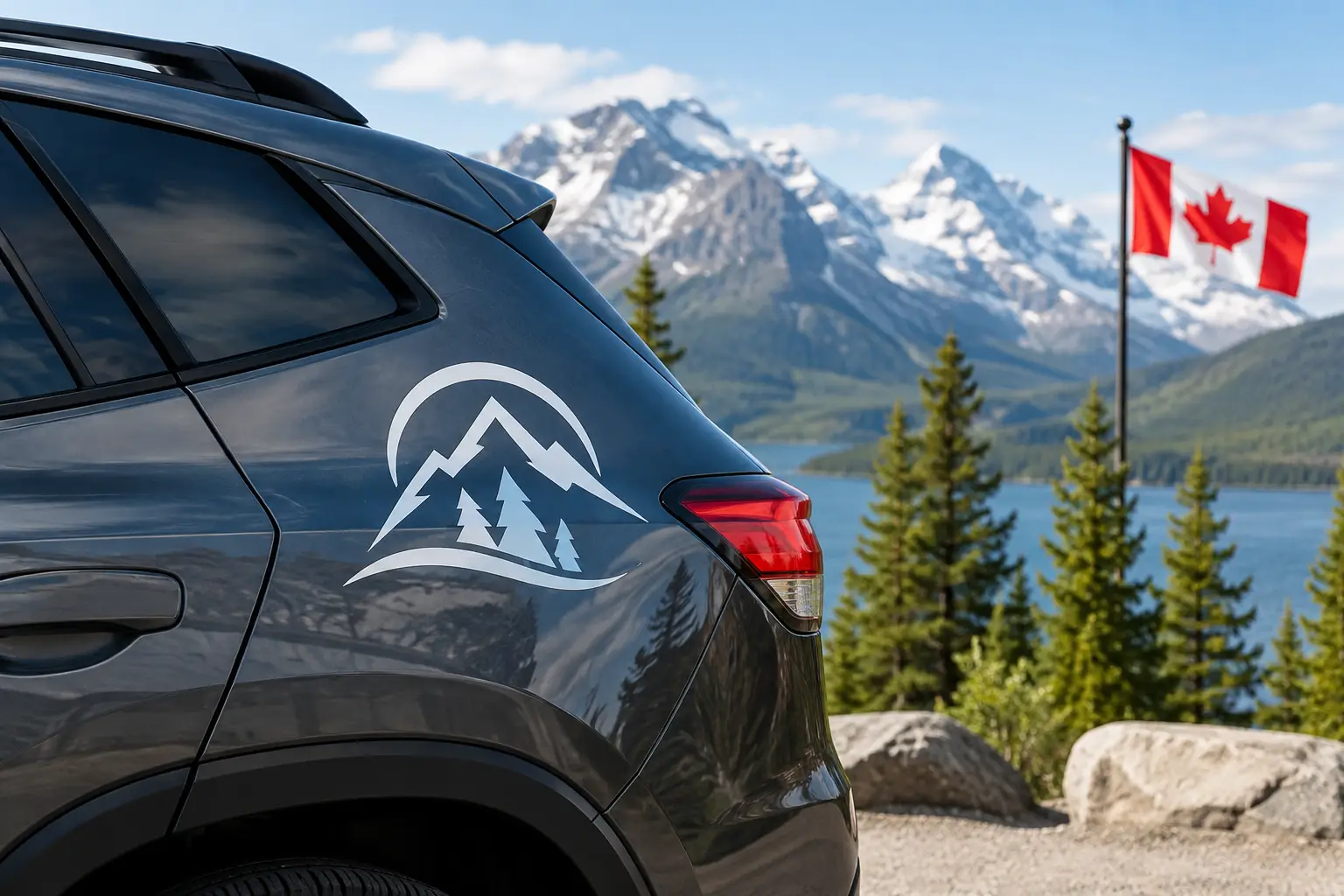
A storefront decal that fades after one summer, a vehicle graphic that lifts at the corners, or a safety label that becomes unreadable in the rain can make a business look neglected. This guide to durable outdoor decals explains what actually determines decal life, so you can specify the right product before it reaches your window, vehicle, equipment, or sign.
Outdoor decals are not a one-material purchase. Their performance comes from the combination of film, adhesive, ink, protective finish, surface preparation, and installation. Choosing on price alone can lead to replacement costs, inconsistent branding, and frustrating downtime. A better approach is to match the decal to where it will live and what it needs to withstand.
Start With the Outdoor Environment
Kamloops-area businesses know that exterior graphics are exposed to more than an occasional rainstorm. Strong sun, temperature swings, road grime, snow, moisture, and frequent cleaning all affect how a decal looks and how long it stays in place. The same is true for businesses serving customers throughout the Interior and other regions with demanding seasonal conditions.
First, consider the exposure level. A decal placed inside a storefront window, facing outward, has protection from weather but may still receive intense UV exposure. A decal applied to an exterior door, sandwich board, trailer, or work truck faces direct sun, moisture, abrasion, and repeated washing. Equipment labels may also encounter fuel, grease, dust, or cleaning chemicals.
Then consider expected service life. A short-term event decal may only need to look sharp for a weekend or a season. Permanent business hours, fleet identifiers, contractor branding, regulatory labels, and directional signage need materials designed for years of outdoor use. There is no advantage in paying for a premium long-term film when a temporary campaign will be removed next month. On the other hand, using a short-term product for a permanent job usually costs more once replacement is factored in.
Choose the Right Decal Material
Vinyl is the standard choice for most durable outdoor decals because it is flexible, water-resistant, and compatible with a wide range of adhesives and finishes. But not all vinyl performs the same way.
Calendered Vinyl for Flat, Simple Applications
Calendered vinyl is a practical option for flat surfaces and projects with a modest service-life requirement. It works well for window decals, basic outdoor signage, temporary promotions, and labels applied to smooth, flat equipment panels. It is generally more economical than premium vinyl, which makes it a good fit when quantity and budget matter.
The trade-off is flexibility. Standard calendered vinyl is less suited to complex curves, rivets, corrugated surfaces, and vehicles that receive regular highway use. Over time, it may shrink more than a higher-grade material, particularly under sustained sun exposure. For a flat storefront application or a seasonal campaign, it can be the right decision. For a fleet vehicle, it usually is not.
Cast Vinyl for Vehicles and Long-Term Graphics
Cast vinyl is thinner, more conformable, and made for demanding exterior applications. It can follow curves, contours, and recessed areas more effectively than calendered film. That makes it a strong choice for vehicle decals, trailers, machinery, curved helmets, and permanent outdoor branding.
It also tends to provide better long-term dimensional stability, meaning the material is less likely to pull back from edges as it ages. When a business depends on clean, consistent fleet branding or professional equipment identification, cast vinyl is often worth the higher initial investment.
Specialty Films for Specific Jobs
Some decal applications call for more than standard white vinyl. Perforated window film can display graphics on a vehicle or storefront while preserving visibility from one side. Reflective vinyl improves visibility for service vehicles, safety messaging, and after-hours identification. Clear vinyl can create a more subtle look on glass, painted surfaces, or product packaging.
These materials have specific installation and durability considerations. Perforated film, for example, may not deliver the same lifespan as solid cast vinyl in harsh exposure. Reflective films vary in grade and intended use. The right choice depends on the application, not simply the appearance you want on day one.
Adhesive Matters as Much as the Film
A strong-looking decal can fail early if the adhesive does not match the surface. Permanent adhesive is the usual choice for long-term outdoor decals, vehicle graphics, and safety labels. It provides dependable bond strength once it has time to cure.
Removable adhesive is useful when graphics need to come off cleanly after a promotion, event, campaign, or seasonal display. However, removable does not mean temporary in every condition. Heat, sun exposure, and the type of surface can affect removal. If the graphic must come off at a specific time without leaving residue, that requirement should be discussed before production.
Low-tack and repositionable adhesives are helpful during installation, especially for large window displays or wall graphics. They are not automatically the best choice for exterior use. A decal applied to a powder-coated metal box, textured plastic, unpainted wood, or low-surface-energy material may require a specialized adhesive to achieve reliable hold.
Surface texture is a frequent source of trouble. Decals adhere best to clean, smooth, non-porous surfaces. Brick, stucco, rough wood, heavily textured plastics, and damaged paint require a different solution or a test application. Promising a long-term decal on an unsuitable surface is not good service. A quick site review can prevent a failed installation.
Protect the Print From Sun and Wear
The print itself needs protection from more than rain. UV exposure can fade colors, especially on surfaces that face direct afternoon sun. Scratches, road debris, cleaning tools, and repeated handling can also dull a decal long before the adhesive fails.
Lamination adds a clear protective layer over the printed graphic. Gloss laminate can make colors appear more vivid and provides a polished finish. Matte laminate reduces glare and is often preferred for readable information, darker designs, and surfaces viewed in direct sun. Both can improve scratch resistance and add meaningful protection against weathering.
For decals that will be touched often, such as door labels, equipment controls, cooler decals, and frequently cleaned signs, lamination is usually a smart decision. It is also valuable for vehicle graphics exposed to road salt, car washes, and debris. For short-term indoor-facing window graphics, it may be unnecessary. This is one of the areas where the intended use should drive the specification.
Design for Distance, Movement, and Visibility
Durability is not only physical. A decal that remains intact but cannot be read quickly is not doing its job. Outdoor graphics are often viewed from a sidewalk, parking lot, road, or passing vehicle. Keep important information large enough to read at the expected viewing distance.
High contrast is more dependable than subtle color combinations. Dark text on a light background, or light text on a dark background, is generally easier to read than similar tones placed together. Fine type, thin lines, and tiny logos may look good on a screen but become difficult to see outdoors. If a decal includes a phone number, hours, safety instruction, or call to action, that information should take priority over decorative detail.
Vehicle decals require an additional check. A design may look balanced when the vehicle is parked, yet become unreadable when it is moving. Keep key branding away from door seams, handles, fuel doors, deep body contours, and areas likely to receive regular impact. A professional production review helps identify these risks before anything is printed.
Installation Determines Whether a Decal Lasts
Even premium vinyl can fail when installed on a dirty, cold, wet, or poorly prepared surface. Before application, the surface should be free of dust, wax, oil, silicone, old adhesive, and cleaning residue. A surface can look clean while still carrying residues that interfere with adhesion.
Temperature also matters. Most vinyl products have recommended application ranges, and cold surfaces can reduce initial tack. Outdoor installation may need to be scheduled around weather conditions, particularly during colder months. The adhesive needs time to establish a full bond, so newly installed decals should not be pressure-washed or aggressively cleaned right away.
For larger graphics, fleet decals, and complex surfaces, professional installation is often the most cost-effective choice. Proper alignment, edge finishing, post-heating where required, and bubble-free application all contribute to a longer service life. It also protects the appearance of your brand. A crooked decal or visible lifting at the edge sends the wrong message before a customer reads a single word.
Plan for Care and Replacement
Outdoor decals need reasonable care, not constant attention. Hand washing with mild soap and water is generally gentler than harsh solvents or abrasive pads. Avoid directing high-pressure water at decal edges, particularly on vehicle graphics. If a decal is damaged, lifting, or becoming difficult to read, address it early rather than waiting for the problem to spread.
Replacement planning is especially useful for fleets, construction equipment, municipal-style signage, and multi-location businesses. Keeping approved artwork, color references, and material specifications on file makes reorders more consistent. It also means a replacement decal can match the original instead of becoming a close-but-not-quite version of your branding.
Noran Printing can help businesses and organizations choose decal materials that fit the surface, exposure, budget, and expected lifespan. The best outdoor decal is not necessarily the thickest or most expensive one. It is the one specified honestly for the job, installed carefully, and designed to keep working long after the first impression.