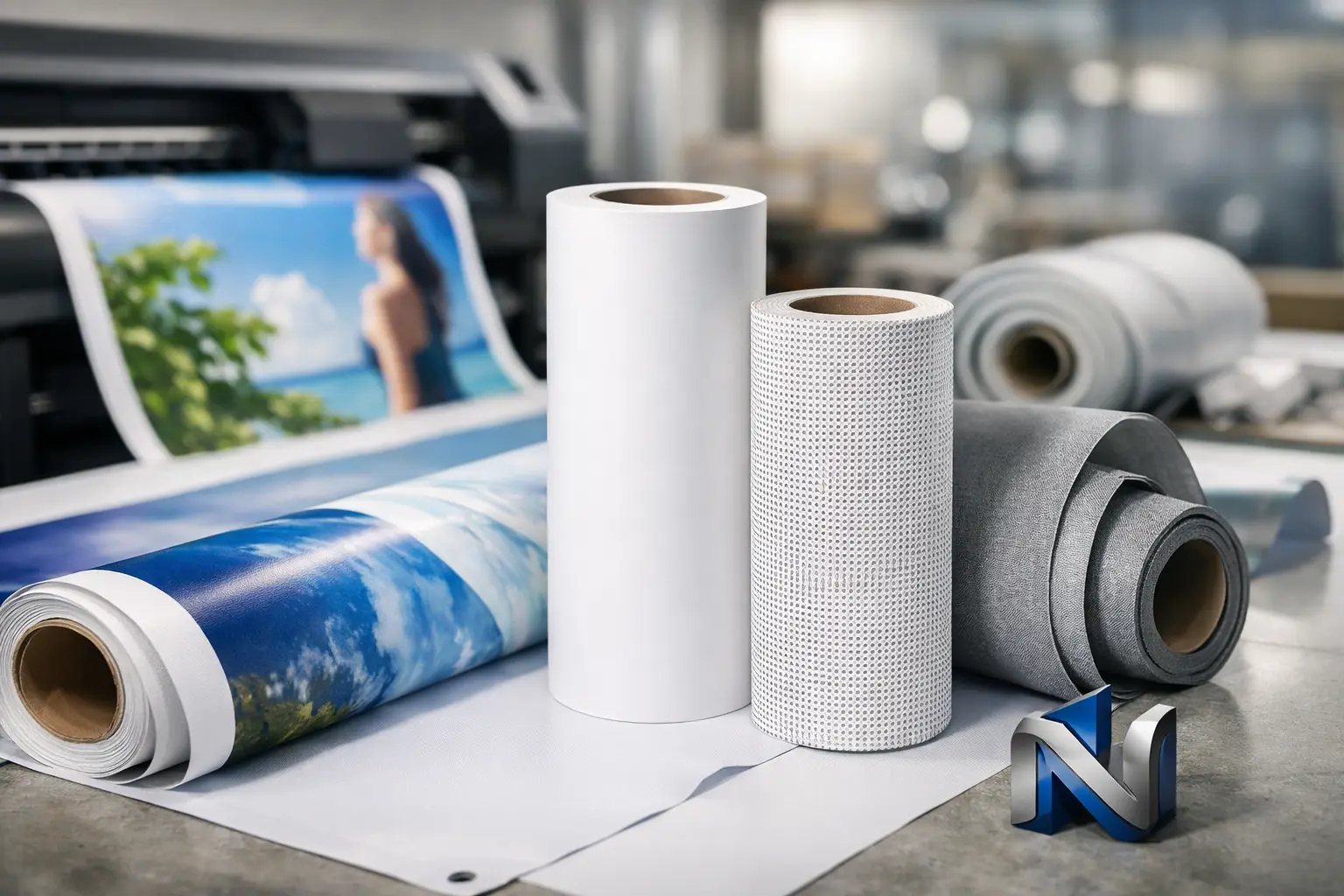
A banner that looks excellent at pickup can become a costly disappointment if it is made from the wrong material for its location. A roadside banner needs to handle wind, weather, and viewing distance. A trade show display needs crisp color, a clean finish, and easy setup. This guide to large format banner materials will help you match the stock to the job before production begins.
The right choice is not always the heaviest material or the lowest-cost option. It depends on where the banner will hang, how long it needs to last, how it will be installed, and what your audience needs to see from a distance. Planning those details early protects your budget and gives your message the professional appearance it deserves.
Start With the Banner’s Job
Before choosing a material, establish the practical requirements. Is the banner for a one-day school event, a construction site, a storefront promotion, a community fundraiser, or a recurring trade show? Indoor and outdoor conditions make a major difference, as do the size of the finished piece and the hardware used to mount it.
A banner viewed from across a parking lot needs larger type and stronger contrast than one displayed inside a reception area. If it will be tied to a fence, light poles, or a building exterior, wind load and reinforced finishing matter. If it will be carried in a parade or installed in a retractable display stand, weight and flexibility become more important.
It is also worth considering how often the message will change. A temporary sale, seasonal event, or short campaign may not need the same material investment as a permanent directional sign or a banner used at every annual event.
Guide to Large Format Banner Materials
Vinyl banners: the dependable all-purpose choice
Vinyl is the most familiar banner material for good reason. It is durable, water-resistant, economical, and suitable for a wide range of indoor and outdoor applications. Standard banner vinyl has a smooth surface that reproduces bold graphics, logos, photos, and text clearly. It is a practical choice for storefront promotions, event signage, sponsor banners, job site notices, and outdoor community announcements.
For many businesses and organizations, vinyl offers the best balance of cost and performance. It can be finished with grommets, hems, pole pockets, or reinforced edges depending on how it will be displayed. A properly finished vinyl banner can stand up well to regular handling and changing weather conditions.
The trade-off is that vinyl can reflect light, especially under direct indoor lighting or bright sun. It can also move noticeably in windy locations. For a banner exposed to sustained wind, a heavier vinyl alone is not always the answer. Mesh may be the better material.
Mesh banners: built for wind exposure
Mesh banner material has small perforations across the surface that allow air to pass through. This reduces wind pressure and makes it especially useful for fences, scaffolding, outdoor athletic facilities, construction areas, and exposed building locations.
From a normal viewing distance, the perforations are far less noticeable than many people expect. The printed design remains visible, but colors and fine details may appear slightly less solid than they do on standard vinyl. That is why mesh works best with simple, high-contrast designs, larger lettering, and clear branding rather than small type or detailed product photography.
Mesh is an excellent example of why material selection should follow the installation environment. A solid vinyl banner can be less expensive at the outset, but replacing it after wind damage is not a saving. For an exposed site, mesh can be the more reliable long-term decision.
Fabric banners: polished presentation for indoor spaces
Fabric banners bring a softer, more refined look to indoor displays. They are often used for trade shows, conferences, retail interiors, presentations, photo backdrops, and branded events. Depending on the fabric and print process, they can provide strong color reproduction with minimal glare, making them comfortable to view under overhead lighting.
Fabric is also easier to transport than many rigid sign options. It can often be folded for storage and may be washable, depending on the specific material and finishing. For organizations that attend multiple events, fabric displays can create a more polished appearance than a conventional vinyl banner.
However, fabric is not the automatic choice for every job. It is usually less suited to extended outdoor exposure, particularly in wet or dirty environments. It may also cost more than standard vinyl. When the banner needs to work hard outdoors, vinyl or mesh generally offers more practical durability.
Blockout vinyl: when both sides matter
Blockout vinyl includes an opaque layer that prevents show-through. It is used when a banner will be viewed from both sides, hung in a window, or placed where strong backlighting could make the design difficult to read. Double-sided banners often rely on blockout material so the image on one side does not interfere with the other.
This material is useful for hanging signs, street-facing promotions, event entrances, and display areas where people approach from multiple directions. It is heavier than basic vinyl, so installation hardware should be selected accordingly. The added weight is worthwhile when clean, readable graphics on both sides are the priority.
Adhesive banner and display films: for smooth surfaces
Some large-format campaigns call for graphics applied directly to a wall, window, counter, or display panel rather than hung with grommets. Adhesive vinyl films can be a strong option for short-term promotions, window messaging, interior branding, and point-of-purchase displays.
These materials require more care during installation because the final result depends on the surface condition and proper application. A smooth, clean surface is essential. They are not interchangeable with traditional banner materials, but they can be the right solution when a hanging banner would look out of place or create installation challenges.
Match the Material to the Environment
Location should guide the decision as much as design. Indoor banners are protected from rain, sun, and wind, so visual finish often takes priority. Fabric, smooth vinyl, or an adhesive display film may all work well depending on the mounting method.
Outdoor banners need greater attention to weather resistance, wind, and installation. Standard vinyl is suitable for many short- to medium-term outdoor uses. Mesh is better for windy or open locations. Reinforced hems and properly spaced grommets help distribute tension and reduce the chance of tearing at attachment points.
Sun exposure is another factor. Bright sunlight can affect how colors are perceived and may gradually fade a banner over time. A design with adequate contrast and durable inks will remain more readable than one built around subtle shades or light text on a busy background.
Finishing Is Part of the Material Decision
A banner is not complete when the image is printed. Its finishing determines how it performs once installed. Grommets are common for banners attached with rope, bungee cords, or zip ties. Hems reinforce the edge and help prevent tearing. Pole pockets create a clean way to slide a rod through the top or bottom of a banner, which is useful for indoor displays, hanging signage, and parade banners.
Ask where the mounting points will be and who will install the banner. A banner mounted tightly to a fence needs different finishing than one suspended from a ceiling. If it will be used repeatedly, reinforced edges and durable hardware are a sound investment. If it is a one-time indoor event piece, simpler finishing may be completely appropriate.
Design for the Material and Viewing Distance
Even the best material cannot rescue a banner that is difficult to read. Keep the main message short, make the most important information large, and use contrast that holds up in real conditions. A phone number, event date, or call to action should not require viewers to stand directly in front of the banner to understand it.
Logos and photographs can reproduce well on large-format materials, but very small details may lose impact from a distance. For mesh banners especially, avoid fine lines and small reverse type. A print professional can help confirm whether artwork is appropriate for the material, size, and intended viewing range before it goes to press.
For businesses and organizations in Kamloops and the surrounding region, working with a local print partner also makes it easier to review samples, discuss installation conditions, and coordinate banner finishing with the rest of a campaign. Noran Printing can help align banners with matching posters, flyers, event materials, branded apparel, and other printed pieces.
The strongest banner choice is the one that fits the real conditions of use. Bring the location, timeline, mounting plan, and message into the conversation early, and the finished banner will be easier to install, easier to read, and far more likely to make the right impression.