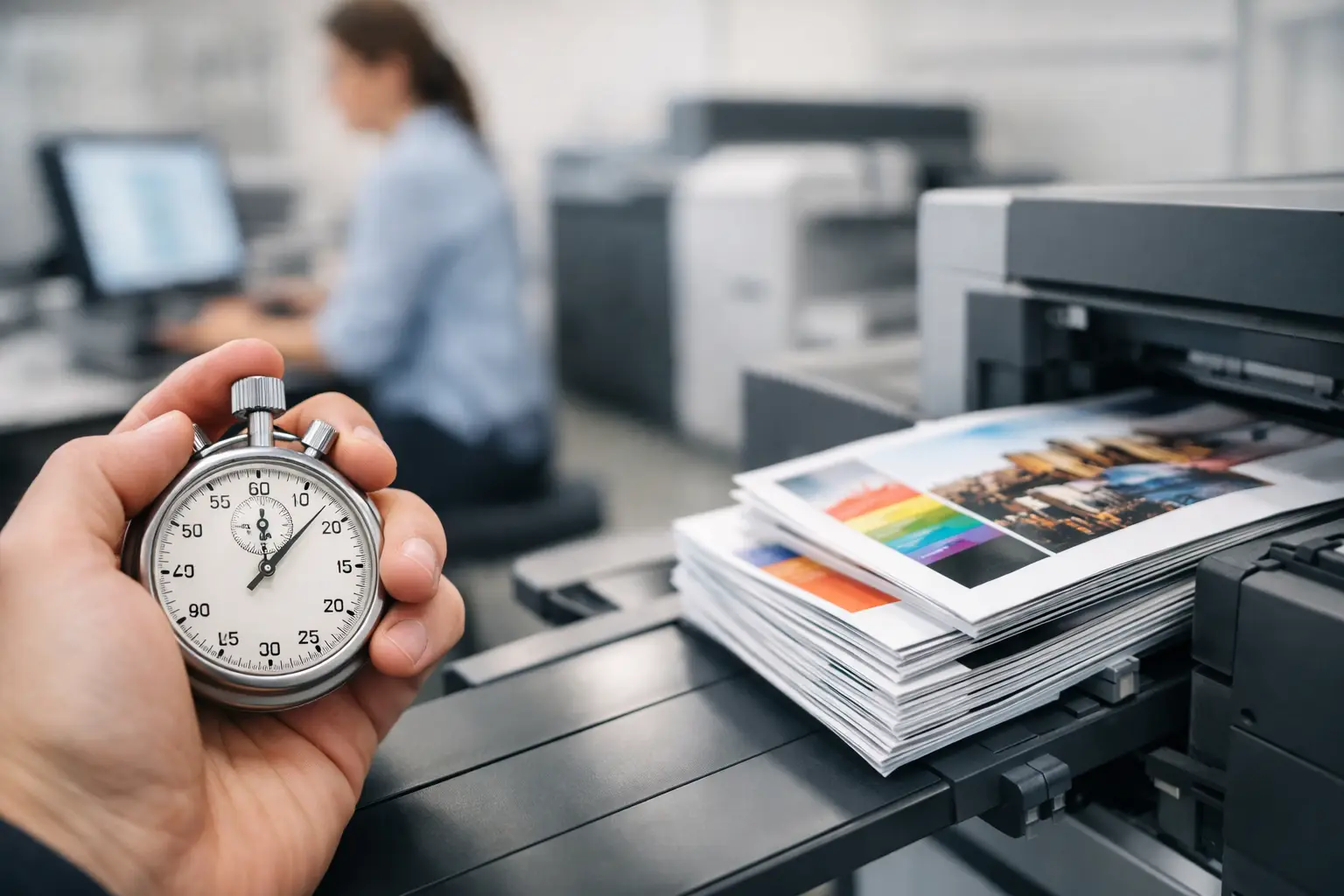
When you need 250 brochures by Friday, updated menus for next week, and a short run of invoices with custom numbering, delays are not a minor inconvenience. They affect sales, operations, and how your business shows up in front of customers. That is where digital printing services prove their value. They give businesses a practical way to produce professional materials quickly, accurately, and in quantities that make sense.
For many organizations, the biggest advantage is not just speed. It is flexibility. Digital printing works especially well when you need frequent updates, shorter runs, personalized content, or a reliable turnaround without sacrificing print quality. If you are managing recurring business materials, event pieces, marketing handouts, or branded collateral, understanding where digital fits can help you order more efficiently and avoid costly overprinting.
What digital printing services are best at
Digital printing services are built for jobs that need precision and responsiveness. Unlike traditional offset methods that require plates and longer setup, digital presses print directly from electronic files. That reduces setup time and makes it easier to move from proof to production.
For a business buyer, that matters in very practical ways. You can revise pricing on a flyer, update staff names on business cards, or print a smaller quantity of booklets without committing to a large run. If your materials change often, digital is usually the better fit.
This also makes digital a strong option for operational print pieces that do real work every day. Forms, invoices, envelopes, labels, presentation folders, and letterheads may not be flashy, but they shape how organized and professional your business appears. When those items are easy to reorder and consistently produced, your team spends less time fixing supply problems and more time serving customers.
Where digital printing services make the most business sense
Not every print job has the same priority. Some pieces are meant to drive response. Others support day-to-day operations. Digital printing is valuable because it handles both.
Marketing materials are one of the clearest examples. Flyers, brochures, postcards, newsletters, and posters often need fast production and occasional version changes. A seasonal offer, a new service, or an event date can change quickly. Printing only what you need helps control waste while keeping your message current.
Digital is equally useful for short-run branded materials. If you are testing a campaign, opening a new location, hosting a fundraiser, or preparing conference handouts, it rarely makes sense to order more than you can realistically use. A shorter run lets you stay nimble.
There is also a strong case for digital when personalization matters. Variable data printing allows names, addresses, account information, numbering, or other customized details to change from one printed piece to the next. That is useful for direct mail, ticketing, statements, membership communications, and any print job where one-size-fits-all is not good enough.
Speed matters, but so does control
Businesses often ask for fast turnaround, but speed alone is not the full story. A rushed job that arrives with inconsistent color, poor alignment, or the wrong version is not efficient. It creates more work.
Good digital printing services balance turnaround with quality control. That includes reviewing files properly, checking specifications, maintaining press calibration, and catching issues before they become expensive reprints. A dependable print partner should help you avoid preventable mistakes, not just react to deadlines.
This is especially important when several items need to work together. A company may need brochures, presentation folders, forms, labels, and event signage all at once. If those materials come from different vendors, brand consistency can slip. Colors shift, paper stocks vary, and timelines become harder to manage. Working with one shop that can coordinate multiple pieces simplifies the process and usually produces a cleaner result.
Why short runs are often the smarter choice
A common mistake in print buying is ordering too much just to chase a lower unit price. On paper, the math looks good. In practice, extra boxes of outdated brochures, old forms, or menus with last season’s pricing are wasted money.
Digital printing changes that equation. Because setup is faster and shorter runs are more economical, businesses can order based on current need rather than guesswork. That helps with version control, storage space, and budget planning.
It also supports more frequent updates. If your organization adjusts services, pricing, staff, or promotions throughout the year, smaller digital runs let you stay accurate without carrying obsolete inventory. For schools, nonprofits, medical offices, and local businesses, that flexibility is often more valuable than the lowest possible cost per piece.
That said, there are trade-offs. For very large runs of standardized materials, offset printing may still be the better fit. The right choice depends on quantity, timeline, customization needs, and how likely the content is to change. A good print provider should be honest about that instead of forcing every job into one production method.
Design and file quality still matter
Digital presses are advanced, but they cannot rescue every file problem. Low-resolution images, missing bleeds, incorrect sizing, and poor color setup still affect the final result. If a printed piece looks soft, misaligned, or inconsistent, the issue often starts before it reaches the press.
That is why service matters as much as equipment. Experienced print teams help customers sort out specifications before production starts. For some buyers, that means confirming the right paper stock or fold style. For others, it means catching a layout issue that would have ruined the finished piece.
This guidance is especially useful for organizations that do not order print every day. Office managers, administrators, and event coordinators often wear multiple hats. They may be handling signage one week, donor materials the next, and staff apparel after that. Having one dependable source for print support reduces friction and keeps projects moving.
The advantage of working with a full-service print shop
Many businesses do not need just one item. They need a system. A launch campaign might include business cards, brochures, posters, window graphics, embroidered apparel, and promotional items. An event might require programs, banners, sponsor signage, name tags, and printed handouts. Managing each category through a different vendor adds time and increases the chance of inconsistency.
That is where a full-service shop stands out. When commercial printing, large-format pieces, branded merchandise, and specialty jobs can be handled under one roof, ordering becomes simpler. Timelines are easier to coordinate, brand standards stay tighter, and customers spend less time chasing updates from multiple suppliers.
For local organizations, there is also a practical benefit in having a nearby partner who understands recurring business needs. Whether the order is a routine batch of forms or a last-minute set of event materials, clear communication and accountability make a difference. Noran Printing has built its reputation around that kind of dependable service for businesses and organizations that need more than a basic online order form.
Choosing digital printing services that actually help
The right provider should do more than accept files and produce output. They should ask the right questions. How will the piece be used? How many versions do you need? Does the content change often? Is mailing involved? Does the print need to match existing branded materials?
Those details shape the recommendation. A restaurant may need menus that are easy to update. A contractor may need durable presentation folders and invoice forms. A school may need short-run newsletters and event posters. A nonprofit may need personalized donor letters with matching reply materials. Different goals require different print decisions.
The best digital printing services are the ones that make ordering easier, not more complicated. They help you choose quantities sensibly, keep quality consistent, and align print production with how your business actually operates.
If your printed materials are part of how you sell, communicate, and stay organized, they deserve more attention than a quick upload and a crossed finger. Good print should support the work behind it – clearly, professionally, and on time. That is usually the difference between checking a box and building a brand people trust.