A booklet can look polished on screen and still feel wrong the moment someone picks it up. Maybe it will not stay open on a table, maybe the spine cracks after a few uses, or maybe the format feels too formal for a short event program. If you are figuring out how to choose booklet binding, the right answer usually comes down to four things – page count, purpose, budget, and how the piece will be handled.
Binding is not just a finishing detail. It affects how your booklet reads, how long it lasts, how professional it feels, and how much you spend per piece. For businesses, schools, nonprofits, and event organizers, choosing the wrong binding can create practical problems long after the file is approved.
How to choose booklet binding for the job
The best binding option starts with how the booklet will actually be used. A product catalog that sits in a sales office has different demands than a church program, training manual, annual report, or event guide. Before you think about paper stocks or cover finishes, think about the working life of the piece.
If the booklet is short, easy to hand out, and meant for quick reading, a simple binding style often makes the most sense. If it needs to hold up through repeated use, lay flatter for note-taking, or support a higher page count, you will likely need something more substantial.
This is where many buyers get stuck. They compare binding styles as if one is universally better than another. It depends on the job. A premium option can be the wrong choice if it adds cost without improving function. A basic option can also be the wrong choice if the booklet needs to last for months in active use.
Start with page count and booklet thickness
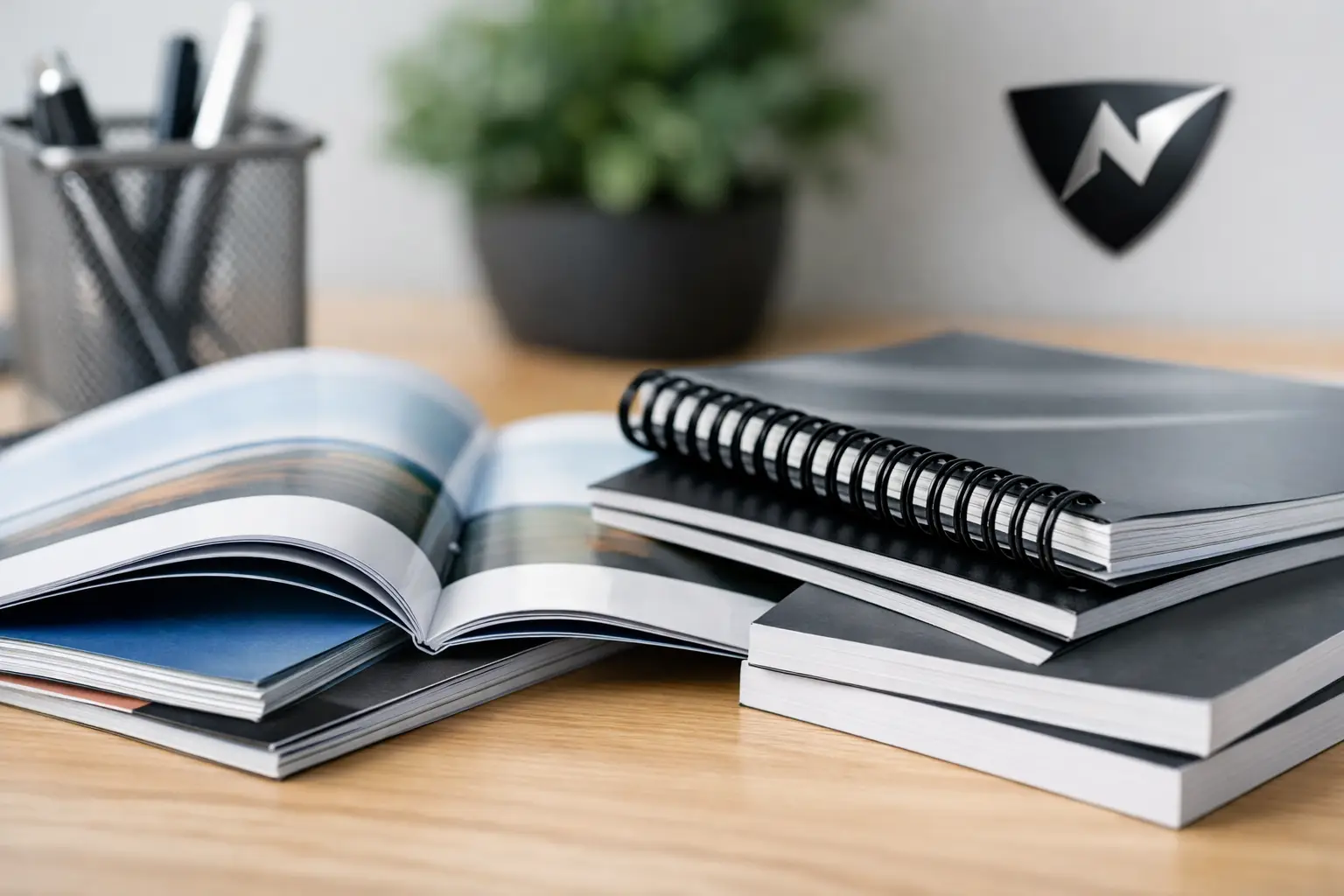
Page count eliminates options quickly, which is helpful. Saddle stitching, for example, is one of the most common choices for booklets because it is clean, cost-effective, and efficient for shorter pieces. It uses folded sheets that are stapled along the spine. This works well for newsletters, event programs, promotional booklets, and many catalogs with modest page counts.
As the booklet gets thicker, saddle stitching becomes less practical. The spine will not sit as neatly, page creep becomes more noticeable, and the finished piece can feel bulky rather than refined. If your booklet is moving into manual, workbook, or reference territory, coil or perfect binding may be a better fit.
Perfect binding creates a square spine and gives the booklet a more book-like appearance. It suits reports, higher-page-count catalogs, and publications that benefit from a more finished presentation. The trade-off is that it usually costs more than saddle stitching and does not lay as flat when open.
Coil binding handles thicker documents well and makes page turning easy. It is useful for manuals, training materials, and documents that need to fold back on themselves. It is not always the first choice for a polished marketing piece, but for usability, it solves real problems.
Match the binding to how people will use it
A booklet that gets read once has different needs than one used every week. That sounds obvious, but it is often overlooked when a buyer focuses only on appearance.
A sales brochure or event booklet may only need to look sharp for a short window of time. In that case, saddle stitching often does the job well. It is efficient, attractive, and keeps production costs under control, especially when quantities are higher.
A staff handbook, safety guide, or training workbook usually has a longer life. People may flip through it repeatedly, write in it, or keep it on a desk. That is where ease of use matters more. Coil binding is often the practical choice because it stays open better and holds up to constant handling.
If the goal is presentation first, perfect binding brings a more substantial look. It can be the right move for a company profile, annual report, or premium catalog where spine printing and shelf presence matter. Still, it is worth asking whether readers need to open it flat. If they do, appearance alone should not drive the decision.
How to choose booklet binding based on budget
Budget matters, but the cheapest option is not always the best value. If a booklet is hard to use or wears out too quickly, the savings disappear fast.
Saddle stitching is generally the most economical choice for shorter booklets. It is ideal when you need a professional look without pushing up unit cost. That makes it a strong option for many businesses and community organizations ordering promotional pieces, event programs, or informational handouts.
Perfect binding tends to sit higher on the cost scale because of the production method and the more finished appearance. It can be worth the investment when presentation supports the purpose of the piece, especially for customer-facing materials meant to reflect brand quality.
Coil binding usually lands somewhere in the practical middle depending on size, page count, and materials. It is often chosen not because it is the least expensive option, but because it delivers the best function for manuals, workbooks, and reference documents.
A smart print decision looks at total usefulness, not just unit price. Spending slightly more on a binding style that improves durability or readability can save money on reprints and frustration.
Consider durability and storage
Some booklets live in waiting rooms, conference bags, and display racks. Others are stuffed into backpacks, carried to job sites, or referenced in classrooms. Binding should reflect that reality.
Saddle-stitched booklets are dependable for regular distribution and light to moderate handling. They mail well, stack neatly, and stay lightweight. For many marketing uses, that is exactly what you want.
Perfect-bound booklets look durable, but the key question is how they will be opened and used. They are well suited to materials that are read more traditionally, page by page, without aggressive folding or constant flattening.
Coil-bound pieces are often the strongest option for active use. They can handle repeated opening and are easy to manage on a desk or counter. The trade-off is visual style. Some audiences see coil binding as practical and professional, while others see it as more operational than promotional.
Storage also matters. Perfect-bound booklets sit neatly on shelves and have a printable spine, which helps with organization. Saddle-stitched and coil-bound pieces do not offer that same spine presence in the same way.
Think about brand presentation
Binding sends a message before a single word is read. That is why this decision is partly functional and partly visual.
If you are producing a booklet for a formal business presentation, investor meeting, or polished sales leave-behind, perfect binding may support the impression you want to make. It gives the piece weight and structure.
If you are producing something straightforward, efficient, and easy to distribute, saddle stitching often feels right. It is clean without being overstated.
If the audience needs to work with the booklet – writing notes, flipping back and forth, using it during training – coil binding communicates practicality. For many internal and educational uses, that is a benefit, not a drawback.
A good print partner can help you weigh these details against your actual goals instead of choosing based on assumptions.
Questions worth answering before you print
Before approving a booklet, ask a few practical questions. How many pages does it have? Does it need to lay flat? Will people keep it for a day, a month, or a year? Is this primarily a marketing piece, a reference tool, or both? Does the appearance need to feel premium, or does usability matter more?
Those answers usually point to the right binding faster than comparing samples in the abstract. In a local print environment, this is where hands-on guidance makes a difference. An experienced shop can flag issues early, recommend a better fit, and help you avoid paying for a format that does not suit the job.
For many organizations, the best choice is not the fanciest one. It is the binding that fits the booklet’s purpose, feels right in the reader’s hands, and holds up as long as it needs to. If you start there, the decision gets much simpler.
When you are ready to print, a quick conversation with a team that handles booklets every day can save time, prevent waste, and leave you with a finished piece that works as well as it looks.