A box of cheap giveaways can disappear fast at a trade show and still do almost nothing for your business. That is usually the problem behind how to pick promotional items – not finding something with your logo on it, but choosing products people will actually keep, use, and connect with your brand.
The best promotional items do a simple job well. They put your name in front of the right people, in the right setting, for more than a single moment. If you are ordering for a school, a contractor, a nonprofit, a local event, or a growing business, the item itself matters less than the fit between the item, the audience, and the purpose.
How to pick promotional items with a clear goal
Before you look at product catalogs, decide what success looks like. Promotional items can support brand awareness, customer retention, staff recognition, fundraising, event attendance, or sales outreach. Those are very different jobs, and they should not all get the same product.
If your goal is broad visibility at a community event, lower-cost items with practical use can make sense. Pens, notepads, magnets, and tote bags still work when the audience is wide and the quantity needs to be high. If your goal is to thank top clients or equip staff with something they will use weekly, a better-quality item usually delivers more value than a larger volume of forgettable pieces.
This is where many orders go off track. Businesses often start by asking what is popular. A better question is what you need the item to do. Popular does not always mean effective for your situation.
Start with the audience, not the product
An office manager ordering for a medical clinic should think differently than an event coordinator ordering for a summer festival. A school booster club has different needs than a real estate office. The best choice depends on who is receiving the item and where they are likely to use it.
Think about daily habits. If your audience works at desks, office-use items may have staying power. If they are often on the road, in the field, or moving between job sites, drinkware, hats, insulated bags, or durable outerwear may make more sense. If the recipients are families, students, or community members, practical household items can carry your brand further than something novelty-driven.
Age range, work setting, and expectations matter too. A premium gift can feel appropriate for long-term clients and completely excessive for a quick event handout. On the other hand, an ultra-cheap item can send the wrong message if your brand is built on quality and professionalism.
Match the item to your brand standards
Promotional products say something about your business before anyone reads the imprint. If the item feels flimsy, your brand can feel that way too. If the print looks rushed or the colors are off, that weakens the impression even if the product itself is useful.
That does not mean every giveaway needs to be expensive. It means the item should be consistent with the way you want your business to be perceived. A law office, engineering firm, school district, restaurant, and construction company will not all want the same style of promotional product.
Practical brands usually do well with practical items. Community-focused organizations often benefit from products people can use at home, at school, or around town. Businesses that emphasize craftsmanship or reliability should choose items that feel solid and well made. In many cases, fewer better items create a stronger result than ordering the cheapest option in bulk.
Think about usefulness first
If people use it, they remember it. That is why the most effective promotional items are often the least flashy.
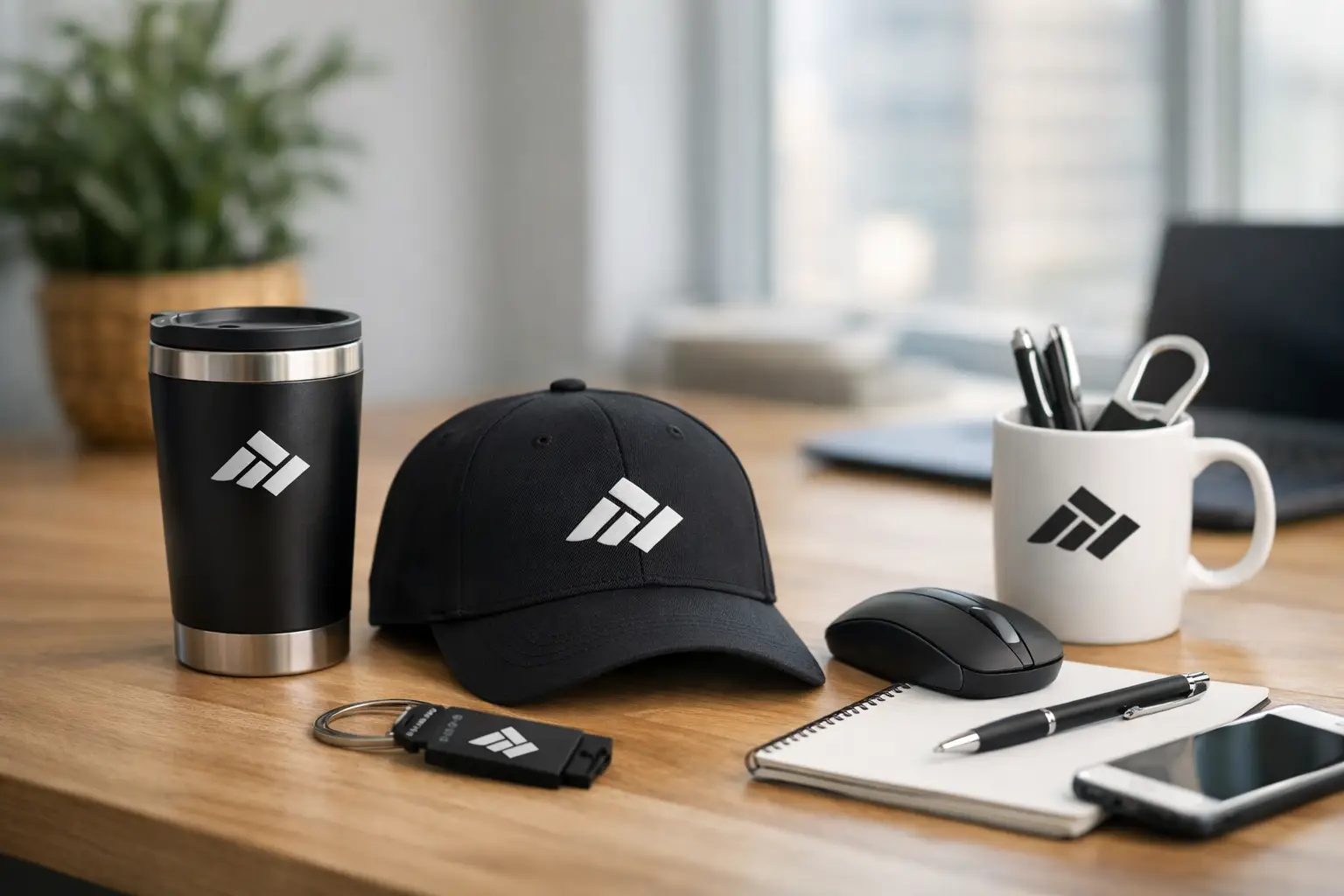
Pens remain popular for a reason, but only if they write well. Tote bags work when they are sturdy enough to keep. Mugs and water bottles can stay in rotation for years if they have the right size, shape, and print quality. Apparel can be excellent brand exposure, but only if it is comfortable and wearable beyond the event where it was handed out.
Usefulness also depends on context. A notebook at a conference makes sense. A branded cooler at a summer tournament makes sense. A desk calendar for a business audience can still be effective. The wrong item in the wrong setting is what creates waste.
When you are unsure, ask a simple question: would I keep this if it did not have my logo on it? If the answer is no, your audience may feel the same way.
Budget matters, but cost per impression matters more
It is easy to focus only on unit price, especially when quantities are high. But the cheapest item is not always the lowest-cost option in practice.
A product that gets thrown away after a day has a poor return, even if it was inexpensive. A product that stays on a desk, in a truck, or in a break room for months can deliver far better value, even if the unit price was higher. This is where cost per impression becomes more useful than cost per piece.
There is also a middle ground many buyers overlook. You do not always need either bargain-bin giveaways or premium executive gifts. Often the best order sits in the practical middle – good quality, clean branding, and enough quantity to support the campaign without wasting budget.
If you are managing several branded materials at once, it can help to coordinate your promotional items with your printed pieces, signage, or event materials. That keeps the message consistent and can make the whole campaign feel more polished.
Consider decoration space and logo readability
Not every item carries branding equally well. A small imprint area can limit what you include. A detailed logo may need to be simplified for embroidery. Certain materials show ink differently than paper or signage. Colors that look sharp on one product may lose impact on another.
This is where a lot of promotional items underperform. The product may be decent, but the branding is too small, too busy, or poorly placed. If people cannot quickly identify your business name, the item is not working hard enough.
In most cases, simpler branding performs better. A clear logo, a readable business name, and one strong color treatment often have more impact than trying to fit in a website, phone number, slogan, and multiple design elements. The item should look intentional, not crowded.
Timing and quantity can change the right choice
Lead time matters. If you need items for an upcoming event, school order, staff program, or seasonal campaign, your options may narrow based on production and decoration timelines. Waiting too long can force you into a substitute product instead of the one that best fits your needs.
Quantity matters for another reason: storage and distribution. Ordering a large volume may lower your unit cost, but only if you will actually use the inventory. A business that attends several events per year may benefit from ordering ahead. A one-time fundraiser may be better served by a more precise quantity and a product tied closely to that event.
This is especially true with dated items, trend-based products, or anything connected to a specific campaign. The more specific the message, the less likely leftovers will be useful later.
How to pick promotional items for different situations
The right product often becomes clearer when you think in scenarios instead of categories.
For trade shows and community events, focus on portability, usefulness, and broad appeal. For employee apparel or team gear, comfort and quality should carry more weight because people will wear the item as an extension of your brand. For customer appreciation, choose something that feels more intentional than disposable. For schools and nonprofits, value and function usually matter most, especially when budgets need to stretch.
If you serve a local market, it can also help to think seasonally. A product that fits how people live and work in your area has a better chance of getting real use. That kind of practical fit often matters more than chasing whatever item happens to be trending.
Work with a supplier who asks questions
A good promotional order starts with guidance, not guesswork. The right print and branding partner should ask about your audience, your budget, your timeline, your logo requirements, and how the items will be distributed. That conversation often saves businesses from ordering products that look fine in a catalog but do not perform once they arrive.
This is one advantage of working with a local provider that understands how businesses, schools, and organizations actually use branded materials. When your promotional items, printed materials, apparel, and signage can be coordinated through one source, it is easier to maintain consistency and avoid last-minute problems.
Noran Printing works with organizations that need that kind of practical support – not just a product, but advice that helps the order make sense from design through delivery.
The best promotional item is rarely the flashiest one. It is the one that fits your audience, reflects your standards, and earns its place in someone’s day. If you choose with that in mind, your logo has a much better chance of being seen for the right reasons.