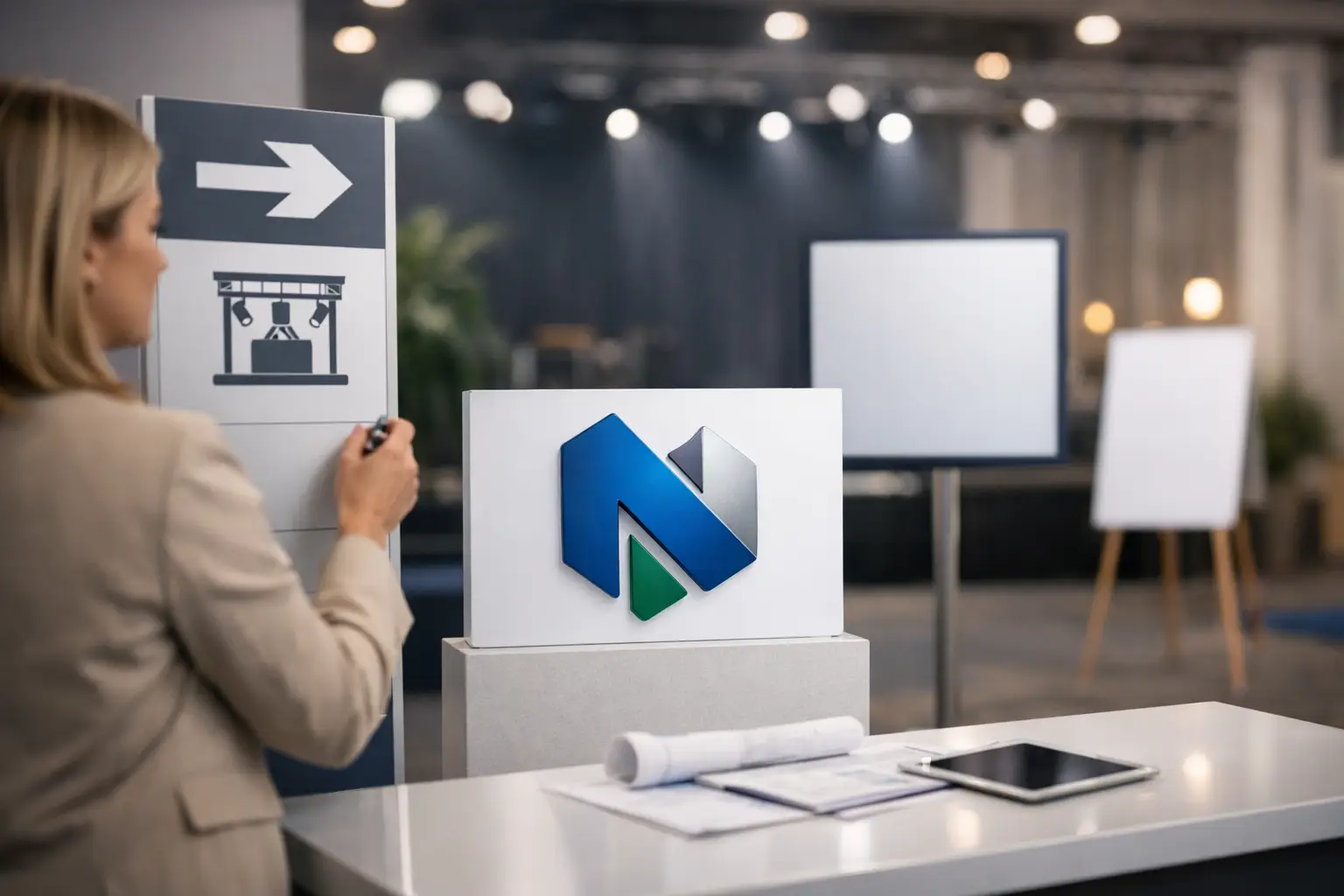
The easiest way to spot poor event planning is to watch guests stop, look around, and ask where they are supposed to go. That is usually a signage problem, not a staffing problem. If you are figuring out how to plan event signage, the goal is simple: help people move confidently, find what they need, and recognize your brand at every stage of the event.
Good signage does more than fill wall space. It reduces confusion, keeps schedules on track, supports sponsors, and makes an event feel organized before a speaker even steps on stage. Whether you are planning a school fundraiser, trade show booth, community festival, corporate open house, or conference, signage works best when it is treated as part of operations, not as an add-on ordered at the last minute.
How to plan event signage from the guest perspective
Start by thinking like an attendee, not an organizer. You already know where registration is, where the restrooms are, and which room hosts the keynote. Your guests do not. The most useful signage plan follows the actual path people take, from arrival to departure.
That usually begins outside the venue or at the parking area. If people cannot quickly confirm they are in the right place, everything after that feels less organized. Directional signs, entrance signs, and parking guidance often matter more than decorative signs because they remove stress immediately.
Once guests enter, the next questions are predictable. Where do I check in? Where is my session? Where do I line up? Where can I get help? A strong signage plan answers those questions before someone has to ask. That means mapping each decision point and assigning signage to it. If there is a hallway split, a large lobby, multiple buildings, or several event zones, those are places where signs carry real operational value.
Decide what each sign needs to do
One of the most common mistakes in event signage is asking one sign to do five jobs. A welcome sign should welcome. A directional sign should direct. A sponsor sign should recognize sponsors. When every sign tries to carry branding, schedules, rules, and arrows at the same time, readability suffers.
It helps to group signage by function. Most events need a mix of arrival signage, wayfinding signage, registration signage, agenda or schedule signage, room identification, sponsor recognition, and promotional or branded display pieces. Some events also need menu boards, safety signage, parking instructions, or step-and-repeat backdrops.
This is where priorities matter. If the budget is tight, spend first on signs that reduce confusion and support traffic flow. Large branded pieces look impressive, but they do not replace basic wayfinding. A polished event still feels disorganized if guests cannot find the check-in table.
Match the sign format to the environment
How to plan event signage well depends partly on where the signs will be used. An indoor business event has different needs than an outdoor fundraiser or sports tournament. Lighting, weather, viewing distance, and foot traffic all affect what format makes sense.
A poster in a quiet hallway may be enough for a room name or schedule. In a large lobby, a mounted foam board or retractable banner may be easier to spot from a distance. Outdoor events usually need more durable materials and larger type because wind, glare, and wider open spaces work against readability.
Placement is just as important as print quality. A beautifully printed sign that sits behind a crowd, beside visual clutter, or too low to see will not do its job. In most venues, the practical test is simple: can someone notice it quickly while walking, not while standing still and searching?
Keep the message short and easy to scan
People do not read event signage the way they read a brochure. They glance, decide, and move. That means short wording wins almost every time.
Use plain language. “Registration” is better than “Guest Welcome and Check-In Experience.” “Main Hall” is better than a branded internal name guests have never heard before. If there is a schedule sign, highlight the event name, times, and locations clearly. If there is a directional sign, the arrow and destination should be the first thing people see.
Typography matters here. High contrast, clean fonts, and generous sizing do more for usability than clever design details. Brand consistency matters, but readability comes first. If your event colors are light or low contrast, they may need adjustment in signage applications. What looks good on screen does not always read well in a busy venue.
Build a signage checklist early
A signage plan usually starts to fall apart when it lives only in someone’s head. Putting it into a working checklist early saves time and reduces reprints.
For each sign, record the purpose, final wording, size, material, quantity, installation method, and exact placement. Note who approves it and when artwork is due. If variable details are involved, such as room numbers, sponsor tiers, changing schedules, or personalized names, flag those early. These are the details most likely to shift late in the process.
This is also the stage to confirm venue rules. Some venues allow easels, floor decals, window graphics, or hanging signs. Others limit adhesives or require freestanding displays only. A sign that cannot be installed where you planned it loses much of its value.
Allow time for revisions and production
If you want event signage to look organized, the timeline needs to be organized too. Last-minute ordering often leads to avoidable compromises like rushed proofs, limited material options, or signs that arrive without enough time for setup review.
Artwork delays are especially common when multiple departments or sponsors need approval. Logos arrive in the wrong format. A room assignment changes. A schedule shifts after print files were sent. None of that is unusual, but it does mean you should leave room for adjustments.
Working with one experienced print partner can simplify this stage. When banners, posters, directional signs, handouts, and branded display pieces are handled through one shop, consistency is easier to maintain and coordination is easier to manage. For organizations planning recurring events, that kind of support can save real time from one event to the next.
Balance branding with function
Every organization wants an event to look polished and recognizable. That is reasonable. Signage should support your brand. It should not overpower the practical job the sign needs to do.
A good rule is to think in layers. The first layer is clarity: what is this sign for? The second is navigation: what should the viewer do next? The third is branding: who is hosting this event, and what visual identity ties it together? If those layers are reversed, signs often look branded but fail in use.
This trade-off shows up often with sponsor-heavy events. Sponsors need visibility, but too many logos can crowd out the main message. The better approach is usually to separate sponsor recognition from directional information unless the layout allows both without sacrificing legibility.
Plan for setup, damage, and day-of changes
Even a strong signage plan needs some flexibility. Signs get moved. Weather changes. Attendance exceeds expectations. A registration area shifts because of room turnover. These are normal event realities.
It helps to have a few extra pieces ready, especially directional signs, parking signs, and blank name or schedule inserts if your event uses them. If the event spans several hours or multiple days, think about how signs will be transported, stored, and protected between uses. Durable materials may cost more upfront, but for annual events or traveling displays, they often provide better value.
Day-of logistics matter too. Who is responsible for placing each sign? Who checks that signs match the final floor plan? Who handles a missing or damaged piece? The more clearly those roles are assigned, the less scrambling happens during setup.
How to plan event signage for repeat use
Not every sign has to be fully custom each time. If your organization runs annual conferences, seasonal promotions, school events, or community fundraisers, it can make sense to create a reusable signage system.
That might include branded welcome signs with changeable date panels, standard directional templates, sponsor boards designed for easy updates, or retractable banners that work across multiple event types. Reusability is not always the right choice. If details change drastically from event to event, fully customized signage may still be the better option. But when the event structure is consistent, reusable pieces can improve speed and control costs over time.
For local businesses and organizations managing frequent events, a dependable print partner can help standardize those materials so the process gets easier, not harder, with each new order.
The best event signage is usually the kind people barely notice because it did its job so well. Guests knew where to go, what was happening, and who was behind it all. That kind of clarity does not happen by accident. It comes from planning signage early, using it with purpose, and treating every printed piece as part of the event experience.