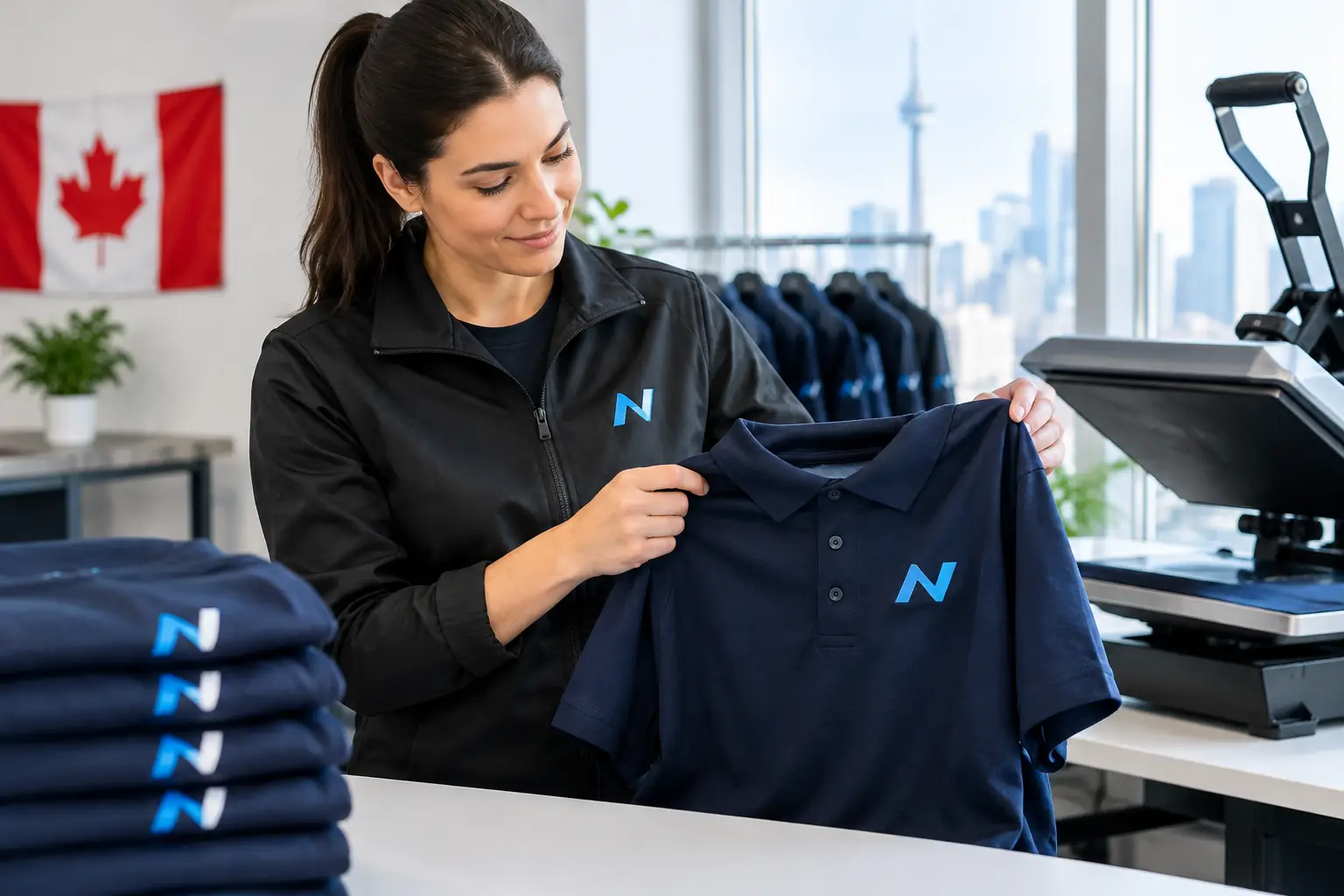
A uniform is often the first thing a customer notices when a team arrives on-site, welcomes them at a counter, or represents an organization at an event. Knowing how to print employee uniforms means looking beyond a logo on a shirt. The garment, decoration method, artwork, placement, and care instructions all affect whether your staff looks polished after one wash or one hundred.
For businesses, schools, and community organizations, the best uniform program balances professional appearance with the realities of the workday. A restaurant server needs different apparel than a construction crew, and a small front-office team may prioritize a different finish than a high-volume event staff order. Start with the job, then choose the printing approach that supports it.
Start with the work, not the logo
Before selecting a shirt style or print method, consider where and how employees will wear the uniform. Think about physical activity, temperature, exposure to dirt or chemicals, safety requirements, and how frequently garments will be washed. A lightweight cotton tee may work well for a summer fundraiser, but it may not hold up for a landscaping crew working outdoors every day.
Fabric matters because it changes how ink, thread, and heat-applied graphics perform. Cotton is comfortable and commonly used for screen printing. Polyester is popular for athletic, service, and outdoor apparel because it dries quickly and resists wrinkles, but it needs the right inks and temperature settings to prevent dye migration. Blended garments can offer a practical middle ground, combining comfort with durability.
Also consider the impression the uniform should create. Embroidered polos and button-down shirts tend to suit customer-facing offices, hospitality teams, and professional services. Printed T-shirts, hoodies, and workwear can be a better fit for crews, retail promotions, events, and casual workplaces. The goal is not to make every team look formal. It is to make the uniform look intentional and appropriate to the job.
Choose the right method to print employee uniforms
The best decoration method depends on your artwork, quantity, garment type, budget, and expected lifespan. There is no single right answer, which is why an early conversation with an experienced print provider can prevent costly reorders.
Screen printing for bold, repeatable designs
Screen printing is a strong choice for medium to large orders with simple, solid-color artwork. It produces a durable finish, delivers consistent color, and becomes more cost-effective as quantities increase. It works especially well for staff T-shirts, hoodies, event apparel, and branded workwear.
The trade-off is setup. Each ink color generally requires its own screen, so a detailed logo with several colors can add cost and production time. For a recurring uniform order using the same design, that setup is often worthwhile because the result is dependable and easy to reproduce.
Embroidery for a professional, textured finish
Embroidery uses thread stitched directly into the garment and is a natural fit for polos, jackets, hats, quarter-zips, and durable workwear. It gives logos dimension and holds up well to regular use. For a smaller left-chest logo, embroidery can make a uniform feel established without overwhelming the garment.
Not every design translates well to thread. Very small lettering, fine lines, gradients, and intricate details may need to be simplified. Embroidery also has more weight than print, so it is usually better for structured fabrics than lightweight performance shirts. Good digitizing and thread color selection make a noticeable difference in the final result.
Heat-applied graphics for names and smaller runs
Heat-applied graphics are useful when uniforms need individual names, numbers, job titles, or changing staff information. They are also practical for smaller orders where screen setup may not make financial sense. Modern heat-applied options can be clean and flexible, especially on athletic apparel and specialty fabrics.
Durability depends on the material, application process, and garment care. This method should be applied with the correct temperature, pressure, and timing for the fabric. A quality provider will match the transfer to the garment rather than using the same material for every job.
Digital printing for detailed, full-color artwork
Digital garment printing can be a useful option for small quantities or artwork with complex color transitions, photographs, or fine details. It avoids the color-by-color screen setup of traditional screen printing. However, it is not always the most economical choice for large staff orders, and the best results depend heavily on garment fabric and color.
Prepare artwork that prints cleanly
A logo that looks sharp on a website may not automatically work on a shirt. Employee uniforms are viewed from a distance, in motion, and under different lighting. A clear design with strong contrast is usually more effective than one packed with small details.
Whenever possible, provide a vector logo file, such as AI, EPS, PDF, or SVG. Vector files can be scaled without becoming blurry, which is important for chest prints, large back graphics, and embroidery digitizing. High-resolution PNG files may work for some digital applications, but a small web image is rarely suitable for production.
Use approved brand colors, but be practical about garment color. A navy logo can disappear on a black polo, while a white logo may need a backing layer on certain fabrics to stay bright. If color matching is important, request a proof and discuss the intended garment. Ink, thread, and fabric do not reflect light the same way as a printed brochure or a screen.
Keep typography readable. Employee names and titles should be large enough to read at a normal conversational distance. If your logo includes a tagline, ask whether it will remain legible at the selected size. Removing a tiny tagline is often a smarter choice than producing a technically accurate but unreadable decoration.
Plan placement for comfort and visibility
The left chest is a standard location because it is visible, familiar, and works well for logos on polos, jackets, and button-down shirts. A full front print creates more impact on T-shirts, while a large back print can help identify crews working on-site, at events, or in busy public spaces.
Placement should account for garment features. Pockets, seams, zippers, reflective strips, and buttons can interfere with printing or embroidery. A logo placed too close to a zipper may look off-center when worn. On heavier jackets, embroidery may be ideal, while a printed transfer may be better on a location that cannot be stitched easily.
Avoid treating every garment size exactly the same. A print that looks balanced on a medium shirt can look too small on a 3XL or too large on an extra-small. Standardizing the design is important, but experienced production teams can adjust placement and sizing within reason to maintain a consistent appearance across the order.
Order enough, then plan for the next hire
Uniform orders often fall short because businesses order only for the current headcount. Add a practical buffer for new hires, replacements, seasonal staff, and common sizes. This is especially helpful when you have a staff uniform deadline or need a consistent look for a public-facing team.
Document the garment brand, color, style number, logo version, decoration method, and placement. That record makes future orders faster and reduces the risk of mismatched apparel. Garment availability can change, so keeping an approved alternative style is wise for ongoing programs.
For organizations with multiple departments, use a simple system for variation. The main logo may stay consistent while shirt color, name personalization, or sleeve decoration identifies a department or role. This protects the overall brand while making uniforms more useful in day-to-day operations.
Approve a proof before production
A production proof is your checkpoint for spelling, logo version, garment color, placement, and sizing. Review it with the people who understand both the brand and the work environment. If employees will wear the uniforms for long shifts, it can be worthwhile to see a sample garment before committing to a large order.
Ask direct questions about turnaround time, minimum quantities, reordering, and care. Clear communication at this stage keeps deadlines realistic, particularly when uniforms are needed for a grand opening, a seasonal launch, or a community event.
Protect the investment with proper care
Uniform care affects print life as much as production quality. In most cases, wash garments inside out in cold water, use mild detergent, avoid bleach, and dry on low heat when possible. High heat can weaken adhesives and damage printed surfaces over time. Embroidered garments are durable, but they also benefit from sensible washing practices.
Give employees simple care instructions when uniforms are distributed. It is a small step that protects the organization’s appearance and reduces replacement costs. If staff work around heavy soil, grease, or chemicals, choose garments and decoration methods designed for that environment rather than expecting casual apparel to perform like industrial workwear.
A well-produced uniform helps employees feel part of the same team and helps customers recognize who they can approach. For Kamloops-area organizations that need practical guidance, dependable production, and consistent repeat orders, Noran Printing can help turn an approved logo into apparel your team will be comfortable wearing with confidence.