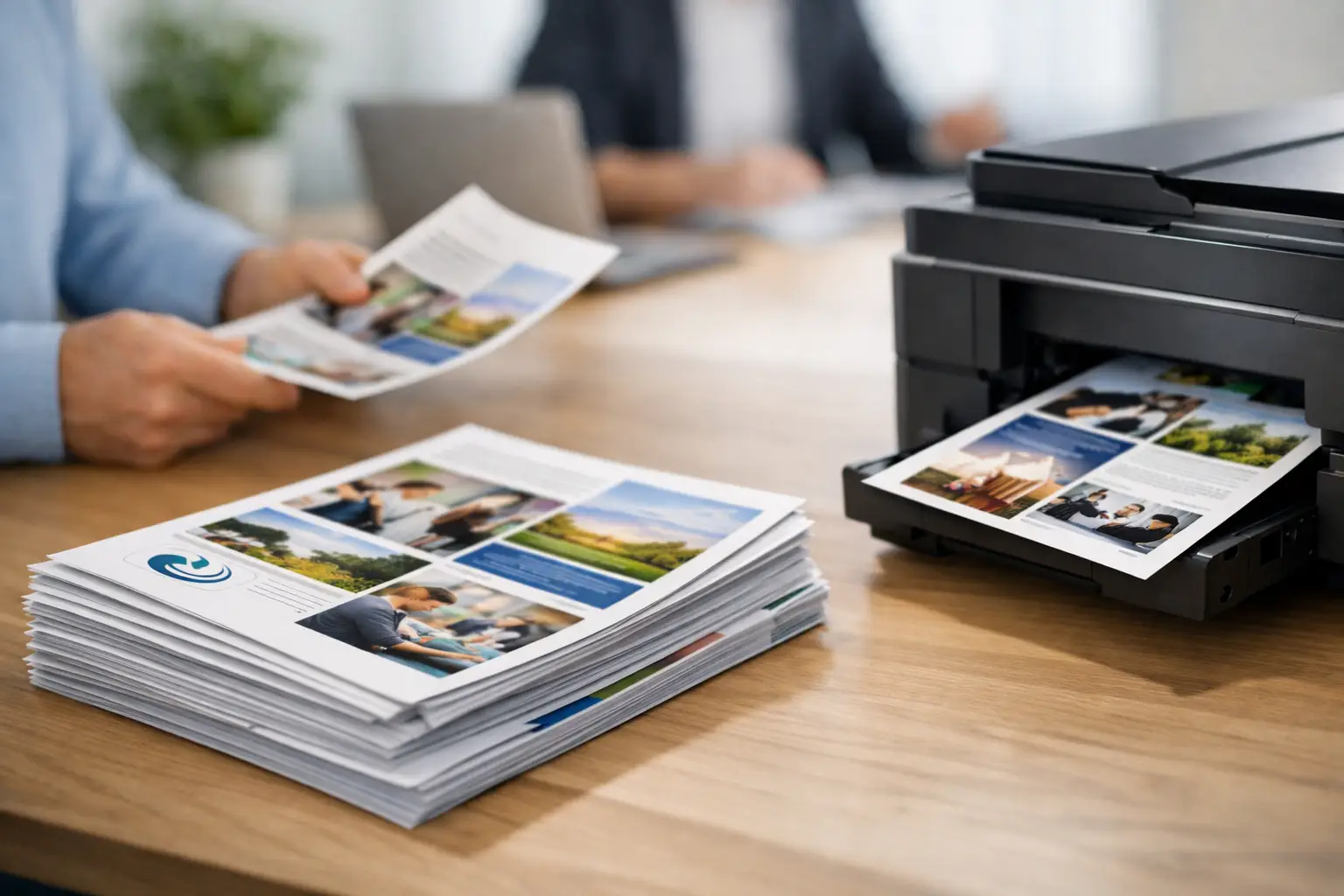
A newsletter that gets left on a front desk is wasted paper. A newsletter that gets picked up, read, and passed along can keep members informed, reassure donors, support staff communication, and make an organization look organized and credible. That is why newsletter printing for organizations still matters, even when email and social media do most of the daily talking.
For many schools, nonprofits, clubs, churches, and local associations, print fills a gap that digital channels cannot always cover. Not every audience checks email. Not every update deserves a social post. And not every message should disappear in a crowded inbox. A printed newsletter has staying power. It can sit in a waiting room, go home in a backpack, arrive in a mailbox, or get handed out at an event. People see it on their own time, and often more than once.
Why newsletter printing for organizations still delivers value
The biggest advantage of a printed newsletter is focus. When someone holds a physical piece, there are no pop-ups, no competing tabs, and no notification banners stealing attention. That matters when your organization needs to explain a program update, thank supporters, share upcoming dates, or show the results of a fundraiser.
Print also carries weight in a different way. A well-produced newsletter suggests care, consistency, and follow-through. For an organization, that can reinforce trust. Parents notice when a school communication looks polished. Members notice when an association provides regular updates. Donors notice when a nonprofit reports back clearly and professionally.
That said, print is not automatically the right choice for every message. If your content changes daily, or if you need instant distribution, digital will usually do the job better. Printed newsletters work best when the information has a useful shelf life and the audience benefits from something they can keep, post, or share.
What makes an organizational newsletter effective
The strongest newsletters are not the longest ones. They are the clearest. Many organizations try to fit every announcement into one issue, then end up with crowded pages and tiny type. Readers tune out when a piece feels dense or hard to scan.
A better approach is to decide what the newsletter needs to accomplish. One issue might focus on event participation. Another might highlight program outcomes and donor impact. Another might serve as a recurring internal update for members or staff. Once that purpose is clear, the design, paper, and page count become easier to choose.
Good newsletter printing starts well before the press runs. It starts with structure. A strong front page should give readers an immediate reason to continue. Inside pages should be organized around short articles, clear headings, strong photos, and sensible spacing. Contact details, upcoming dates, and calls to action should be easy to find without feeling repetitive.
Tone matters too. Organizations often need to balance warmth with authority. A community group can sound welcoming without being casual to the point of confusion. A school can be informative without sounding stiff. A nonprofit can be mission-driven without turning every article into a funding appeal. The print piece should match the organization readers already know.
Choosing the right format for newsletter printing for organizations
There is no single best format for every organization. It depends on audience, budget, frequency, and how the newsletter will be distributed.
A simple folded newsletter works well for shorter updates, event recaps, and community outreach. It is cost-effective, easy to hand out, and practical for mailings. A multi-page booklet format makes more sense when you have multiple departments, longer stories, or recurring sections. Schools, larger nonprofits, and membership organizations often benefit from that extra room.
Page size also affects usability. A standard letter-size format is familiar and efficient. Larger formats can add visual impact, but they can also cost more to print and mail. If your audience is mostly reading at home or in an office, readability should come before novelty.
Black-and-white newsletters can still be the right call in some cases, especially for internal communications or budget-sensitive runs. But full color often earns its cost when photos, branding, charts, or sponsor recognition play an important role. If the goal is to reflect professionalism and build engagement, color usually helps.
Paper, finishing, and the impression they leave
Paper choice changes how a newsletter feels before a word is read. A standard uncoated stock gives a practical, approachable look and is easy to write on if recipients need to make notes. A smoother or heavier stock gives a more polished impression and can help photos reproduce more cleanly.
The best choice depends on purpose. A donor newsletter may benefit from a more substantial feel. A church bulletin-style newsletter that goes out regularly may be better on a lighter, more economical stock. A school update sent home every month needs durability, but it also needs to stay within budget over time.
Finishing options should support the content, not distract from it. Folding, stapling, and trimming need to be consistent and clean. If addresses are being added for mail distribution, that part of the process has to be planned early so the final piece still looks organized. Small production details make a visible difference in how the piece is received.
Quantities, timing, and avoiding common ordering mistakes
One of the most common problems with newsletter printing is ordering based on guesswork. Too many copies create waste. Too few can leave key groups without materials. The right quantity usually comes from looking at actual distribution points, mailing lists, event attendance, and a reasonable overrun buffer.
Timing matters just as much. Organizations often treat the print stage as the last step, when in reality it should be part of the schedule from the start. If content approval runs late, design gets rushed. If design gets rushed, errors are easier to miss. If the files are not properly prepared, production can slow down at the exact moment everyone wants the job finished.
A dependable print partner helps prevent those bottlenecks by flagging practical issues early. That includes page setup, image quality, bleeds, paper options, folds, addressing, and turnaround expectations. For recurring newsletters, it is even better to build a repeatable process instead of starting from scratch each cycle.
When variable data and mailing support make sense
Some organizations need more than a generic print run. If newsletters are being mailed to members, donors, or households, variable data printing can make the piece more useful and more personal. Names, addresses, custom messages, or segmented content can all be managed more efficiently when the printing process supports it.
This is especially valuable for organizations with multiple audiences. A chamber group may want different inserts for sponsors and general members. A nonprofit may send one version to volunteers and another to donors. A school system may need distribution by campus or program. In those cases, the production setup matters just as much as the design.
Mailing support can also save significant staff time. Addressing, sorting, and preparing a job properly is not glamorous work, but it affects deadlines and accuracy. For busy administrators and office managers, having that handled correctly can remove a major operational headache.
Working with a local printer versus ordering online
Online ordering platforms can be useful for very simple jobs, especially when cost is the only factor. But newsletters are rarely just simple jobs. They involve timing, revisions, paper choices, readability concerns, and sometimes mailing or variable data requirements.
That is where a local print shop often gives organizations a real advantage. You can ask questions before committing to a format. You can review paper options with actual guidance. If something in the file is off, there is a better chance of catching it before it becomes an expensive problem. And when the newsletter is part of a broader communication plan that includes brochures, posters, event signage, forms, or promotional materials, working with one dependable provider keeps everything more consistent.
For organizations in Kamloops and surrounding communities, that local relationship can be especially practical. Deadlines do not always move. Events do not always wait. Having responsive support nearby can make recurring communications easier to manage over the long term.
A printed newsletter should do more than fill space. It should represent your organization clearly, reach people reliably, and make the next action obvious. When the format, paper, timing, and production support are handled properly, the result is not just a better print piece. It is a communication tool people are more likely to read, trust, and keep.