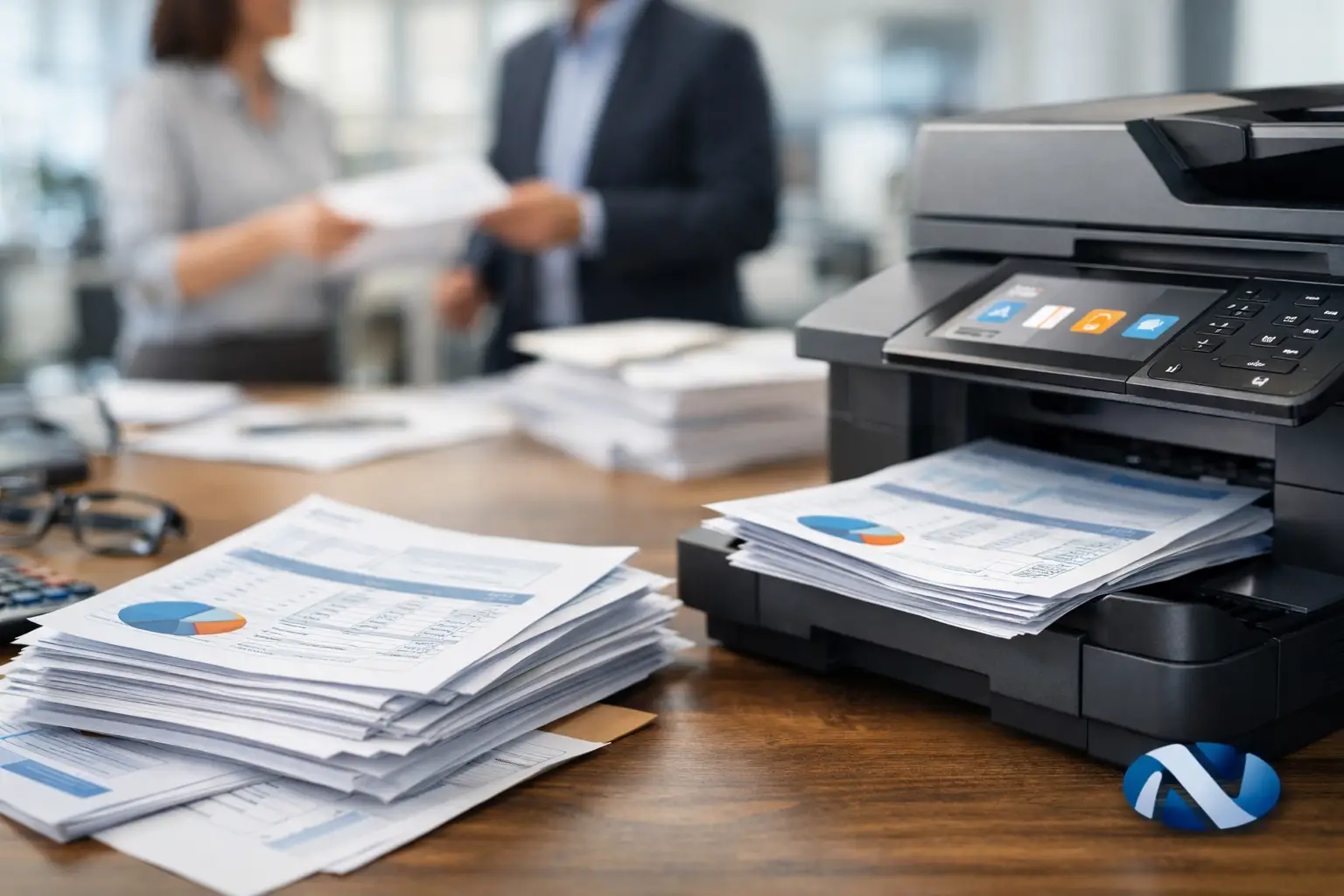
A misplaced work order, an unreadable invoice, or a form with no clear space for signatures can slow down an otherwise capable team. Reliable office forms printing services turn the paperwork your staff uses every day into an organized system that supports accurate records, faster handoffs, and a more professional customer experience.
For many businesses, forms are not glamorous marketing pieces. They are operational tools. Estimates, invoices, packing slips, inspection reports, purchase orders, delivery tickets, and service forms all need to work under real conditions – at a front desk, in a service vehicle, on a job site, or in a busy office. That calls for more than putting a logo on a page. It calls for thoughtful layout, suitable materials, consistent color, and dependable production.
Why Office Forms Still Matter
Digital tools have changed how businesses communicate, but paper forms remain essential in many workflows. A technician may need a customer signature where internet service is unreliable. A warehouse team may need a physical packing slip attached to an order. An office may require numbered invoice copies for filing, accounting, and customer records.
Well-designed forms reduce uncertainty. Staff know where to enter information, customers know where to sign, and managers can find the details they need without decoding cramped handwriting or incomplete fields. When forms are standardized, they also help maintain consistency across teams, shifts, and locations.
Printed forms make a quiet but meaningful impression on customers. A clean, branded estimate or service report reinforces that your business is organized and accountable. On the other hand, a photocopied template with faded lines and mismatched branding can make even excellent service feel less established.
Office Forms Printing Services for Daily Operations
The right form depends on what happens after it leaves the printer. An invoice that stays in the office has different requirements than a delivery receipt that travels in a truck. A local print partner should ask how the form will be used before recommending stock, format, finishing, or quantity.
Carbonless Forms for Copies That Stay Together
Carbonless forms, sometimes called NCR forms, are a practical choice when several people need a copy of the same transaction. A single handwritten entry can create copies for the customer, office, accounting department, warehouse, or technician without using carbon paper.
They are commonly used for invoices, work orders, purchase orders, inspection forms, delivery tickets, and service reports. Sets can be produced in two, three, or more parts, with different colored sheets to make filing easier. They can also be padded, glued into sets, or assembled into books with a cover and wraparound writing shield.
The key decision is not simply how many copies you need. Consider who receives each copy and how long each party needs to retain it. A service company may need a customer copy, a technician copy, and an office copy. A supplier may need additional copies for shipping and receiving. Planning the distribution before printing prevents unnecessary reorders or forms that do not fit the workflow.
Numbered Forms for Better Tracking
Sequential numbering is one of the simplest ways to improve accountability. Numbered invoices, receipts, quote forms, and work orders make it easier to trace a transaction, check for missing paperwork, and organize records later.
The numbering can begin at a specific point to match an existing system. It can also be placed where it is easy to reference during a phone call or while filing. For operations that need more detail, forms may include a job number, customer account number, location code, or a barcode. The best setup depends on how your office tracks work now and where errors tend to occur.
Custom Forms Built Around the Job
Off-the-shelf forms can be useful for basic needs, but they often force staff to work around someone else’s layout. Custom forms allow a business to include the exact fields, checkboxes, terms, contact details, and brand elements it needs.
For example, a contractor’s job form may need room for site conditions, materials used, change approvals, and customer sign-off. A clinic or community organization may need clearly defined consent fields and confidential record areas. A restaurant supplier may require a detailed order form with quantities, delivery instructions, and payment terms.
A useful form guides the person completing it from top to bottom. Related information should be grouped together, instructions should be concise, and writing areas should be large enough for practical use. If a form asks for information repeatedly, consider adding checkboxes, preprinted options, or a simple table. These choices save time and improve legibility.
Details That Affect How a Form Performs
A form can look fine on screen and still fail in the field. Paper weight, coating, ink coverage, binding, and margin space all affect usability. This is where experienced print guidance has real value.
Uncoated paper is often the right choice for forms that must be written on, stamped, or signed. Glossy stock may suit promotional pieces, but it can be frustrating for everyday paperwork. Heavier covers can protect form books, while lighter interior sheets help keep multi-part sets manageable.
Color should be used with purpose. Your logo and headings may benefit from full color, while black ink can be more economical for forms that are reordered often. Colored carbonless sheets can distinguish copies, but the contrast still needs to be clear enough for readable handwriting and accurate scanning.
Margins matter as well. If forms will be punched, stapled, bound, or stored in folders, leave enough room so important text is not lost. If a form will be used in a clipboard or book, consider whether the writing space remains comfortable near the edge of the page.
How to Plan a Better Forms Order
Before requesting a quote, gather a few practical details. You do not need to be a print expert, but a clear brief helps your printer recommend the right solution and avoid costly revisions.
- Identify the form’s purpose and the person who will complete it.
- Decide whether it needs single sheets, pads, loose sets, or bound books.
- Confirm the finished size, number of parts, and whether copies need different colors.
- Determine whether sequential numbering, variable information, or barcodes are required.
- Estimate how frequently the form is used so you can choose a sensible order quantity.
Ordering a larger quantity can reduce the unit cost, but only when the content is unlikely to change. If your pricing, staff contacts, legal language, or branding is being updated soon, a smaller run may be the smarter choice. A dependable print shop can help balance cost efficiency with the risk of ending up with outdated stock.
The Value of Variable Data Printing
Some organizations need forms that are consistent but not identical. Variable data printing makes it possible to personalize individual pieces with names, account numbers, addresses, codes, or location-specific details while keeping the core design consistent.
This can be useful for preprinted customer forms, membership materials, personalized invoices, school communications, and multi-location operations. Rather than manually adding information after printing, the required data can be incorporated during production. That reduces repetitive office work and can help minimize transcription errors.
Variable data requires clean, accurate source information. Before production begins, confirm the format of your data file, check spelling and account details, and identify any blank fields or exceptions. A careful proofing process is especially important when every printed piece contains different information.
Choose a Print Partner That Understands the Work
Price matters, but forms are not a category where the lowest quote always delivers the best value. A form that is difficult to use, printed with weak contrast, assembled incorrectly, or delayed when stock runs low can create costs that do not appear on an invoice.
Look for a print provider that can review your existing form, identify practical improvements, and produce repeat orders consistently. High-speed digital press technology can support efficient turnaround for many business forms, while quality control helps ensure numbering, copy order, color, and finishing are correct before the job reaches your team.
For businesses that also need letterhead, envelopes, labels, presentation folders, signage, promotional products, or branded apparel, working with one provider can simplify purchasing and help keep brand standards consistent. Noran Printing supports businesses and organizations across Kamloops and the surrounding region with hands-on guidance and dependable production for everyday operational print.
A well-made form does more than capture information. It gives your staff a dependable tool for doing the job right, one clear entry and one complete record at a time.