A loose stack of brochures, estimate sheets, and business cards can make even a strong company look unprepared. Presentation folder printing solves that problem fast. It gives your materials structure, keeps your brand consistent, and turns a simple handoff into something that feels organized and credible.
For many businesses, folders are not an extra. They are part of how sales kits, onboarding packets, proposal documents, school information packs, and event materials are delivered. When the folder is well printed and built for the job, it supports the message before a single page is read.
Why presentation folder printing still matters
Digital communication handles a lot of daily work, but print still carries weight when the moment matters. A face-to-face meeting, a formal quote, a donor package, or a conference handout asks for something more polished than a stapled stack of paper. A presentation folder creates that finished look.
It also helps with consistency. When multiple documents need to stay together, the folder acts as the branded outer shell. That matters for real estate offices, contractors, legal firms, schools, healthcare providers, nonprofits, and any organization that shares packets on a regular basis. A clean folder tells the recipient that details are being handled properly.
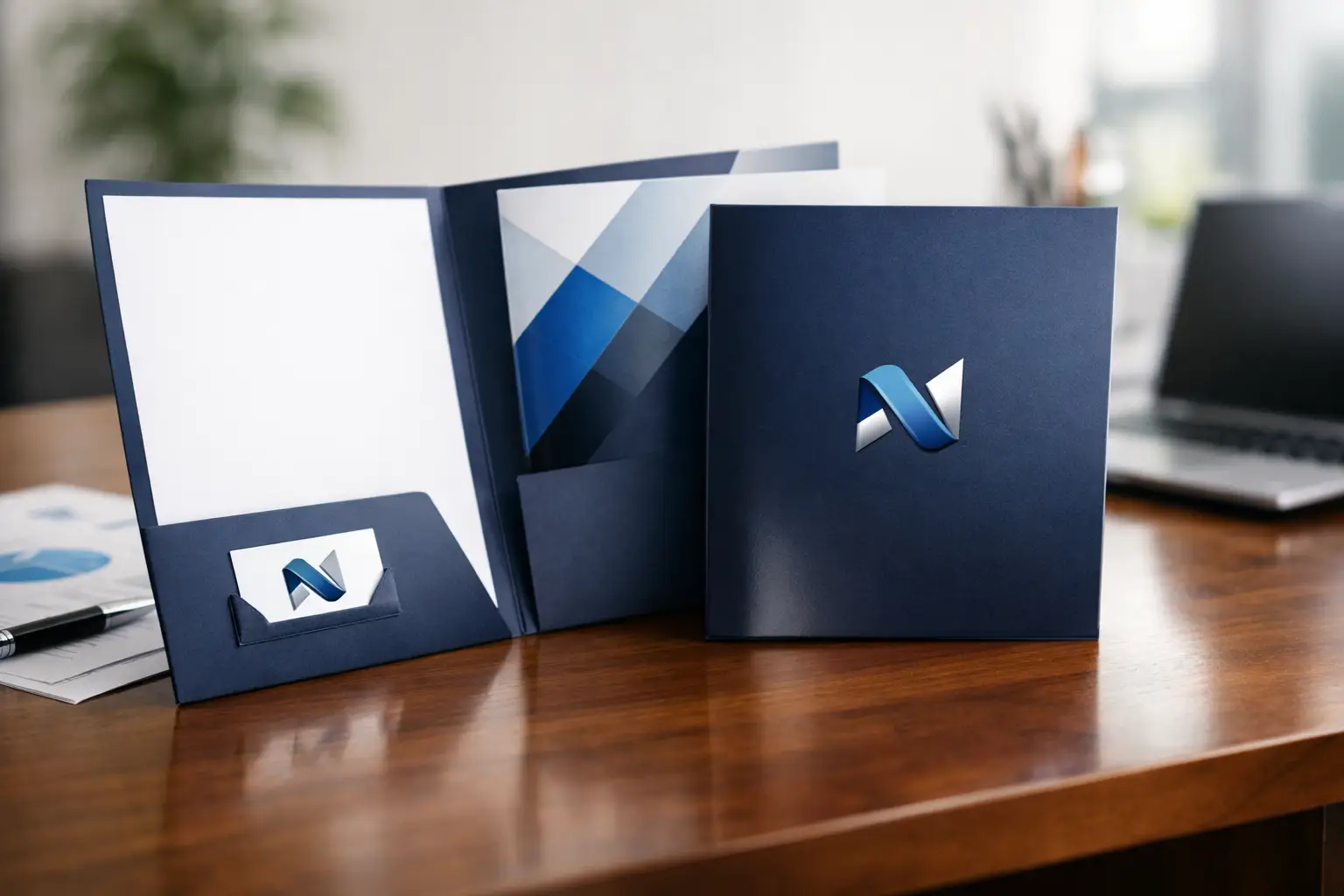
There is also a practical advantage. Pockets keep documents in place, business card slits give the package a personal contact point, and heavier stock protects the contents better than a thin cover sheet. Good print is not just about appearance. It improves usability.
What makes a folder look polished
Not every folder has to be elaborate, but the best ones feel intentional. Design, stock, finish, and structure all affect the final result.
Stock matters more than many buyers expect
A presentation folder needs enough rigidity to hold shape in the hand and survive being carried from meeting to meeting. If the stock is too light, the folder bends easily and starts to look worn before it has done its job. Heavier cover stock gives a better first impression and feels more substantial.
That said, heavier is not always better. If the folder needs to be mailed, packed in quantity, or produced on a tighter budget, there is a balance to strike. An experienced print shop can help match the stock to the use case instead of simply pushing the thickest option.
Finish changes how the brand is perceived
Gloss can make colors pop and photography stand out. Matte tends to feel more refined and can be easier to handle without obvious fingerprints. Soft-touch finishes add a premium feel, but they are not necessary for every audience or budget.
This is where context matters. A construction company may want a durable, straightforward folder that reflects practicality. A financial firm may prefer a cleaner matte finish that feels formal and understated. The right choice depends on the brand and the setting where the folder will be used.
Pockets and slits should match the contents
Standard two-pocket folders work well for most business uses, but not every packet is standard. If you are inserting a few single sheets, almost any pocket configuration will do. If you need room for thicker sets, order forms, or multi-page booklets, pocket depth and expansion become more important.
Business card slits are a common add-on, and they are often worth including. They make the folder more functional and create an easy way for the recipient to keep a direct contact with the materials. If your team hands out folders in person, that detail can make the package more effective.
Common mistakes in presentation folder printing
The most common problem is trying to fit too much on the outside. A folder is not a brochure. It does not need to explain every service, feature, and selling point on the cover. Too much text or too many visual elements can make the piece feel crowded.
Another issue is poor artwork setup. Folders require attention to bleed, folds, pockets, and safe margins. A design that looks fine on a flat screen may not work once it is converted into a die-cut finished piece. Logos can end up too close to folds, text can land in awkward spots, and important elements can get hidden by the pocket.
There is also the budget mistake of ordering purely by unit price. A cheaper folder that scuffs easily, prints with weak color, or arrives without enough durability can cost more in perception than it saves on paper. Printed materials used in sales and client-facing settings should hold up under handling.
How to design a folder that works in the real world
A good folder starts with clarity about its purpose. Is it meant for proposals, event packets, school registration materials, or welcome kits for new clients? Once that is defined, the design choices become easier.
Keep the front cover focused. Usually the logo, a short brand line or company name, and a clean visual treatment are enough. Inside pockets can carry more detail if needed, but even there, restraint usually works better than clutter.
Think about what will be inserted. If the packet includes a brochure, estimate sheet, letter, and card, the folder should support that combination without fighting for attention. The inside panels can include contact details, a short service overview, or branded graphic elements, but they should never make the documents feel secondary.
It also helps to think ahead about reusability. A folder tied to a specific campaign or date can be useful for a one-time event, but a more evergreen design often gives better long-term value. For many businesses, a folder that works across meetings, quotes, and general information packages makes ordering easier and reduces waste.
When custom presentation folder printing is worth it
Standard folders are suitable for many uses, but there are times when custom production is the better investment. If your documents are unusual in size, your brand standards are strict, or the folder is part of a premium sales process, custom options can make a visible difference.
Custom sizing, special pockets, embossing, foil, spot coatings, and unique finishes can help a piece stand out. The trade-off is cost and production complexity. Those features work best when the folder supports a high-value interaction, such as a bid package, investor packet, luxury service presentation, or donor campaign.
For everyday use, simpler often performs better. Clean printing, solid stock, sharp color, and accurate finishing usually matter more than added effects. A folder does not need to be flashy to feel professional. It needs to be well made and appropriate for the business using it.
Working with a local print partner helps avoid costly missteps
Presentation folders are one of those products that look straightforward until details start to matter. Fold lines, pocket size, paper choice, and file setup all affect the final piece. That is why working with a local print provider can save time and frustration, especially for businesses ordering folders alongside brochures, forms, flyers, or other support materials.
A shop with broad print capability can also help create consistency across the whole package. The folder, inserts, letterhead, and business cards should look like they belong together. Matching color and finish across pieces gives the final packet a more complete and dependable look.
For local organizations in Kamloops and surrounding communities, that hands-on support is often the difference between a folder that simply exists and one that actually strengthens the presentation. Noran Printing works with businesses and institutions that need that kind of practical guidance, especially when folders are part of a larger print order and timing matters.
How many folders should you order?
This depends on how often they are used and whether the design will stay current. If your branding, staff list, or messaging changes often, smaller runs can make sense even if the unit cost is slightly higher. Digital printing makes shorter quantities more realistic for many businesses.
If the design is stable and the folder is part of a regular sales or administrative process, larger runs usually offer better value. The smart decision is not always the biggest order. It is the order size that fits your usage, storage space, and likelihood of design updates.
A print shop should be able to talk through those factors honestly. The right quantity should support your operations, not leave you with stacks of outdated materials six months later.
Presentation folders do a simple job, but they do it at an important moment. When someone is deciding whether your business feels organized, established, and ready to deliver, the details matter. A well-printed folder keeps those details working in your favor.