A promotional item has only a few seconds to earn its place on a desk, in a vehicle, or in someone’s daily routine. If it feels cheap, irrelevant, or overloaded with branding, it is likely headed for a drawer. If it is useful, well made, and clearly connected to your business, it can keep your name visible long after an event, meeting, or customer visit.
For businesses and organizations, promotional products are not simply giveaways. They are a practical extension of your brand. The right item supports recognition, starts conversations, and gives customers a physical reminder of the service they can count on.
Why promotional products still work
Digital advertising moves quickly. A social post can be missed, an email can be deleted, and an online ad can disappear the moment a customer scrolls past it. A useful branded item works differently. It stays within reach and can create repeated impressions without requiring another click or another advertising spend.
A pen used at a reception desk, a tote bag carried to the grocery store, or an embroidered jacket worn by a staff member all put a business name in front of people naturally. The value is not only in the first recipient. It is also in the people who see the item later.
That does not mean every branded product is worth ordering. The most effective choices depend on who will receive them, where they will use them, and what action you want the item to support. A contractor preparing for a trade show needs something different from a school recognizing volunteers or a professional office welcoming new clients.
Start with the job the item needs to do
Before choosing colors, apparel styles, or quantities, decide what success looks like. Are you trying to thank repeat customers, give staff a consistent appearance, support a fundraising event, or leave a stronger impression after a sales meeting? One clear purpose leads to better product decisions.
For example, a community event may benefit from affordable items that can be distributed in larger numbers. A real estate office may get more value from a smaller quantity of quality presentation folders, branded notepads, or practical closing gifts. A restaurant may focus on staff shirts, takeout menus, and branded materials that reinforce the same look at every customer touchpoint.
Consider how long the item should remain useful. Event-day items can be simple and economical. Client gifts and employee apparel should generally be more durable because they represent your standards over time. There is no single best product. The right choice is the one that fits the audience, occasion, and available budget.
Promotional products should earn their space
People keep products that solve a small problem or make a routine easier. That is the standard worth using when evaluating options. A useful item does not need to be extravagant, but it should feel intentional.
Choose everyday usefulness
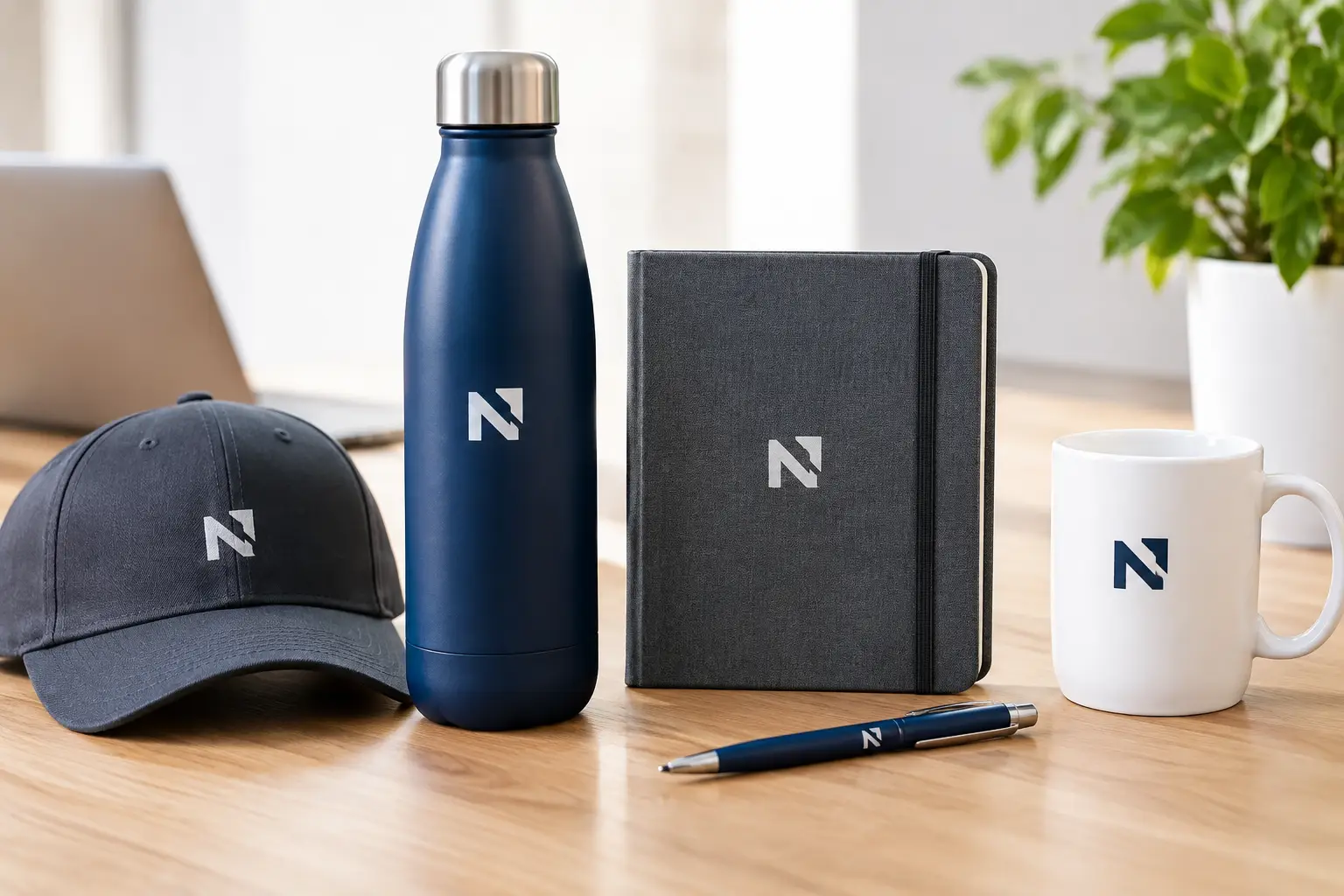
Office supplies, drinkware, bags, notebooks, apparel, and vehicle-related items often perform well because they fit established habits. Think about where your audience spends time. Office managers may appreciate desk-ready products. Outdoor crews may use durable apparel or insulated drinkware. Parents at school events may find tote bags and water bottles more useful than novelty items.
The item should also suit the season. Branded outerwear may be a strong choice for fall and winter, while caps, reusable bottles, and picnic-ready products can make more sense for spring and summer events. Timing affects whether a product is used immediately or set aside.
Put quality ahead of excess
A lower-cost item can be appropriate for a large event, but it should still function properly. A pen that skips, a bag with weak handles, or apparel that loses its shape quickly can create the wrong association with your business.
Often, it is better to order fewer items with a stronger perceived value than to distribute a large quantity of products that recipients will not use. This is especially true for client appreciation, employee recognition, and business-to-business marketing. Quality signals care, and care supports trust.
Keep the message easy to read
Your logo, business name, and contact details should be clear at a glance. Trying to fit every service, phone number, social channel, and tagline onto a small item usually reduces its impact. Give the brand room to breathe.
For some products, a logo and website are enough. For others, such as a notepad, folder, or calendar, there may be room for more detailed contact information. A print professional can help match the design to the available space and the chosen production method.
Make your promotional branding consistent
Promotional products work best when they look like they belong with the rest of your materials. The colors on an embroidered polo should feel consistent with your business cards, brochures, signage, presentation folders, and forms. That consistency makes your company easier to recognize and more professional in the eyes of customers.
Color accuracy matters here. A logo that looks one way on a digital screen and another on a printed item can weaken the overall impression. Artwork, garment color, ink selection, and decoration method all influence the final result. Reviewing the intended use before production helps avoid surprises.
Consistency does not require every item to look identical. A subtle embroidered logo may be best for staff apparel, while a bolder full-color design can be effective on event signage or promotional bags. The goal is a recognizable family of materials, not a copied design applied without thought.
Match quantities and production methods to the project
Ordering the right quantity requires a balance. Ordering too few can lead to rushed reorders and inconsistent materials. Ordering far more than needed can tie up budget and storage space, particularly when dates, staff roles, or branding details may change.
Estimate distribution realistically. For an event, account for attendance, volunteers, sponsors, and a reasonable number of extras. For staff apparel, consider new hires and replacement needs. For client gifts, build your list around priority accounts rather than ordering based on a vague guess.
Production method matters as well. Screen printing can be a practical choice for larger apparel runs with bold designs. Embroidery offers a durable, professional finish for polos, jackets, hats, and uniforms. Digital printing supports detailed graphics, shorter runs, and variable information when personalization is part of the campaign.
Variable data printing can be particularly valuable when a mailer, invitation, or printed insert needs to include individual names, locations, offer details, or event information. Pairing personalized print with a useful promotional item can make outreach feel more relevant without making it feel overly complicated.
Build promotional items into the full customer experience
The strongest promotional programs do not stand alone. They support the materials a customer already sees. A branded folder can hold a proposal. A custom notebook can accompany a training session. Staff apparel and event signage can reinforce the same identity at a community gathering. A label, menu, flyer, or direct mail piece can carry the message further.
This is where working with one local print partner can save time. Rather than coordinating business printing, signage, apparel, and promotional products across several suppliers, businesses can plan the full set of materials together. At Noran Printing, that means practical guidance on products, decoration methods, print quality, and timing from a team that understands local business needs.
A promotional product should never be chosen simply because it is available. Choose something your audience will use, your team will be proud to hand out, and your business will be pleased to see representing its name months from now.