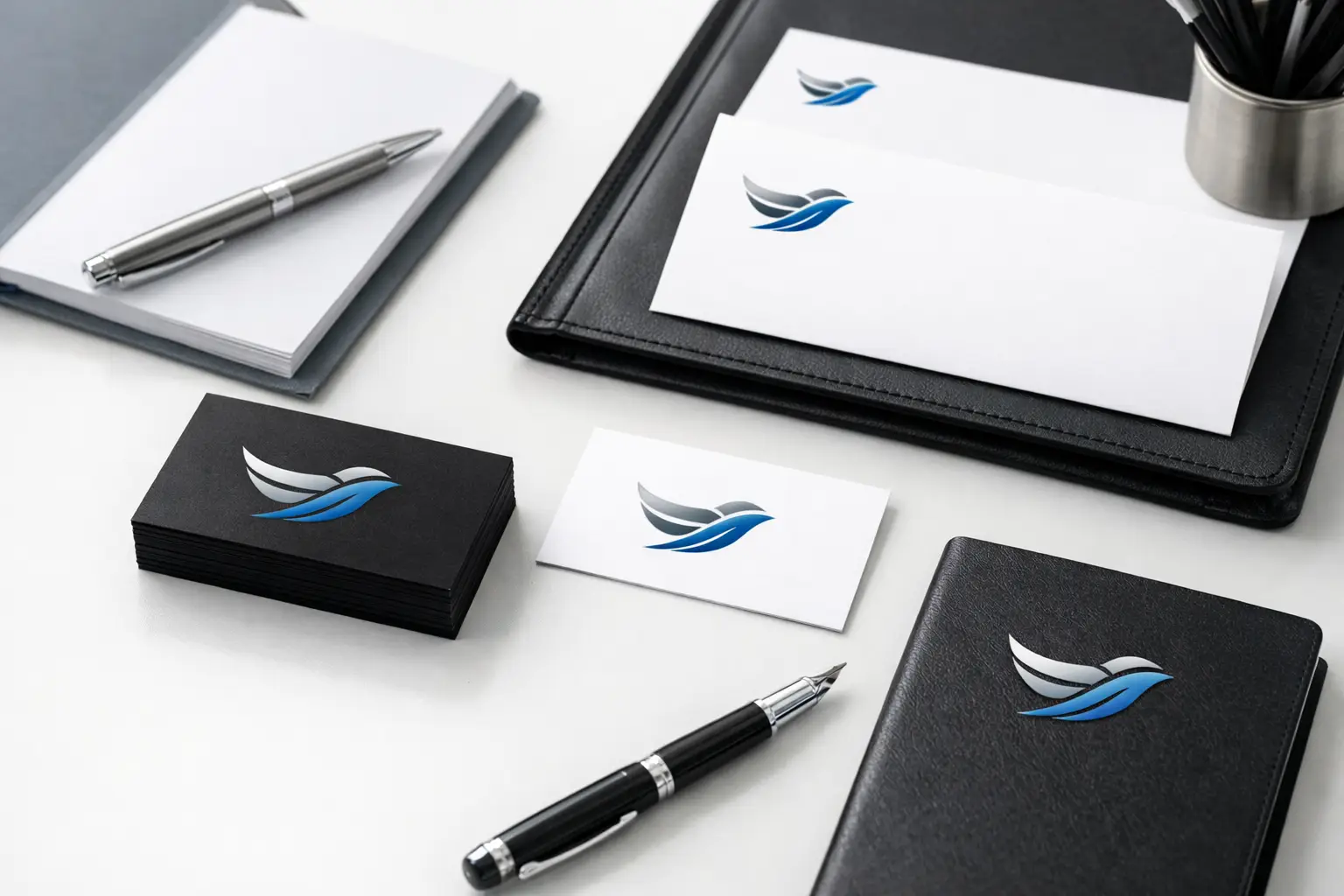
A customer meets your team at an event, takes your card, then later receives a quote on plain paper in a generic envelope. Nothing is technically wrong with that, but the impression weakens fast. If you have ever wondered what is business card and stationery, the short answer is this: it is the set of printed brand materials a business uses to present itself clearly, professionally, and consistently.
For many organizations, these pieces are still doing real daily work. They support sales conversations, front desk interactions, proposals, invoices, mailings, events, and internal operations. Good business printing is not just about looking polished. It helps people recognize your company, trust what they are receiving, and remember who sent it.
What is business card and stationery in practical terms?
Business cards and stationery are core printed materials that carry your company identity. A business card is the compact, hand-to-hand piece that shares contact information. Stationery is the broader set of branded paper items your business uses for communication and operations.
In most cases, stationery includes letterheads, envelopes, notepads, forms, invoices, presentation folders, and sometimes labels or mailing pieces. Some companies keep the set very simple. Others build out a full package because they send contracts, estimates, statements, promotional inserts, or internal paperwork every week.
The key idea is consistency. These pieces use the same logo, brand colors, type styles, and contact details so your business looks organized across every touchpoint. That matters whether you are meeting a new client, mailing documents, or handing out materials at a local event.
Why businesses still use printed cards and stationery
It is easy to assume everything has moved online. In reality, print still fills a gap that digital tools do not always cover. A business card is immediate. It does not rely on someone typing your name correctly into their phone or remembering your website later.
Stationery works the same way. A printed letterhead on a proposal, a branded invoice, or a clean envelope can make communication feel more official and more credible. That is especially useful for service businesses, schools, nonprofits, contractors, medical offices, legal firms, and organizations that handle recurring paperwork.
There is also a practical side. Printed materials keep workflows moving. Not every document should be improvised in a word processor with a copied logo at the top. Standardized forms, invoice pads, and branded templates save time and reduce inconsistency.
The role of business cards
A business card is often the first printed piece someone keeps from your company. Its job is simple, but it carries weight. It should make it easy for someone to contact you and easy for them to remember who you are.
A standard card usually includes your business name, logo, employee name, title, phone number, email, website, and sometimes a physical address. Depending on the business, it may also include appointment reminders, service highlights, social handles, or a short tagline.
The design matters, but so does the finish. Paper thickness, coating, texture, and print quality all affect how the card feels in someone’s hand. A flimsy card can suggest corner-cutting. A well-produced card feels intentional. That does not always mean expensive. It means choosing a format that fits your brand and your audience.
For example, a law office may want a clean, understated card on heavier stock. A restaurant or event business might choose a more visual design. A contractor may prioritize readability and durability over decorative effects. Good business cards are not all supposed to look the same.
What counts as stationery?
When people hear stationery, they sometimes think only of letterhead. In business printing, the category is broader than that. It usually refers to the branded paper materials a company uses regularly.
Letterheads are one of the most common pieces because they give printed correspondence a formal, branded appearance. Envelopes matter too, especially when mailed documents need to look professional before they are even opened. Notepads are useful for front desks, sales teams, field staff, and internal meetings.
Then there are the operational items. Invoices, purchase orders, work orders, carbonless forms, appointment slips, and presentation folders all fall under the same umbrella in many print environments. These pieces may not seem glamorous, but they are often the materials customers see most often.
That is why stationery should not be treated as filler. It supports the everyday mechanics of your business while reinforcing your brand at the same time.
What good business card and stationery design should do
Strong design is not about adding decoration to paper. It is about making information easy to use while keeping the brand consistent.
A good set starts with the basics: logo placement, readable fonts, correct contact details, and colors that reproduce well in print. From there, the layout should match the purpose of each item. A business card needs clarity at a small size. A letterhead needs enough open space for actual communication. A form needs room for handwriting, signatures, or multiple fields.
This is where trade-offs come in. A highly detailed design may look sharp on a screen but print poorly at small sizes. Very light colors can feel elegant, but they may not hold up well on forms that are photocopied or scanned. Heavy ink coverage can create a bold look, but it may add cost or affect readability.
That is why experienced print planning matters. The best stationery systems are designed for real-world use, not just visual appeal.
How these materials support your brand
Branding is often discussed like it only lives in logos and websites. In practice, customers judge your business through dozens of small interactions. Printed materials are part of that.
When your card, letterhead, envelopes, folders, and forms all look like they belong together, your business appears more established. That consistency signals attention to detail. It tells customers they can expect the same level of care in your service.
It also helps internally. Staff can use approved materials instead of making one-off documents that vary by department or employee. That reduces confusion and keeps your company image more consistent over time.
For growing businesses, this can be a turning point. Once you move beyond casual startup materials and into a coordinated print package, you often look more prepared to handle larger accounts, repeat customers, and formal opportunities.
When custom stationery makes the most sense
Not every organization needs a large stationery package on day one. A small business may begin with just business cards, envelopes, and a simple letterhead. That can be enough if most communication is digital.
On the other hand, if your office regularly sends estimates, contracts, statements, invoices, intake forms, or presentation materials, custom stationery usually pays for itself in professionalism and efficiency. Schools, nonprofits, trades, healthcare providers, and administrative offices often benefit from having these items properly set up from the start.
Volume matters too. If you reorder often, it makes sense to standardize sizes, stocks, and artwork so future runs are easier to manage. Variable data or department-specific versions can also help larger organizations keep materials personalized without reinventing the design each time.
For businesses in communities like Kamloops, where reputation and referrals still carry real weight, these details are not minor. They help create a consistent experience that people remember.
Common mistakes to avoid
The biggest mistake is treating business cards and stationery as separate projects with unrelated designs. When materials do not match, the brand feels fragmented.
Another common issue is putting too much information on every piece. A business card with crowded text is harder to use. A letterhead packed with graphics competes with the message. Simpler layouts are often more effective.
Poor print specifications cause problems as well. Low-resolution logos, incorrect color setup, thin paper, and mismatched envelopes can make an otherwise decent design feel unfinished. That is why working with a print partner who understands both design and production can save time and rework.
Finally, businesses sometimes order the minimum just to get by, then find themselves reordering in a rush. If you use these materials regularly, planning ahead usually leads to better consistency and fewer last-minute compromises.
More than paper, but still worth getting right
Business cards and stationery may seem basic compared with signage, apparel, or large marketing campaigns. Yet they often carry your brand in the most direct, repeatable ways. They are the pieces customers hold, file, sign, mail, and pass along.
That is really what is business card and stationery about. It is not just printed paper. It is a practical system for showing that your business is organized, credible, and ready to be taken seriously.
If your current materials feel inconsistent, outdated, or improvised, that is usually a sign worth paying attention to. The right print pieces do not need to be flashy. They just need to represent your business as well as your work already does.