A banner that looks sharp from across a parking lot is doing a very different job than a brochure in someone’s hand. That difference gets to the heart of what is large format printing – a print method used to produce oversized graphics, signage, and visual materials that need to stand out in bigger spaces.
For many businesses and organizations, large format printing is less about size alone and more about visibility. If you need people to notice your message from a distance, guide visitors through a space, promote an event, or reinforce your brand on a wall, window, or display, standard print sizes usually are not enough. Large format printing is built for that kind of work.
What is large format printing and how does it work?
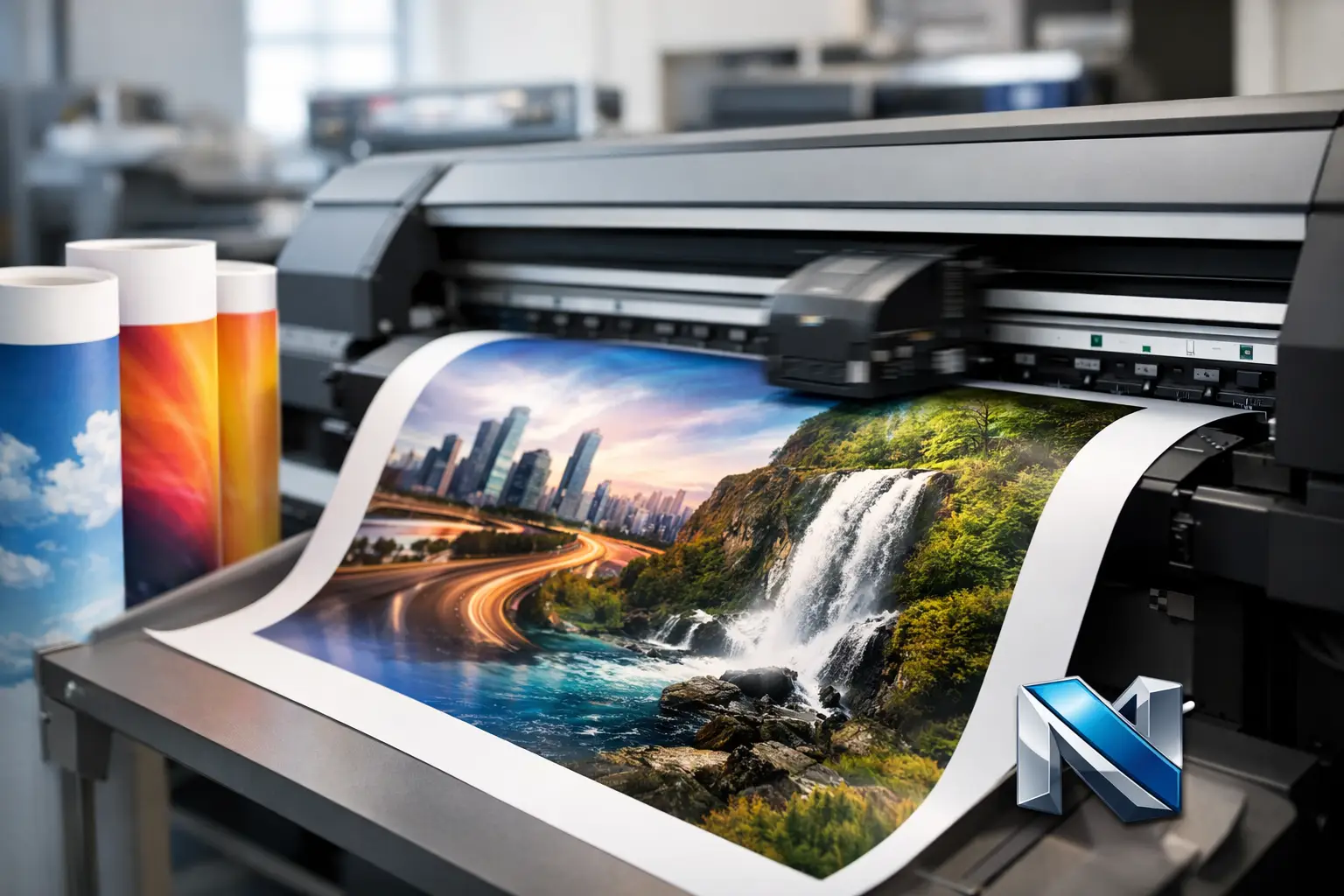
Large format printing refers to printing on materials that are larger than standard commercial sheet sizes. It is commonly used for posters, banners, signs, trade show graphics, wall graphics, window decals, presentation displays, and other oversized pieces.
The process typically uses specialized printers designed to handle wide rolls or large rigid sheets. Instead of printing on a standard letter-size or tabloid press sheet, these machines print on substrates such as vinyl, poster paper, adhesive film, canvas, foam board, coroplast, and other display materials. Depending on the application, the final piece may be trimmed, mounted, laminated, grommeted, or installed.
In practical terms, large format printing lets businesses produce visuals that are big enough to be useful in real-world environments. A restaurant may need a sidewalk sign that can be read quickly by passing traffic. A school may need event signage and directional posters. A contractor may need durable site signs that hold up outdoors. The print method is chosen because the job needs scale, readability, and material options that go beyond everyday paper printing.
What counts as large format printing?
There is no single universal size cutoff, but large format usually begins where standard business printing ends. If the piece is too large for a conventional digital or offset press and requires a wide-format device or oversized finishing, it falls into the large format category.
That can include a modest poster for an in-store promotion or a much larger banner for an event backdrop. It can also include rigid signs, mounted graphics, window films, and display panels. The exact size depends on the equipment, the material, and where the piece will be used.
This is where expectations matter. A customer might assume large format simply means printing something bigger, but the format affects more than dimensions. Viewing distance, installation method, material durability, indoor versus outdoor use, and image resolution all play a role in how the piece should be produced.
Common uses for large format printing
Large format printing shows up in more places than many people realize. Retail stores use it for promotional signs, window graphics, and point-of-sale displays. Offices use it for branded wall graphics, presentation boards, and lobby signage. Community groups and event organizers rely on banners, sponsor boards, and wayfinding signs.
Construction and real estate teams often use large format products for site signs, safety signage, and development boards. Schools and nonprofits use posters, fundraising displays, and graduation or event graphics. Trade shows and conferences depend on retractable banner stands, backdrops, and display panels that need to look polished and travel well.
For local businesses, one of the biggest benefits is consistency. When the same brand colors, logos, and messaging carry across business cards, brochures, signs, banners, and promotional displays, the brand feels more established. Large format printing is often part of that larger system, not a one-off order.
Materials matter as much as size
One of the biggest misconceptions about what is large format printing is that it is just ink on oversized paper. In reality, the substrate often matters as much as the design.
A poster printed for a short indoor promotion may work well on paper with a satin or gloss finish. A banner for repeated event use may need durable vinyl with reinforced edges and grommets. A window graphic may require adhesive film with the right opacity and removability. Yard signs often use corrugated plastic because it is lightweight and weather resistant. Mounted presentation graphics may use foam board for a clean, professional appearance.
The right material depends on how long the piece needs to last, where it will be displayed, and how often it will be handled. Outdoor use usually calls for stronger materials and, in many cases, protective finishing. Indoor displays can allow for more flexibility, but they still need to suit the setting. A polished corporate environment calls for a different finish than a temporary fundraiser or seasonal event.
Image quality at large sizes
This is where professional guidance saves time and rework. A file that looks fine on a laptop screen can fall apart when enlarged to poster or banner size. Logos, photos, and text all need to be prepared with the final dimensions in mind.
Vector artwork is usually best for logos, icons, and typography because it scales cleanly. Photos need enough resolution for the intended viewing distance. That last part is important. A wall banner viewed from ten feet away does not require the same image density as a brochure held at arm’s length. Bigger does not always mean higher resolution in a simple one-to-one way.
Design also needs to match the environment. Text that reads clearly on an 11 by 17 flyer may be too small on a lobby sign if people are expected to read it from across the room. Strong contrast, simple hierarchy, and sensible sizing matter more than cramming in extra information.
When large format printing is the right choice
Large format printing is the right choice when visibility is the main priority. If your message needs to attract attention at a distance, identify a location, support an event, or shape the look of a physical space, it is usually the most effective option.
It is also a practical choice when you need durability. Many large format materials are designed for handling, transport, or weather exposure in ways standard paper pieces are not. That makes them useful for repeat events, job sites, storefront promotions, and semi-permanent displays.
That said, it is not always the best answer. If the goal is to share detailed information that people will read up close, a brochure, booklet, or handout may do the job better. If the budget is tight and the sign is only needed briefly indoors, there may be more economical material choices than a premium mounted display. Good print planning is not about choosing the biggest format. It is about choosing the format that fits the job.
What to consider before placing an order
Before ordering large format pieces, it helps to think through a few practical questions. Where will the graphic be used? How far away will people be when they see it? Is it temporary or long-term? Will it be hung, mounted, placed in a stand, or applied to a surface? Does it need to withstand sun, rain, or repeated transport?
Those answers affect size, material, finishing, and file setup. They also affect cost. A simple poster and a weather-resistant outdoor sign may look similar in concept, but they are built very differently. The cheapest option upfront is not always the most cost-effective if it has to be replaced quickly or fails in use.
Working with an experienced print provider can make the decision easier, especially if you are coordinating multiple items at once. For businesses that already need forms, marketing pieces, signage, and promotional materials, using one reliable source helps keep branding consistent and ordering more efficient. That kind of practical support matters when deadlines are real and the printed piece needs to perform the first time.
Why businesses keep coming back to large format printing
Large format printing remains valuable because physical visibility still matters. People notice a well-placed sign, a clean window graphic, a clear event banner, or a professional display board in a way that is immediate and hard to miss. Digital marketing has its place, but physical environments still shape how a business is perceived.
For companies and organizations that want to look organized, established, and easy to find, large format print does important work. It helps direct traffic, build recognition, support promotions, and create a more professional presence in the spaces where customers actually show up.
If you have ever asked what is large format printing, the simplest answer is this: it is print built for visibility, scale, and real-world use. The best results come from matching the right size, material, and design to the job at hand. When that happens, the piece does more than fill space – it communicates clearly and works hard for your business.