
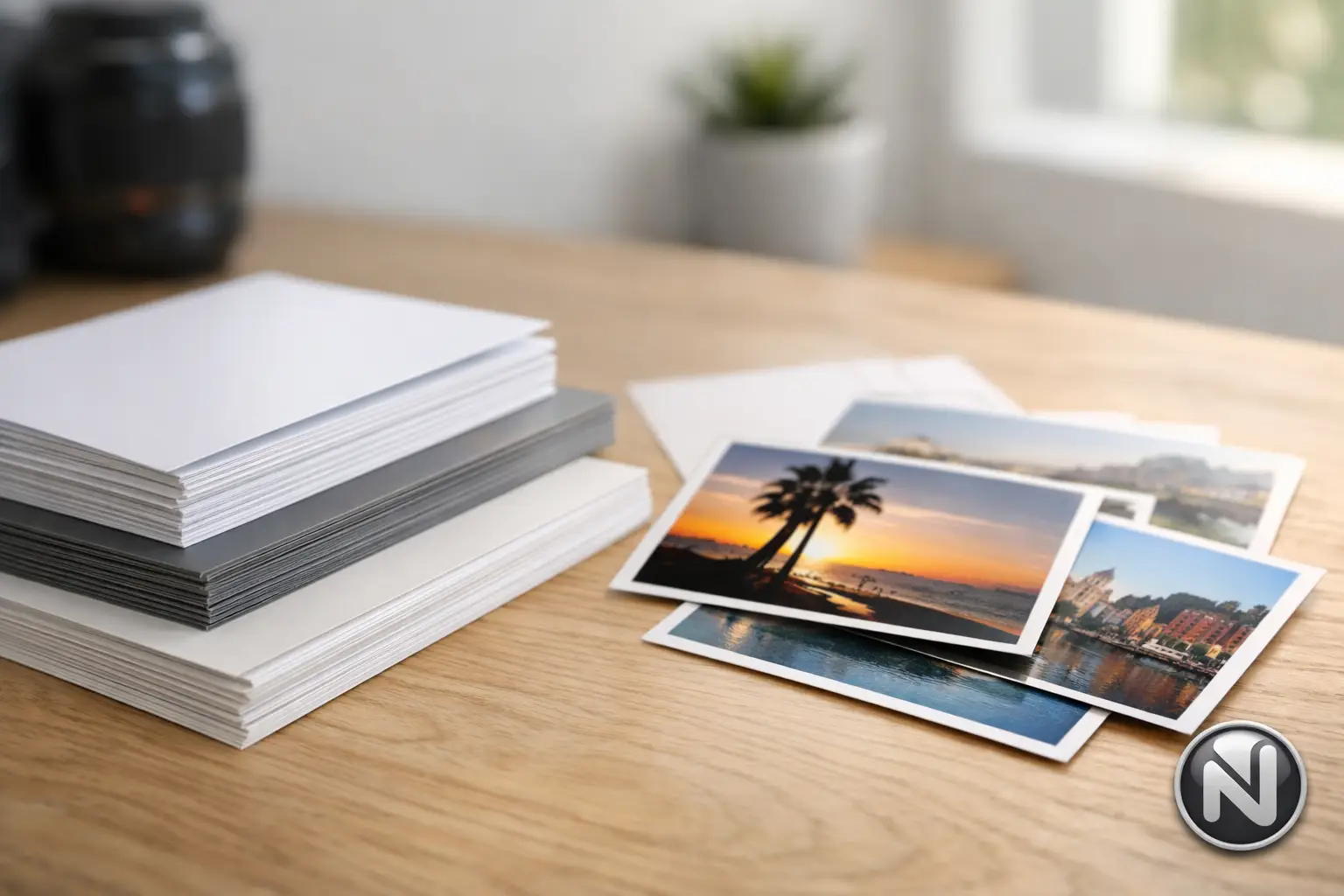
A flimsy postcard gets noticed for the wrong reason. If you’re asking what paper weight for postcards, the short answer is this: most business postcards look and perform best on 14 pt to 16 pt cardstock, while premium pieces often move up to 17 pt or 18 pt. That said, the right choice depends on how the postcard will be used, mailed, and handled.
For a local business promotion, an appointment reminder, an event handout, or a direct mail campaign, paper weight affects more than feel. It changes how durable the card is, how professional it looks, how well it moves through the mail, and how your brand is perceived the moment someone picks it up.
What paper weight for postcards usually means
When people ask what paper weight for postcards, they are usually comparing cardstock thickness rather than office paper weight. Postcards are not printed on standard 20 lb copy paper. They are typically printed on cover stock or cardstock measured in points, often written as pt.
In practical terms, the higher the point number, the thicker the postcard. A 14 pt postcard is solid and common for business use. A 16 pt card feels a bit more substantial. An 18 pt card has a premium, heavier feel in the hand.
You may also see paper described in pounds, such as 100 lb cover or 120 lb cover. That can be confusing because paper weight systems vary by paper category. For most buyers, points are easier to compare because they refer more directly to thickness.
The best postcard paper weights for most jobs
For most organizations, there is not one universal best stock. There is a best stock for the purpose.
14 pt cardstock
This is one of the most common choices for postcards because it strikes a practical balance. It is thick enough to feel like a real marketing piece, sturdy enough for everyday handling, and usually cost-effective for larger quantities.
If you are sending a broad promotional mailing, announcing a sale, or printing event postcards in volume, 14 pt is often a smart place to start. It keeps the piece professional without pushing the budget higher than necessary.
16 pt cardstock
If you want a stronger first impression, 16 pt is a popular upgrade. It has a firmer feel, resists bending better, and tends to communicate a slightly more polished brand image.
For many businesses, this is the sweet spot. It feels premium enough to stand out, but it is still practical for mailing and routine business use. Real estate postcards, restaurant promos, community program announcements, and branded handouts often work well at this thickness.
17 pt to 18 pt cardstock
Heavier postcard stock makes sense when the piece needs to feel more upscale or stay in circulation longer. A luxury service provider, a high-end event invitation, or a leave-behind card for a sales team may benefit from that extra heft.
The trade-off is cost, and sometimes mailing compatibility depending on the size, coating, and finishing choices. Heavier is not automatically better if your main goal is efficient mass distribution.
Why thickness matters beyond appearance
Postcards are handled differently than brochures or flyers. They get stacked, sorted, mailed, pinned to bulletin boards, left on counters, and carried around. That means paper weight affects performance as much as presentation.
A lighter card can bend or scuff more easily. If it arrives worn, the message loses impact before it is even read. A properly chosen cardstock helps the postcard hold its shape and maintain a cleaner, sharper appearance.
Thickness also changes how recipients judge quality. People notice weight immediately, even if they cannot name the stock. A sturdier postcard suggests care, credibility, and professionalism. For businesses trying to make a strong first impression, that matters.
Coated vs. uncoated stock changes the feel too
Paper weight is only part of the decision. Finish changes the experience just as much.
Gloss-coated postcards tend to make colors appear richer and images more vibrant. They are often used for promotional graphics, retail offers, food photography, and any design with strong visual appeal. The surface also adds a bit of protection.
Matte-coated stock offers a more subdued, refined look. It reduces glare and often feels a little more modern or professional, especially for business-to-business marketing.
Uncoated cardstock is useful when the postcard needs to be written on easily, such as appointment cards, RSVP pieces, notes, or reminder cards. If part of the card will be stamped, signed, or filled in by hand, uncoated stock is often the better choice.
So when deciding what paper weight for postcards, do not choose thickness in isolation. A 14 pt matte card can feel more professional than a heavier stock with the wrong finish for the job.
Mailing requirements can affect your choice
Not every postcard is handed out in person. Many are mailed, and mailing introduces practical limits.
Postal systems typically require postcards to meet size, thickness, and stiffness standards. If the stock is too thin, it may not hold up well in processing. If it is too thick, oversized, or heavily finished, it may be treated differently in mail handling or cost more to send.
That does not mean you should avoid premium cardstock. It means you should match the stock to the mailing method. A standard promotional postcard mailed in volume often benefits from a dependable mid-range stock like 14 pt or 16 pt. It performs well without adding unnecessary complications.
This is also where working with an experienced print provider helps. A postcard can look excellent on screen and still run into issues if the physical stock is not suited to the mail stream.
Different postcard uses call for different weights
A business announcement postcard and a luxury event invitation are both postcards, but they should not necessarily be printed the same way.
If you are promoting a sale, seasonal offer, fundraiser, or community event, 14 pt is often enough. It gives you a strong presentation at a practical cost, especially when ordering in quantity.
If the postcard is meant to reflect a more premium brand or stay on someone’s desk for weeks, 16 pt or 17 pt may be a better fit. The added rigidity gives it a longer-lasting feel.
If the card doubles as an appointment reminder or a writable notice, an uncoated 14 pt or 16 pt stock may be more useful than a thicker glossy piece. The best postcard is the one that supports its purpose, not simply the heaviest one available.
Is thicker always better?
No, and this is where many buyers spend more than they need to.
A very heavy postcard can feel impressive, but if you are mailing thousands of pieces, small cost differences add up quickly. In some cases, a heavier stock may not noticeably improve response rates compared with a well-designed 14 pt or 16 pt card.
There is also the design factor. A clean, well-printed postcard on a solid mid-weight stock usually outperforms a poorly designed postcard on expensive paper. Good layout, readable typography, accurate color, and a clear message still do most of the work.
Think of paper weight as part of the message. If your business is aiming for dependable, practical, and professional, a standard premium stock may say exactly what you need. If you are positioning a service as exclusive or high-touch, a thicker card may reinforce that impression.
A simple recommendation for most businesses
If you want a straightforward answer to what paper weight for postcards, start here.
Choose 14 pt cardstock for cost-effective promotional postcards in larger quantities. Choose 16 pt cardstock if you want a more substantial feel and a polished everyday business standard. Consider 17 pt or 18 pt only when the postcard is meant to feel distinctly premium or when presentation outweighs budget concerns.
Then choose the finish based on how the card will be used. Gloss for image-driven marketing, matte for a clean professional look, and uncoated if people need to write on it.
For many businesses, 16 pt matte or gloss is the safest all-around option. It feels professional, holds up well, and works across a wide range of marketing uses.
The value of getting advice before you print
Postcards seem simple until small decisions start affecting cost, print quality, mailability, and how your brand comes across. Paper weight, finish, coating, card size, and whether the piece needs writable space all work together.
That is why many businesses prefer to talk through the job before ordering. A dependable print partner can help you avoid overbuying, under-specifying, or choosing a stock that looks good in theory but does not fit the real use case.
At Noran Printing, that kind of practical guidance matters because businesses are not just buying paper. They are buying a piece that has to represent them well, arrive in good condition, and do its job the first time.
If you’re choosing postcard stock, aim for the paper that fits the purpose, feels right in the hand, and supports the message you want people to remember.