
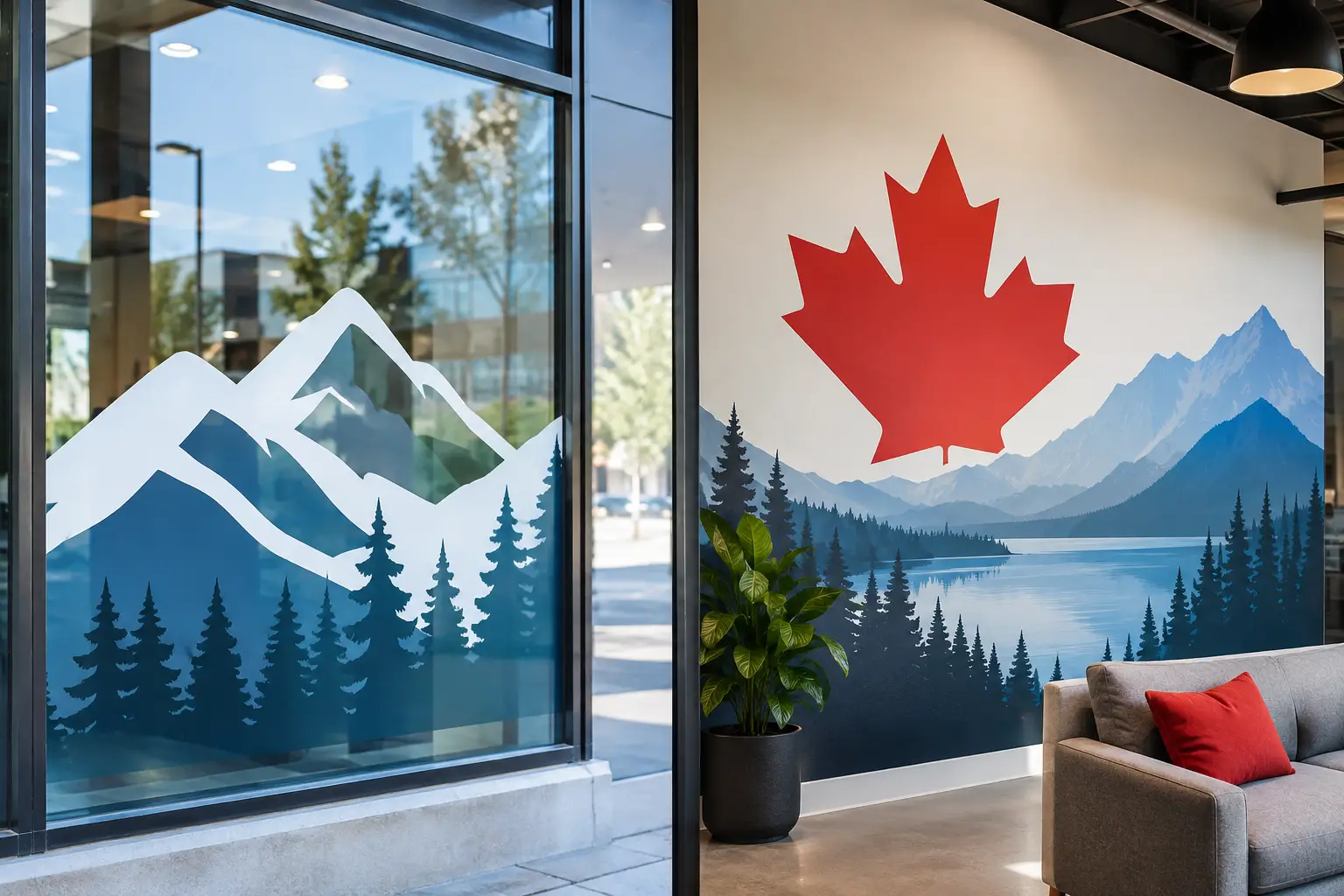
A blank storefront window is valuable advertising space. A blank interior wall can be just as useful for reinforcing who you are, guiding visitors, or making a workplace feel finished. When comparing window graphics versus wall decals, the best choice comes down to where customers need to see the message, how long it needs to last, and what the surface can support.
Both options can carry logos, promotions, wayfinding, hours, campaigns, and branded visuals. They are not interchangeable, though. A graphic that looks sharp on a sunny front window may be ineffective on an interior wall, while a detailed wall display may be the wrong fit for a glass entrance that needs visibility and light.
Window Graphics Versus Wall Decals: The Core Difference
Window graphics are printed or cut vinyl applications made for glass. They can be installed on storefront windows, entry doors, office partitions, vehicle windows, and other glazed surfaces. Depending on the material, they may be viewed from one side, both sides, or allow people inside to see out while presenting a printed image to people outside.
Wall decals are adhesive graphics made for painted walls and other suitable interior surfaces. They range from small logo marks and directional labels to full wall murals, branded timelines, donor recognition displays, and large-scale environmental graphics.
The distinction matters because glass and drywall behave differently. Windows are exposed to light, temperature changes, cleaning, and public-facing sightlines. Walls are usually more protected, but paint texture, wall condition, and surface finish can affect adhesion and the final appearance.
Choose Window Graphics When Visibility Is the Job
For many businesses, window graphics are the first thing a potential customer sees. They make a storefront easier to identify, communicate what happens inside, and create a more professional street presence without requiring a permanent sign installation.
A simple window graphic can display your business name, hours, phone number, and services. A larger design can promote a seasonal offer, showcase products, or turn a wide pane of glass into a branded feature. For offices, clinics, schools, and community organizations, window vinyl can also create privacy on sidelights, meeting room glass, or reception areas.
Common window graphic applications
Frosted or etched-look vinyl is a practical option when you want privacy without blocking daylight. It works well on office doors, treatment rooms, boardrooms, and interior glass partitions. Perforated window film is often used where exterior advertising is needed but staff still need a view outside. Cut vinyl lettering is a clean choice for hours, addresses, service lists, and logos.
Full-color window graphics have strong promotional value, but placement requires planning. A window that faces direct sun or heavy traffic may need bolder contrast and fewer small details. If the design is intended to be read by drivers, it needs a shorter message than a graphic meant for pedestrians standing a few feet away.
Choose Wall Decals When Experience and Direction Matter
Wall decals work best when people are already inside your space. They help turn ordinary walls into useful brand touchpoints, whether the goal is to welcome visitors, direct them to the right room, recognize sponsors, or create a consistent visual experience for staff and customers.
A reception-area logo decal can make a business feel established before a conversation begins. A school hallway can use wall graphics for values, mascots, donor recognition, or wayfinding. An event venue can use removable decals to create a branded backdrop without repainting or building temporary signage.
Wall decals are especially effective when the message needs more room than a storefront window allows. They support larger layouts, detailed imagery, and storytelling that visitors can take in at a slower pace. In a retail setting, they can define departments or highlight a featured product line. In an office, they can reinforce company culture without adding clutter to desks or counters.
Wall condition affects the result
A smooth, clean, fully cured painted wall is the best surface for a decal. Fresh paint needs time to cure before vinyl is applied. Highly textured walls, peeling paint, dusty surfaces, and certain low-VOC paint finishes can reduce adhesion or create an uneven appearance.
This is one area where a quick conversation before production can prevent an expensive mistake. A print provider can recommend the right material, assess whether the graphic should be temporary or long-term, and help match the application to the actual wall surface rather than an ideal one.
Compare Privacy, Light, and Sightlines
The practical difference between window graphics and wall decals often comes down to what must remain visible. A window is not just a print surface. It may provide daylight, exterior visibility, emergency sightlines, or a view into a retail display. Covering too much glass can make an entrance feel closed off, even if the design itself is attractive.
Window film gives you options. Frosted vinyl can obscure a room while still bringing in light. Partial coverage can create branding around the perimeter while preserving clear viewing areas. Perforated film can display an image on the outside and maintain a limited view from inside, although the effect depends on lighting conditions.
Wall decals do not create those trade-offs. They are better suited to messages that need to stay visible at all times and do not rely on natural light. If privacy is the main objective, however, window graphics are usually the more direct solution.
Consider Durability and Change Frequency
Neither choice should be treated as permanent by default. The right material depends on how long the message needs to remain in place and how often your business updates promotions, branding, or space assignments.
A long-term storefront logo and business hours deserve durable vinyl selected for glass and outdoor exposure. A short-term sale, event, or campaign may call for a removable material that can come down cleanly when the promotion ends. For wall decals, temporary campaign graphics and long-term interior branding can use different adhesives and finishes.
Think beyond installation day. If a graphic will change every season, a modular approach may save time and money. Keep the permanent brand elements in place, then leave room for replaceable promotion panels or decals. If a wall is likely to be repainted during a renovation, it may not make sense to invest in a large, long-term mural immediately.
Design for the Surface, Not Just the Artwork
The same logo file can require different treatment on a window than on a wall. Glass reflects light, shows fingerprints, and can be viewed from both sides. A wall may be farther from the viewer and compete with furniture, doors, displays, or overhead lighting.
For windows, prioritize high contrast, readable type, and a clear hierarchy. People should understand the main message quickly. Avoid placing critical information at the bottom of a door or behind merchandise that will block it. If the graphic is installed on the inside of glass for protection, account for whether the artwork needs to be reverse printed.
For walls, scale matters. Small lettering can disappear across a reception area, while oversized graphics can overwhelm a narrow hallway. Measure the visible space, not just the wall itself. Consider furniture placement, baseboards, door swings, light switches, and where people will stand when reading the message.
Color consistency matters on both surfaces. When window graphics, wall decals, brochures, signage, staff apparel, and promotional materials all carry the same brand, consistent production helps your organization look organized and established.
Cost Is About Scope, Not Just Square Footage
It is tempting to compare window graphics and wall decals by size alone, but the installed cost can vary based on material, surface preparation, finishing, installation height, design complexity, and removal requirements. A small window decal with cut lettering may take more production time than a larger simple wall panel. A high wall or multi-pane storefront may require more careful installation planning.
The most useful question is not, “Which is cheaper?” It is, “Which option will do the job for the expected life of the message?” A well-placed window graphic that brings people through the door may deliver more value than an inexpensive interior decal few visitors see. A wall decal that improves wayfinding can reduce confusion and create a better customer experience every day.
For businesses and organizations in Kamloops and the surrounding region, working with a local print partner also makes it easier to review materials, confirm measurements, and coordinate graphics with other printed pieces. Noran Printing can help match the format to the surface, the message, and the way people move through your space.
Make the Choice Based on the Customer Moment
Choose window graphics when you need to attract attention from outside, share essential storefront information, add privacy to glass, or make your location easier to recognize. Choose wall decals when you need to improve an interior, guide visitors, support workplace culture, or give a message more room to be seen and understood.
The strongest spaces often use both, with each doing a different job. Let the window earn attention at the door, then let the wall carry the experience forward once visitors step inside.