A crowded trade show floor gives attendees one reason to take something from your booth: they believe it will be useful after the event. The best trade show handouts do more than put your logo in a bag. They create a reason to remember your business, revisit your offer, or contact your team when a need arises.
That standard changes how you choose. A cheap giveaway can generate traffic, but it may also attract people who have no interest in what you sell. A polished brochure can explain a complex service, yet it will not get read if it is too dense or looks like every other piece on the floor. The right handout fits your audience, supports a specific booth goal, and represents your organization professionally.
Start With the Outcome You Want
Before choosing products, decide what success looks like at this event. If you need more qualified appointments, a concise printed piece with a clear next step may outperform a popular giveaway. If you are building local name recognition, a useful branded item can keep your organization visible long after the show closes. If you are launching a new service, a well-designed brochure or booklet gives your sales team something concrete to leave behind.
Trade show handouts work best when they support the conversation rather than replace it. Your staff should be able to explain why the item matters in one sentence. For example: “This checklist will help you plan your next project,” or “Keep this card for our event-only consultation offer.” That connection gives the handout a job.
It also helps to separate materials for casual visitors from materials for strong prospects. Not everyone needs a full presentation folder or detailed product booklet. Saving your more substantial materials for people who have had a meaningful conversation controls costs and makes follow-up more focused.
The Best Trade Show Handouts for Different Goals
Branded pens that write well
Pens remain a practical choice because people use them. The key is quality. A pen that skips, feels flimsy, or runs out quickly reflects poorly on the business printed on it. Choose a comfortable pen with a reliable ink cartridge, readable imprint, and a color that suits your brand.
Pens are especially effective at business conferences, school events, community fairs, and registration-heavy shows where visitors may need to complete forms or take notes. They are not the most distinctive option, but they are dependable when paired with a stronger printed message.
Notepads and sticky note sets
A branded notepad earns its place on a desk, in a vehicle, or near a phone. That is valuable repeat exposure. Notepads work particularly well for contractors, professional services, real estate teams, schools, and organizations whose customers regularly make lists or record details.
Keep the branding clear without taking over the writing space. A logo, phone number, website, and brief service line are usually enough. For added relevance, consider a notepad designed around a useful format, such as a job-site checklist, appointment notes, meal planning grid, or event planning list.
Useful tote bags
A durable tote bag gives attendees a practical way to carry materials collected throughout the show. It also puts your logo in view around the venue and beyond. Because bags have a higher perceived value than many small giveaways, they are a good choice for larger shows, open houses, recruitment events, and community-facing organizations.
The trade-off is cost and volume. Bags take up storage space, and an overly generic design can make them feel disposable. Use a clean, bold imprint that can be recognized from a distance. Consider reserving premium bags for qualified leads, booked appointments, or a draw rather than placing one in every passerby’s hands.
Drinkware for higher-value conversations
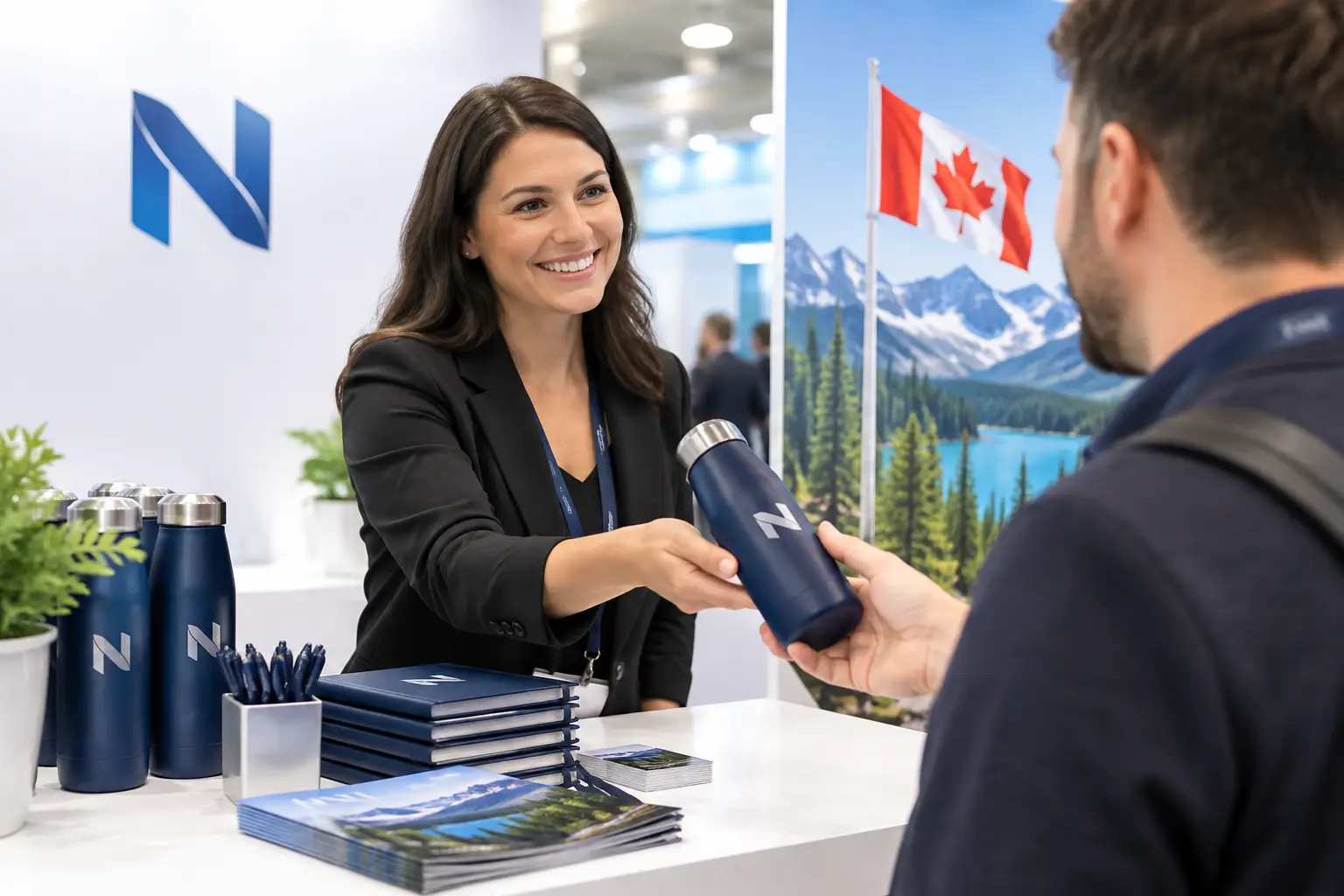
Reusable water bottles, travel mugs, and insulated tumblers can make a lasting impression when the audience and budget support them. They are well suited to client appreciation events, professional conferences, employee recruitment, and industries where a smaller number of quality leads matters more than maximum foot traffic.
This is a case where matching the item to the attendee matters. A premium tumbler may be excessive at a short community event, while it can be an appropriate leave-behind for a decision-maker considering a significant purchase. Keep the logo refined and choose colors that align with your brand standards.
Brochures that answer real questions
A brochure is one of the strongest handouts when visitors need more than a quick reminder. It can explain services, show examples of completed work, outline capabilities, and give prospects something to share with a colleague after the event.
Avoid trying to fit your entire company history onto one sheet. Strong brochures lead with the customer problem you solve, use clear headings, and include only the details that move a prospect closer to action. Professional photos, accurate color, and readable type matter. A rushed brochure with crowded copy can undermine an otherwise excellent booth.
Rack cards and service menus
Rack cards are compact, affordable, and easy to distribute. They work well for restaurants, tourism operators, health and wellness providers, home service companies, event venues, and organizations promoting one clear offer. A service menu can be equally useful when visitors need a simple overview of packages, prices, or available options.
Use the front to earn attention and the back to provide the essentials. Include your name, key benefit, contact information, and a direct call to action. If the piece supports a time-sensitive offer, make the deadline easy to find.
Business cards with a purpose
A business card is still one of the most important trade show pieces, particularly when staff members are making personal connections. It is compact, professional, and easy for a prospect to keep. For many local businesses, it remains the quickest way to ensure a promising conversation does not disappear into a stack of generic materials.
A card can do more than list contact details. Add a short specialty statement, appointment reminder, promotional code, or space for staff to write a follow-up note. Variable data printing can also make cards and follow-up pieces more relevant by personalizing names, offers, or event details when appropriate.
Presentation folders for serious prospects
For services with longer sales cycles, presentation folders create a polished package for estimates, brochures, case studies, service sheets, and business cards. They are particularly effective for commercial suppliers, financial professionals, educational organizations, construction firms, and businesses selling customized solutions.
Folders are not a mass-distribution item. Give them to prospects who have requested information or need materials to bring back to their team. This makes the package feel intentional and helps keep your materials organized after the show.
Make Printed Handouts Easier to Act On
The handout should tell recipients exactly what to do next. “Contact us” is vague. “Book a site visit by Friday,” “Bring this card to our office,” or “Ask for a sample package” provides a clearer path. A QR code can be useful when it leads to one relevant destination, such as an event offer, booking page, or short product demonstration. It should never be the only way someone can reach you.
Include phone, email, and web contact options in readable type. Check every proof for accurate names, numbers, dates, and pricing. At a trade show, your printed materials often outlast the conversation, so accuracy is part of your customer service.
Choose Quality That Matches Your Brand
Paper stock, finish, imprint quality, and color consistency all communicate something. A luxury service may call for a heavier brochure stock or a presentation folder with a refined finish. A busy community event may benefit more from sturdy, economical rack cards and practical promotional products. The right choice depends on the setting, the expected attendance, and the value of a typical customer relationship.
Ordering early gives you better options. It allows time for design review, proofing, quantity planning, and coordinating all booth materials so they look like one brand. A local print partner can also help you balance practical concerns such as portability, setup, storage, and replenishment.
For Kamloops-area businesses and organizations preparing for a show, Noran Printing can bring business printing, promotional items, signage, apparel, and presentation materials together under one roof. That makes it easier to keep your colors, message, and finish consistent across the booth.
Do Not Forget the Follow-Up Piece
The most effective handout may be the one you send after the show. A personalized thank-you card, mailed brochure, or printed proposal can reinforce a conversation while competitors are still relying on a collected business card. Record notes during the event: what the visitor asked about, what materials they took, and what next step they requested.
A thoughtful handout earns attention once. A timely, relevant follow-up shows that your business is prepared to earn trust long after the exhibit hall is packed away.