A rack of printed material can make booklets vs brochures look like a small decision. It is not. The format you choose affects how much information people absorb, how long they keep the piece, what it costs to produce, and whether it supports the action you want them to take.
For a restaurant introducing seasonal catering, a tri-fold brochure may be exactly right. For a school explaining registration, programs, schedules, and policies, a booklet gives the information room to breathe. The strongest choice starts with the job the printed piece needs to do, not simply the number of pages you have available.
Booklets vs Brochures: The Core Difference
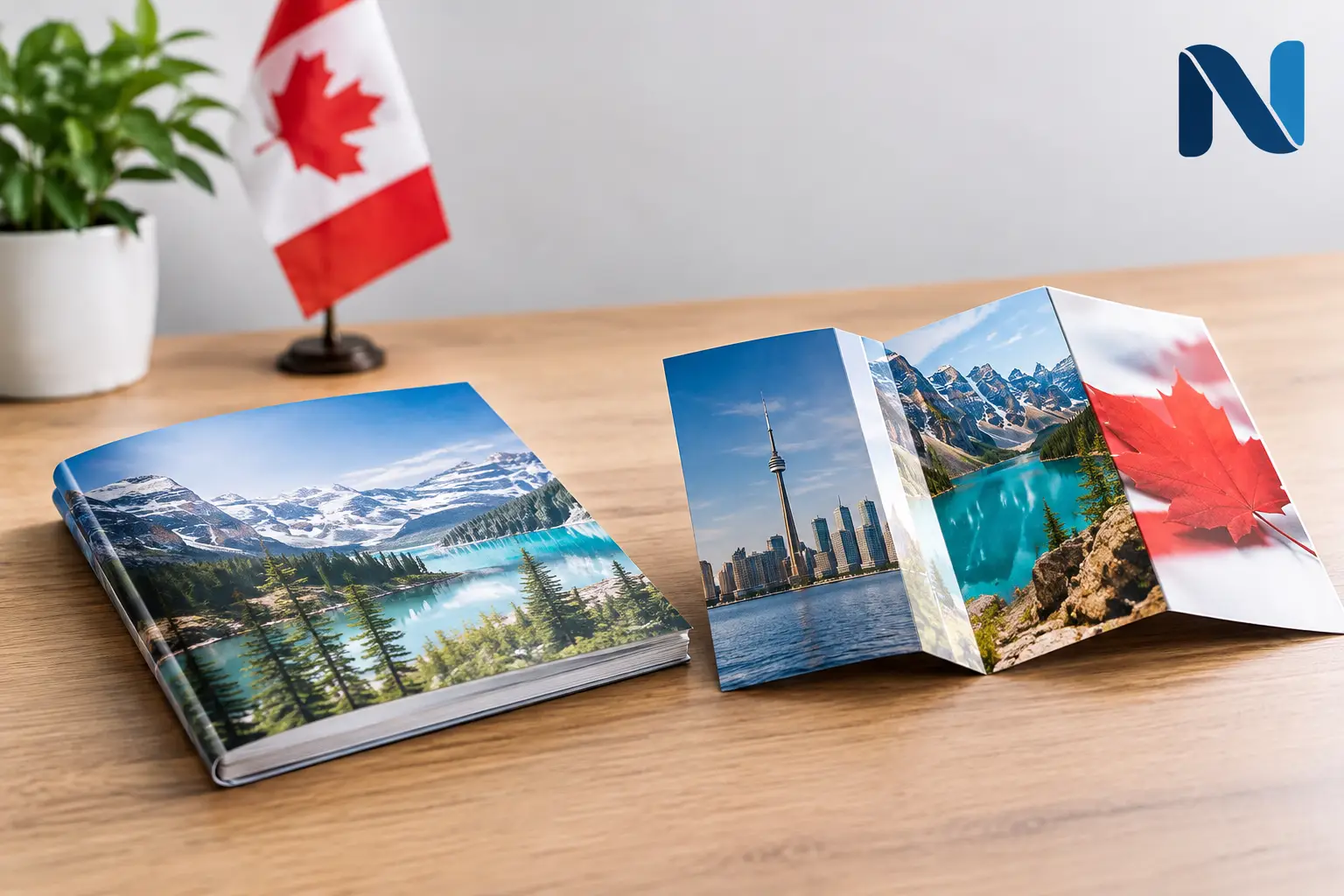
A brochure is usually a single sheet of paper that is folded into panels. Common options include bi-fold, tri-fold, gatefold, and z-fold formats. It is designed for a quick read and works well when the message can be organized into a clear, focused sequence.
A booklet is a multi-page printed piece, often saddle-stitched with staples along the fold or finished with another binding method for larger page counts. It can carry substantially more detail while giving the reader a more structured experience. Think of product catalogs, event programs, annual reports, training manuals, visitor guides, course calendars, and detailed service guides.
The distinction is not only about page count. A brochure asks for attention in a moment. A booklet earns attention over several minutes, or over repeated use. That difference should shape the writing, design, paper selection, and distribution plan.
When a Brochure Is the Better Choice
Brochures are effective when the reader needs a useful overview without feeling buried in information. They are compact, easy to display, and practical for counters, trade show tables, reception areas, direct handouts, and mail inserts.
A local service business may use a brochure to introduce its services, explain its service area, establish credibility, and provide clear contact details. A real estate team can use one to promote a listing or explain its approach. A nonprofit can use one to communicate its mission, current needs, and ways to participate.
The best brochure has one primary purpose. It might be booking an appointment, requesting a quote, visiting an event, donating, or learning about a specific offer. Supporting details matter, but they should move the reader toward that action rather than compete for attention.
The advantages of brochures
Brochures are generally more economical than booklets because they use fewer sheets and require simpler finishing. They are also easy to carry, replenish, and hand out in volume. For businesses that need a polished leave-behind at meetings or a concise introduction at community events, that efficiency matters.
Their limitation is space. A tri-fold panel is smaller than many people expect once margins, images, headings, and contact information are accounted for. Trying to fit a full company history, every service, several testimonials, detailed pricing, and multiple calls to action into one brochure usually produces crowded copy and an unclear message.
If the content cannot be reduced without losing critical information, the brochure may be the wrong format. Smaller type is not a solution. It is a signal that the piece needs a different structure.
When a Booklet Is Worth the Investment
A booklet is the better choice when your audience needs to compare options, follow instructions, understand a process, or retain information for later. It is particularly useful when the material has chapters, categories, schedules, specifications, or a sequence that needs to be followed.
For example, a contractor may use a booklet to explain project stages, material choices, warranties, and maintenance guidance. A school or community organization may need room for program descriptions, registration details, calendars, maps, and sponsor recognition. A manufacturer or distributor may need a product booklet that helps customers compare models and make informed purchasing decisions.
A booklet also creates more room for visual pacing. Instead of forcing every point onto one panel, you can give key sections their own pages, use larger photography, include diagrams, and make complex information easier to scan. That is valuable when clarity supports trust.
What to consider before choosing a booklet
More pages bring more planning. Booklet page counts typically work in multiples of four because of the way sheets are printed and folded. That means a 10-page concept may need to become an 8-page or 12-page booklet, depending on the printing method and layout.
Binding is another consideration. Saddle stitching is a clean, dependable option for many shorter booklets. Larger documents may require perfect binding, coil binding, or another finish based on how the piece will be used. A training manual that must lie flat has different requirements than a polished product guide handed out at a sales meeting.
Booklets also need a disciplined content plan. More pages do not mean every page should be dense. White space, clear headings, strong images, and consistent navigation help readers find what matters. A booklet that feels organized will reflect well on the organization behind it.
Match the Format to the Reader’s Situation
The right decision often becomes clear when you picture where and how people will read the piece. A brochure suits a busy reception area, a visitor information display, or a quick conversation at an event. The reader can understand the essentials in less than a minute and take it along if they want more time.
A booklet is better for a seated conversation, an information package, a registration package, a sales presentation, or a resource someone will refer to more than once. It has a longer shelf life because it is built to answer follow-up questions.
Audience familiarity matters too. If people already know your organization and only need details about a new program or promotion, a brochure may be enough. If they are unfamiliar with your services, face a more involved decision, or need assurance before committing, a booklet can provide the depth that builds confidence.
Budget, Quantity, and Print Specifications
Cost should be considered as a complete picture, not just a price per piece. A brochure can have a lower unit cost, especially at higher quantities, but it may not do the work if your team must repeatedly explain what the printed piece leaves out. A booklet costs more to produce, yet it may save time in meetings, improve consistency across staff, and give prospects a more useful reference.
Paper stock also changes the impression. A heavier cover stock can make a brochure feel more substantial, while an uncoated stock can be useful when readers need to write notes. For booklets, cover and interior paper can be selected separately to balance durability, readability, and budget. Gloss stocks make photography and color stand out, while matte finishes can reduce glare and create a more understated feel.
Quantity is not always a simple choice between a short run and a large run. Materials with stable information, such as an organization overview or evergreen service guide, may justify a larger quantity. Pieces with dates, pricing, staff details, or seasonal programs should be produced carefully to avoid outdated inventory. Digital printing is especially practical for smaller quantities, quick updates, and variable data versions tailored to different audiences.
Design Details That Make Either Format Work
Whether you choose a booklet or brochure, the front cover or front panel has one job: give people a reason to open it. Lead with a clear benefit, not a vague slogan. A strong image, a recognizable brand, and a direct statement of purpose are usually more effective than trying to say everything at once.
Inside, organize information according to the reader’s questions. Start with the most relevant benefit, then explain how the service, program, or offer works. Use headings that mean something, write in short sections, and make contact details easy to locate. If a response is time-sensitive, repeat the call to action where it makes sense rather than hiding it at the very end.
Color accuracy, image resolution, margins, folds, and bleed areas are technical details that affect the finished result. A local print partner can review files before production and flag issues that may not be obvious on a screen, such as low-resolution images, copy too close to a fold, or colors that may shift in print.
A Practical Way to Decide
Start by writing down the one action you want readers to take and the questions they need answered before taking it. If the answers fit comfortably into a few well-organized panels, choose a brochure. If readers need comparison tables, step-by-step explanations, multiple sections, schedules, or material they will keep and revisit, choose a booklet.
Then consider distribution. A brochure is ideal when you need an approachable, high-volume handout. A booklet is a stronger investment when each copy supports a more meaningful conversation or serves as a lasting resource. Noran Printing can help businesses and organizations in Kamloops assess format, paper, finishing, and quantity before production begins.
The best printed piece is not the one with the most pages or the lowest initial cost. It is the one that gives your audience the right information at the right pace, then makes the next step feel clear.