
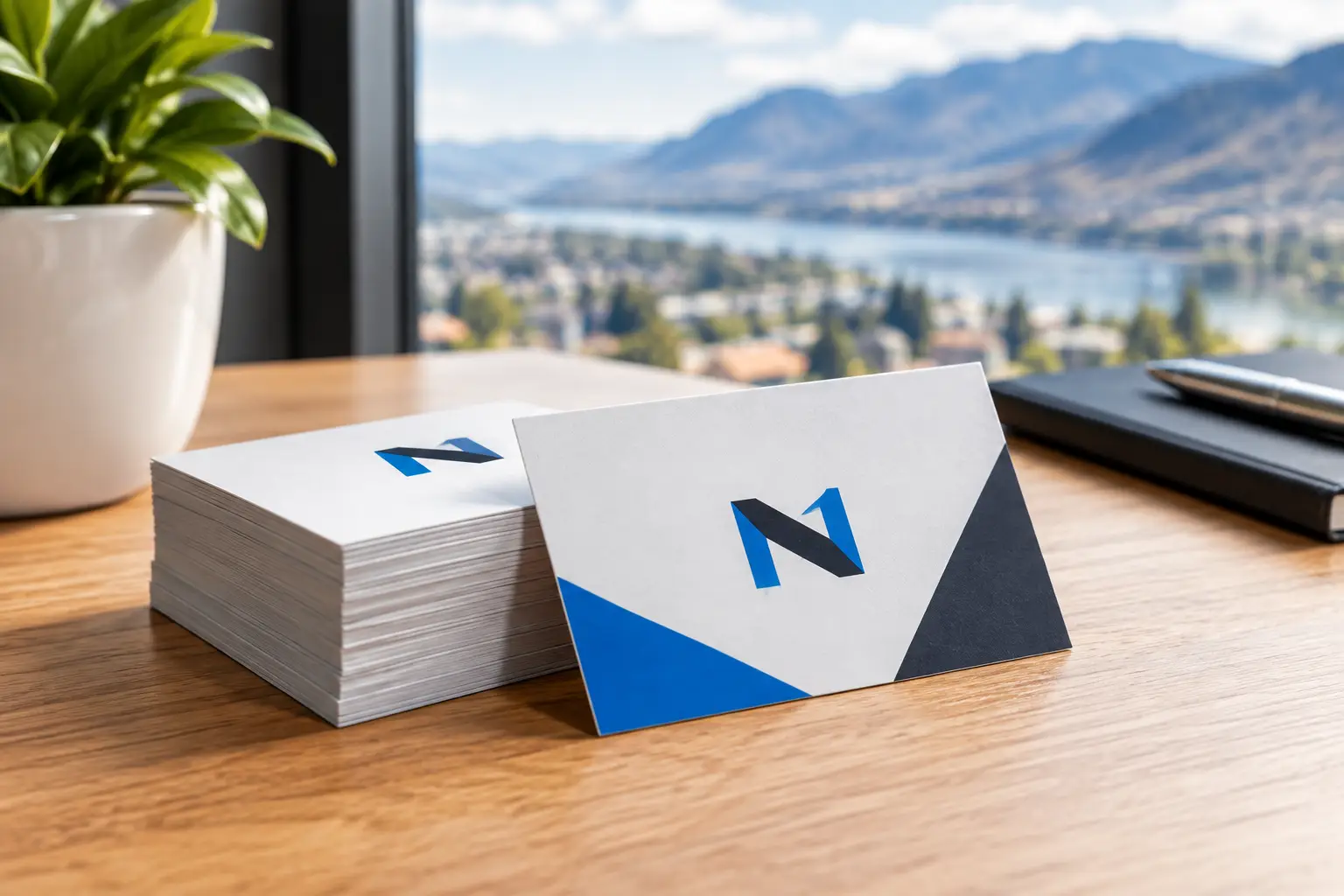
A business card has only a few seconds to do its job. It needs to make your company easy to remember, easy to contact, and worth calling. That is why Kamloops business card printing is about more than putting a logo and phone number on cardstock. Paper, finish, color, layout, and production quality all shape the impression someone takes away.
For a contractor meeting a new client, a restaurant owner speaking with suppliers, or a nonprofit coordinator building local partnerships, a well-made card signals that the organization is prepared. It is a small piece of print, but it often becomes the first physical example of your brand in someone else’s hands.
What a Business Card Needs to Accomplish
The strongest business cards are clear before they are clever. A recipient should be able to find your name, business name, phone number, email address, and website or social handle without turning the card over three times. If people cannot quickly see how to reach you, even a beautiful design has missed the mark.
A card should also match the way your organization operates. A law office may need a restrained, polished look on a heavier uncoated stock. A salon, retail shop, or event business might benefit from a richer color palette and a finish that feels more distinctive. Trades and service businesses often need straightforward contact details with high contrast, because their cards are handed out on job sites, in vehicles, and at busy counters.
Consistency matters just as much. The logo, typefaces, colors, and message should feel connected to your brochures, signage, invoices, uniforms, and promotional products. When each piece looks like it came from a different company, trust can slip before a conversation even begins.
Choosing the Right Kamloops Business Card Printing Options
There is no single best card stock or finish. The right choice depends on your brand, budget, how the card will be used, and how often your details change.
Stock weight and feel
Standard business card stock is a practical choice for everyday networking, staff cards, and larger quantities. A thicker stock creates a more substantial feel and can be especially effective for professional services, real estate, hospitality, or premium retail. The trade-off is cost: heavier stocks and specialty papers typically increase the per-card price, so they make the most sense when the card supports a higher-value sale or a carefully positioned brand.
Uncoated paper offers a natural, writable surface. It is useful when staff may add appointment times, notes, or personal details by hand. Coated stock tends to make photos and solid colors appear more vivid, and it provides a cleaner, smoother finish. If your design uses deep color blocks or detailed imagery, coated stock is often the more reliable fit.
Matte, gloss, and soft-touch finishes
Matte cards are easy to read and give a refined, low-glare appearance. They work well for businesses that want a confident, professional presentation without visual distraction. Gloss cards can make colors pop and are a strong option for bold graphics, product images, and energetic branding.
Soft-touch finishes add a velvety texture that people notice immediately. They can make a card feel premium, but they are not automatically right for every order. A highly textured or dark soft-touch card may show fingerprints more readily, while a simple matte finish can be more practical for cards that see heavy daily use.
Shape and size
The traditional 3.5-by-2-inch business card remains popular for a reason. It fits wallets, card holders, and standard filing systems. A square card, rounded corners, or a slim vertical layout can help your card stand apart, but unusual sizes can be harder for recipients to store.
Use a nonstandard format when it supports the brand rather than simply attracting attention. A creative agency may have room to take that approach. An accounting office or medical practice may get better results from a familiar format with excellent typography and paper quality.
Design for Readability Before Decoration
Good printing can only reproduce what is supplied. Before placing an order, take a hard look at the design itself. Small type, low-contrast colors, crowded layouts, and thin lines can look fine on a large monitor but become difficult to read at business-card size.
Keep the most important information away from the edge. Print production requires bleed for artwork that runs to the trim, and a safe margin keeps text from looking cramped or being cut too close during finishing. A local print partner can review files and flag common issues before production, which is far less expensive than reprinting a card that arrived with a phone number too small to read.
Photos deserve particular care. A web image may look sharp online but may not have enough resolution for print. Logos should ideally be supplied in vector format, while photos should be high-resolution and prepared in the appropriate color mode. Digital presses deliver excellent results, but accurate source files remain the starting point for sharp text and dependable color.
Use Both Sides With Purpose
The back of a business card is valuable space, but it does not have to carry more contact details. It can reinforce the reason a customer should choose you. A short service list, a clear value statement, operating hours, an appointment reminder, or a simple branded graphic may be more useful than repeating the front.
For some businesses, the back can also be functional. A loyalty stamp area may suit a café or personal service provider. A clean note field can help an insurance agent or consultant follow up after a meeting. If you use a QR code, test it on an actual printed proof and make sure it leads to a mobile-friendly destination. A QR code should make it easier to connect, not become a decorative square that nobody scans.
Order Quantity and Timing Matter
Ordering more cards usually lowers the unit cost, but the lowest price is not always the best purchase. If your staff turnover is frequent, your services are changing, or you are updating a phone number or brand identity, ordering an excessive quantity can leave you with outdated stock.
For stable businesses with established details, a larger run is often efficient. For newer companies, seasonal teams, or organizations testing a revised brand, a smaller order may be the smarter decision. High-speed digital production makes it practical to produce quantities that match current needs without treating every order as a massive print run.
Timing should be discussed early, especially before trade shows, community events, grand openings, conferences, or staff onboarding. A quality print shop can provide realistic production expectations and help prioritize the details that affect turnaround. Last-minute jobs can sometimes be accommodated, but planning ahead gives you more flexibility with stock, finishing, and proofing.
Maintain Color Consistency Across Your Materials
Your business card should not be the only item that carries your identity. When your cards, envelopes, letterhead, brochures, presentation folders, signage, and branded apparel use the same visual standards, your business looks established at every customer touchpoint.
This is where working with one full-service print provider has a practical advantage. Rather than explaining your brand colors and logo requirements to multiple vendors, you can keep materials coordinated and make reorders simpler. Noran Printing supports businesses and organizations that need paper printing, promotional materials, signage, and branded items handled with consistent attention to quality.
For organizations with several staff members, variable data printing can also make individual cards easier to manage. The main design stays consistent while names, roles, phone numbers, and email addresses are updated accurately for each person. That approach reduces manual errors and helps every employee represent the same brand standard.
A Card Worth Keeping
A business card does not need flashy effects to be effective. It needs a clear message, a design that reflects your organization, and print quality that holds up when it is handed across a counter, passed around a meeting room, or pulled from a wallet weeks later.
Choose the stock and finish that suit how you work, make contact details effortless to find, and allow enough time for a proper proof. When the next opportunity arrives, your card should already be ready to make a confident introduction.