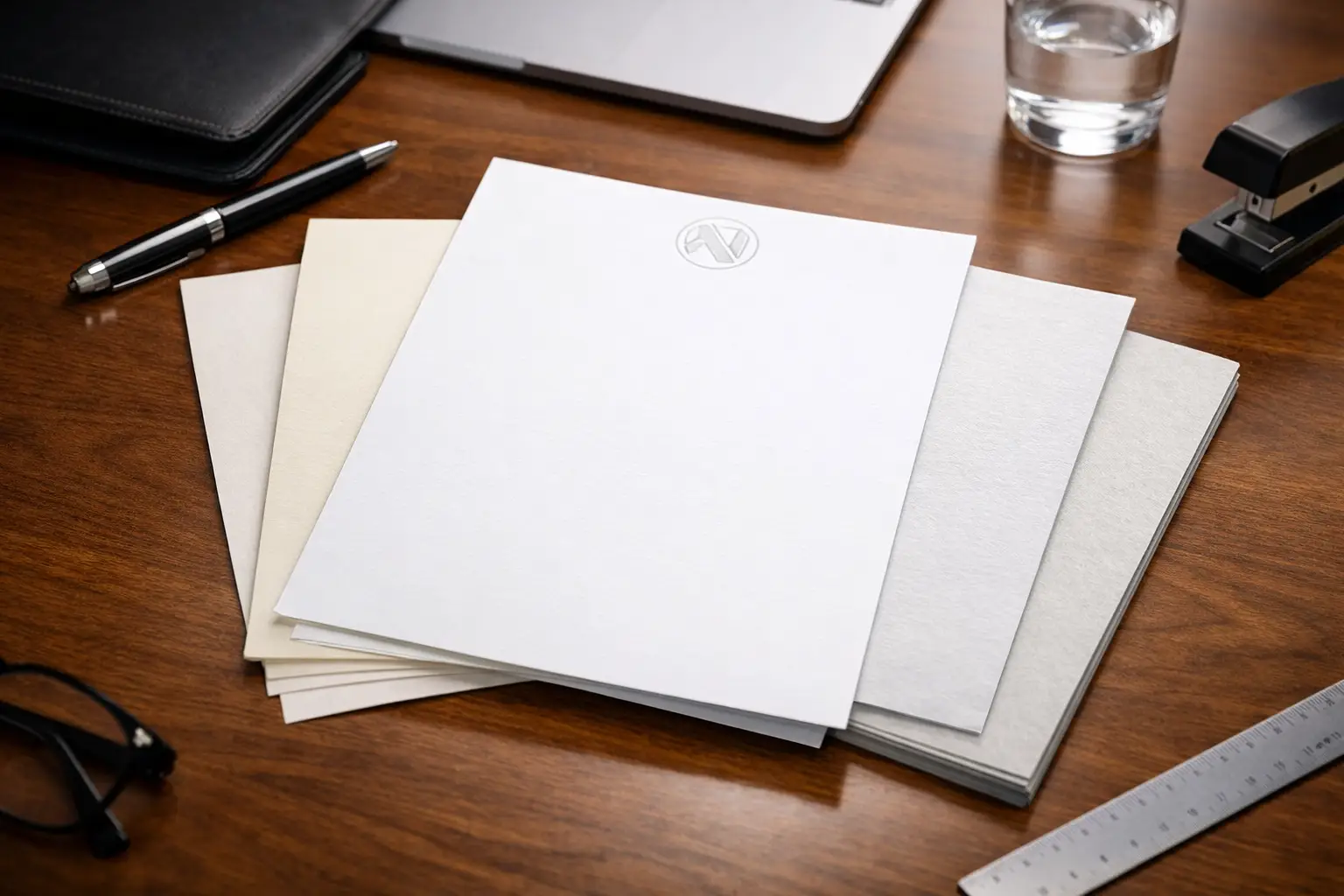
A letterhead may carry only a logo, address, and a few lines of contact information, but the paper behind it speaks just as clearly. When customers receive a proposal, invoice, formal letter, or service agreement, the sheet should feel consistent with the care your organization puts into its work. So, what paper is best for letterheads? For most businesses, 70 lb uncoated text stock is the strongest all-around choice: substantial enough to feel professional, practical for everyday correspondence, and suitable for writing, printing, and mailing.
That does not make it the right answer for every order. A law office sending formal documents, a contractor printing invoices, and a boutique retailer issuing premium correspondence may need different paper characteristics. The best letterhead paper is the one that supports your brand, works reliably with your printer or production method, and fits the purpose of the document.
What Paper Is Best for Letterheads?
For standard business letterhead, choose a smooth, bright-white, uncoated paper in the 60 lb to 70 lb text range. This stock has more presence than ordinary office copy paper without becoming too thick for folding, filing, or matching envelopes. It also accepts handwriting well, which matters when staff need to add a signature, note, or approval.
A 70 lb uncoated text sheet is a dependable starting point for proposals, official letters, client communications, and stationery used across a busy office. It runs well through many digital printing systems, maintains a clean look with full-color logos, and gives recipients a noticeably better first impression than lightweight stock.
For letterhead that will be printed in-house, confirm what your office printer can handle before ordering. Some desktop printers perform best with lighter paper, while others can accommodate 70 lb text or more. A beautifully printed letterhead is only useful if your team can feed it consistently without jams, curling, or toner problems.
Paper Weight: Why Heavier Is Not Always Better
Paper weight is often the first specification people notice, and it matters. However, the heaviest sheet is not automatically the most professional one. Letterhead needs to travel through printers, fold into envelopes, stack neatly in trays, and remain easy to write on.
Standard office copy paper is commonly 20 lb bond. It is economical and functional, but it can feel thin for official correspondence, especially when a letter includes a large logo or dark color blocks. Moving to 24 lb bond can provide a modest upgrade for internal stationery or high-volume use.
Commercial letterhead is often specified by text weight rather than bond weight. These systems are not directly interchangeable, so it is better to describe the result you want than assume one number means the same thing across every paper line. Ask for a sample if you are comparing 24 lb bond, 60 lb text, and 70 lb text. Feeling the stocks side by side makes the decision much easier.
For most organizations, 70 lb text lands in the practical middle ground. It feels intentional in the hand but does not create unnecessary mailing costs or operational headaches. Consider 80 lb text only when the letterhead is part of a more premium stationery set and your printer, envelope, and mailing process can support it.
Choose an Uncoated Finish for Everyday Correspondence
Finish affects how the page looks, how ink or toner sits on the sheet, and whether people can comfortably write on it. Uncoated paper is generally the best choice for business letterhead because it has a natural, non-glare surface. It reads well under office lighting and works well with handwritten notes and signatures.
A smooth uncoated finish is the most versatile option. Fine type stays crisp, small contact details remain legible, and a full-color logo can reproduce cleanly. It is particularly well suited to businesses that print their letterhead digitally or run it through office equipment after it has been professionally printed.
Linen and laid finishes add texture and a traditional stationery character. They can be appropriate for professional services, invitations, formal correspondence, or organizations with an established, classic identity. The trade-off is that textured paper can make very small text appear less sharp and may not be ideal for detailed graphics, tight registration, or frequent in-house printing.
Glossy or coated paper is rarely the best fit for letterheads. It can look polished for promotional pieces, but it is harder to write on and can feel more like a flyer than official stationery. Reserve coated stocks for brochures, postcards, and visual marketing materials rather than day-to-day correspondence.
Brightness, Color, and Opacity Matter More Than They Seem
Bright white paper creates clean contrast for black text and helps brand colors appear more accurate. For most letterheads, white or bright white is the safest choice because it reinforces clarity and works with nearly every logo design.
Warm white, natural white, cream, or light gray stock can be effective when it supports a deliberate brand look. A heritage organization, legal practice, or specialty retailer may prefer a softer paper tone that feels established and refined. Before committing, review a printed proof. Colors that look strong on white paper can appear muted or shifted on a cream or colored stock.
Opacity is equally important. It refers to how much show-through occurs when there is printing on the other side of the sheet. High-opacity paper helps prevent dense text, logos, and signatures from distracting through the page. This is valuable for two-sided correspondence, contracts, and documents that may be copied or scanned.
If your letterhead includes a large solid-color header, footer, or background element, opacity deserves extra attention. A slightly heavier uncoated stock may produce a cleaner result than a lightweight sheet, particularly when the document is printed on both sides.
Match the Paper to the Way You Use Letterhead
The practical use of the stationery should guide the final specification. Letterhead used mainly for digital printing in short runs has different demands than preprinted sheets used in office laser printers. A design that looks excellent on a production press may not perform as expected through every desktop machine.
For preprinted letterhead, leave adequate clear space where variable information will be added later. This includes the body of letters, invoice details, names, and signatures. Avoid placing heavy ink coverage near areas that must pass through a fuser or printer rollers, particularly if the letterhead will be run through laser equipment.
Organizations that send formal letters by mail should also match their letterhead to their envelopes. The paper does not need to be identical, but the whites, textures, and overall quality should feel coordinated. A premium letterhead paired with a thin, mismatched envelope weakens the presentation.
For invoices, forms, and operational documents, function usually comes first. A smooth uncoated 60 lb or 70 lb text paper keeps the page professional while remaining easy to print, stamp, file, and scan. If the document needs duplicate copies, sequential numbering, or variable data, the production method should be discussed before selecting the stock.
Recycled Paper Can Be a Strong Business Choice
Recycled paper is not a compromise by default. Many modern recycled uncoated stocks are smooth, bright, reliable, and well suited to professional letterhead. They can support an organization’s environmental commitments without sacrificing print quality.
The key is to choose a recycled sheet that matches the image you want to project. Some have visible fibers or a more natural tone, which can add character. Others look nearly indistinguishable from standard bright-white office paper. If sustainability is central to your organization, a recycled letterhead can make that value tangible every time a document leaves your office.
Start With a Sample, Not a Guess
Paper is one of the few branding decisions people can physically feel. A screen cannot show the difference between a thin office sheet and a well-chosen uncoated stock, nor can it reveal how a color will reproduce on a textured surface.
Before placing a large order, review printed samples with your actual logo, especially if it contains fine lines, gradients, pale colors, or large areas of ink. Check how the paper folds, whether it works with your office printer, and how it looks beside the envelope or business card it will accompany. This small step can prevent an expensive mismatch.
For businesses and organizations that need dependable stationery, Noran Printing can help compare practical options and produce letterhead that fits the way your team works. The right paper should not just look good on the day it arrives. It should keep representing your organization well after hundreds of letters, forms, and client conversations have passed through your hands.